
Meghalaya expands timely seed, input and processing support for farmers
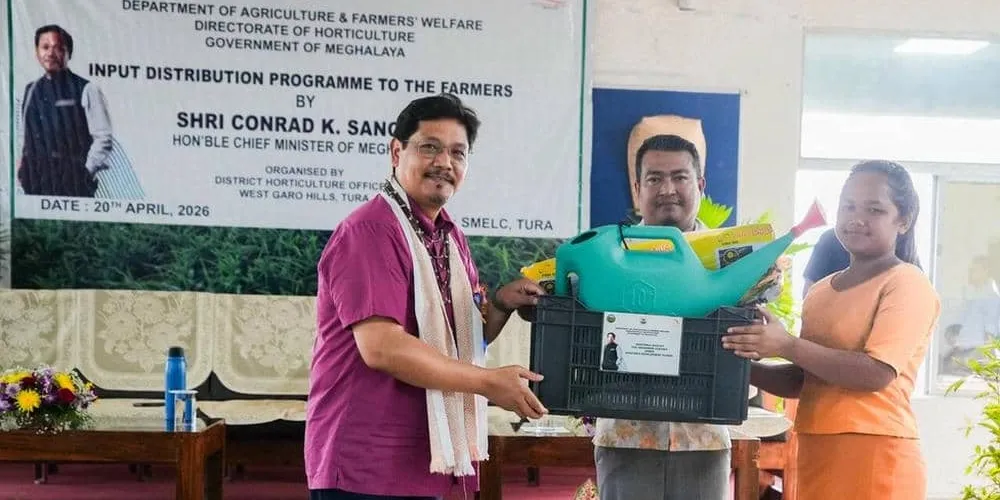
India’s Meghalaya state is widening its support package for farmers with a stronger emphasis on timely access to quality seeds, production inputs and processing infrastructure. The measures were highlighted at an event in Tura attended by farmers and state officials. Chief Minister Conrad K. Sangma said more than 70% of households in Meghalaya depend directly or indirectly on agriculture, making the performance of farm support programmes central to rural incomes and stability.
According to Sangma, one of the most persistent problems for local producers has been the lack of good-quality seeds at the moment they are actually needed in the production cycle. The government is therefore trying to handle the issue in mission mode so that farmers receive the right inputs at the right time. The package now includes the distribution of ginger seeds, vegetable seed kits and cheques for vermicomposting units, combining immediate production support with measures that can reduce dependence on outside inputs.
A major part of the push is the Ginger Mission. The state says it has invested more than Rs 62 crore in the initiative since 2022 and has already covered more than 19,000 farmers, with plans to expand further. The programme is meant not only to supply basic resources but also to strengthen self-help groups, improve farmer organisation and build a more durable income base in rural areas.
Sangma also linked higher farm incomes to processing capacity. His argument was that cultivation alone does not capture enough value, so the state needs facilities that can help farmers market their produce in a more profitable form and reach larger markets. The flagship example is a ginger processing unit in Ri Bhoi worth about Rs 20 crore. Once completed, it is expected to support around 10,000 farmers through better market access and improved returns.
The programme also supports lower-cost organic nutrient management. Cheques for vermicomposting units are intended to help farm households become more self-reliant in organic manure and less exposed to purchased external inputs. Vegetable seed kits are also being distributed to Anganwadi centres and schools to promote kitchen and nutri-gardens, linking farm support to nutrition and local food availability.
The measures come after a difficult season for ginger growers, with prolonged monsoon conditions contributing to disease outbreaks. The state is now pushing additional responses such as seed treatment, the use of rested land and disease-free planting material. Farmers are also being enrolled in crop insurance, especially in West Garo Hills. Taken together, the package suggests Meghalaya is trying to move from one-off distribution toward a more integrated support model that combines seeds, organic inputs, processing and risk management.
Not yet comments. Be the first!
Comments · 0