
Hawaii flooding batters farmers and cuts vegetable supply to local markets
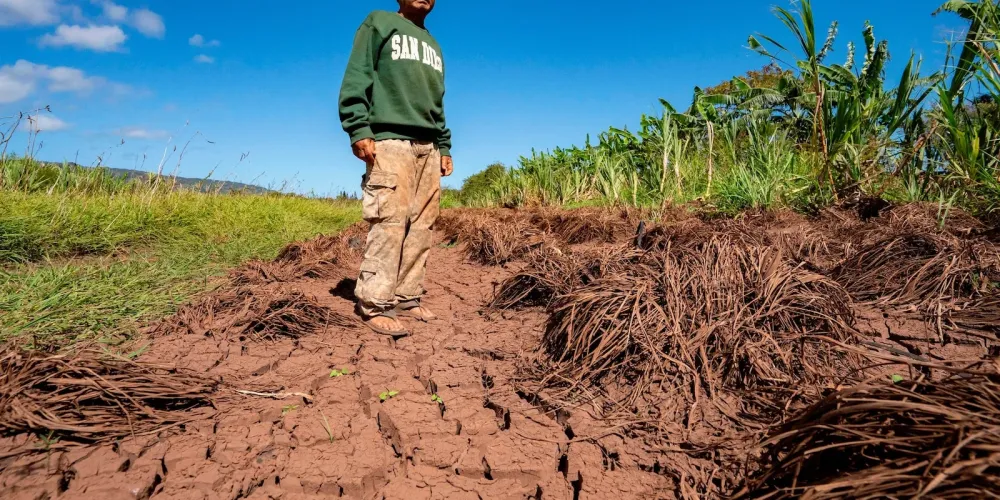
Hawaii’s worst flooding in two decades is still rippling through the state’s farm economy, hitting the small and diversified holdings that supply fresh food to the islands. On Oahu’s North Shore, farmer Bok Kongphan returned to fields covered in reddish-brown mud, with irrigation lines tangled where lemongrass, cucumber and okra had been growing. His niece, Jeni Balanay, also lost choy sum, bitter melon and tomatoes, while recently planted banana, coconut and mango trees turned yellow and are unlikely to survive.
Data gathered by farm advocates show that more than 600 of Hawaii’s 6,500 farms reported nearly $40 million in damage from the back-to-back March storms. Brian Miyamoto, executive director of the Hawaii Farm Bureau, said the real toll is broader, estimating about $50 million in losses across close to 2,000 farms. The damage extends beyond crops to livestock, machinery, vehicles and farm infrastructure, and many growers were only days or weeks away from harvest when the flooding struck.
The losses matter more in Hawaii than in many mainland states because of the islands’ isolation and their dependence on local food production. After plantation-style agriculture gave way to smaller farms growing a wider mix of crops, the state increasingly relied on those holdings to supply grocery stores and farmers markets. Global shipping disruptions during the COVID-19 period reinforced the value of local production, yet many Hawaii farms remain too small and too diversified to afford or qualify for crop insurance.
That fragility is compounded by weak farm incomes. According to the US Department of Agriculture, most Hawaii farms report less than $10,000 in annual sales. Farmers are now trying to rebuild with the help of federal disaster relief, one-time $1,500 emergency grants, state long-term loans and a charitable fund that raised about $850,000 in the weeks after the floods. Even with those tools, recovery is uneven, and some operators are still unsure whether they can restore normal production quickly enough to protect their customer base.
The market impact is already visible. Miyamoto said some growers cannot get to farmers markets at all, while many who do arrive with sharply reduced volumes. Farmer Kula Uliʻi said her family has been bringing roughly one-quarter of its usual output: instead of 200 pounds of tomatoes at weekend markets, they may sell only about 60 pounds. The family also lost starts that were supposed to go into the ground this month, which means constrained harvests could continue for months.
Flood contamination has also widened the damage. Even taro, a crop associated with wet conditions, was lost after being submerged in polluted floodwater. State officials are testing soil, distributing seeds and starts, and urging farmers not to give up. But for many producers, the task is not simply cleaning fields. It is rebuilding a full production and marketing chain at a time when Hawaii consumers are already seeing thinner supplies of locally grown vegetables.
Not yet comments. Be the first!
Comments · 0