
Sahara vs Great Green Wall: The 8,000-km Belt Fighting Desertification
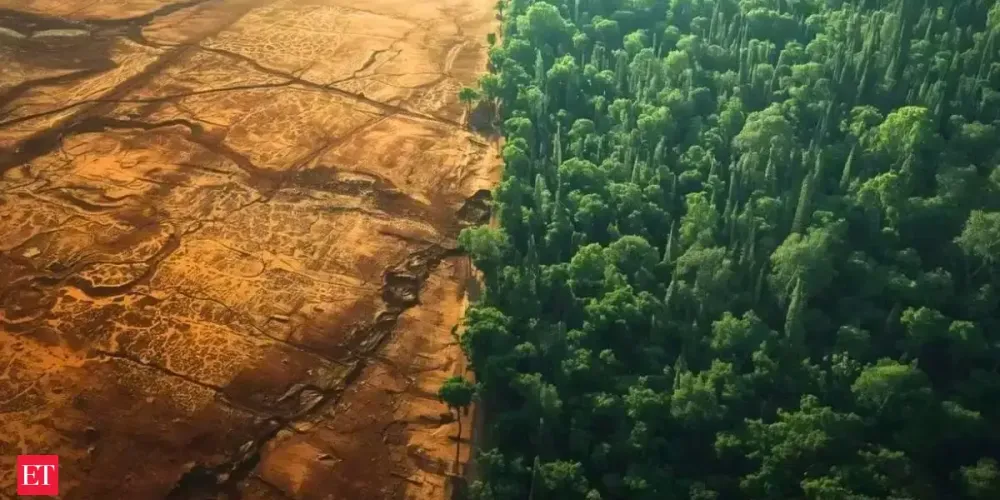
The Great Green Wall project stands as one of the most ambitious environmental initiatives in human history. Stretching roughly 8,000 kilometers from the Atlantic coast of Senegal to the shores of Djibouti on the Red Sea, this belt covers the vast semi-arid Sahel region, located just south of the Sahara Desert. Launched by the African Union in 2007, the project was originally envisioned as a continuous line of trees, but the concept has evolved over time into a comprehensive landscape restoration strategy tailored to local ecological conditions.
Today, the project unites more than 20 African nations and encompasses not only tree planting but also grassland recovery, wetland restoration, improved farming practices, and rainwater harvesting systems. Scientists eventually pushed back against the original idea of a single, thin line of trees, arguing that for long-term ecosystem survival, a broader and more diversified approach to soil rehabilitation and land management is essential.
The Sahel region has suffered for decades from desertification, land degradation, prolonged droughts, and increasingly unpredictable rainfall. These pressures threaten the food security of millions who rely on agriculture and livestock for their livelihoods. The Great Green Wall is designed to reverse this trajectory; restored lands retain water more efficiently, support higher crop yields, minimize soil erosion, and provide essential habitats for local wildlife.
The targets set for 2030 are truly massive. The initiative aims to restore 100 million hectares of degraded land—an area roughly equivalent to the size of Egypt. Furthermore, the goal is to capture 250 million tonnes of carbon dioxide from the atmosphere and create 10 million 'green' jobs across participating nations. So far, approximately 30 million hectares have been restored, representing a significant start that nonetheless requires sustained international funding and stronger cooperation.
The success of this initiative holds global significance. If it fulfills its goals, it will serve as a working model for restoring degraded drylands in other parts of the world facing similar environmental challenges. The defining feature of this project is that the primary labor is driven by local communities, farmers, and governments across the Sahel—the very people whose daily existence depends on the resilience of this unique green barrier against the encroaching desert.
Not yet comments. Be the first!
Comments · 0