
Connecticut expands an agricultural lab to help farmers tackle new risks
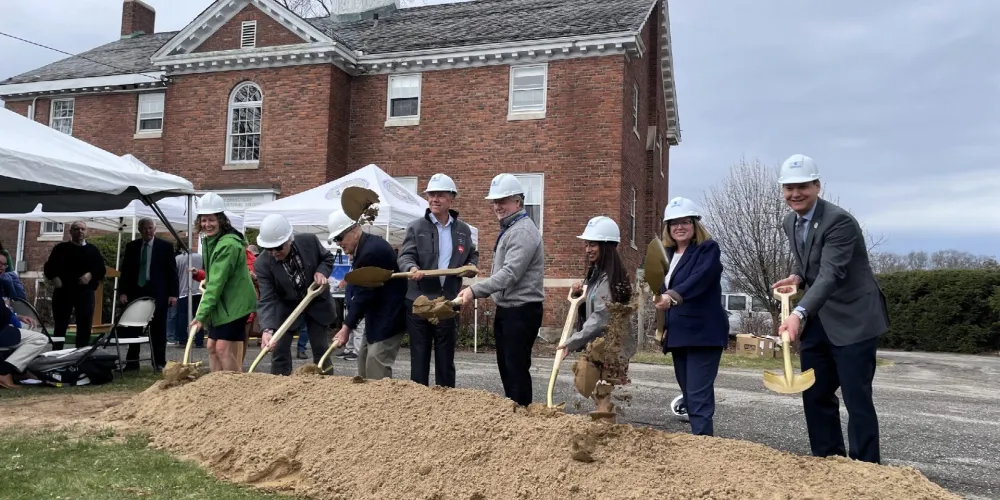
Connecticut is investing nearly $40 million to modernize and expand a key agricultural laboratory in Windsor, with the state putting $37.9 million into the Anderson-Magnarelli Valley Laboratory of the Connecticut Agricultural Experiment Station. The project was highlighted at a groundbreaking event in early April and is intended to strengthen one of the state's practical support hubs for diagnosing plant, soil, pest and climate-related farm problems.
CT Mirror reported that the experiment station has been serving farmers for more than 150 years, while the current laboratory building is 87 years old. Its limitations have become increasingly obvious as farming conditions become more complex. The building lacks the electrical infrastructure and air-filtration systems expected in a modern lab, and staff have also dealt with leaking roofs and mold. CAES director Jason White said the existing facility cannot properly support the advanced technologies now needed for work ranging from agricultural pests to air quality and vector-borne disease.
The upgrade plan includes improvements to the original building, thermal hoods for molecular research, energy-efficiency work and a three-story addition of nearly 25,000 square feet for laboratory and administrative space. Modular greenhouses are also part of the project. Governor Ned Lamont said the expansion reflects how difficult farming has become and is meant to improve the odds that producers can stay ahead of emerging threats.
The laboratory already has a direct role in farm operations. Each year, scientists there analyze roughly 6,000 plant samples and 5,000 soil samples submitted by growers. One of the farmers cited in the story, Terry Jones of Jones Family Farms in Shelton, has recently dealt with anthracnose crown rot in strawberries, a fungal disease he described as having been more typical farther south before gradually moving north with warmer conditions.
Jones has also faced damage from Cryptomeria Scale insects from Asia on Christmas trees, while repeated cycles of drought followed by extreme rain have increased root-rot pressure. Agricultural scientist Richard Cowles said researchers are testing tree species from other parts of the world that can better tolerate drought and flooding, and are also experimenting with intercropping, such as planting asparagus between trees, and using non-toxic minerals like calcium to strengthen soils. Taken together, the Windsor expansion is designed to give Connecticut farmers more scientific backup as climate and invasive-species pressures intensify.
Not yet comments. Be the first!
Comments · 0