
Falcon-like drone offers strawberry growers a new defence against bird damage in Queensland
Queensland strawberry farms are trialling a flapping drone designed to mimic a peregrine falcon and drive rainbow lorikeets away from valuable fruit.
Queensland strawberry growers are testing an unusual crop-protection tool: a flapping drone called RoBird that mimics the size, silhouette and flight behaviour of a peregrine falcon. ABC Rural reports that the system is being trialled to scare off rainbow lorikeets and cockatoos, birds that can cause severe losses in berry production. The issue is large enough for Australia’s federal agriculture department to value bird-related damage to horticultural crops at more than $300 million a year.
RoBird weighs less than one kilogram, is launched by hand and flies in short 15-minute windows on rechargeable batteries. Drone pilot Harry Lagastes said the goal is not to harm wildlife but to haze the bird species that farmers know are eating the crop. That approach is meant to protect fruit while avoiding unnecessary pressure on other birds and maintaining biodiversity around production areas.
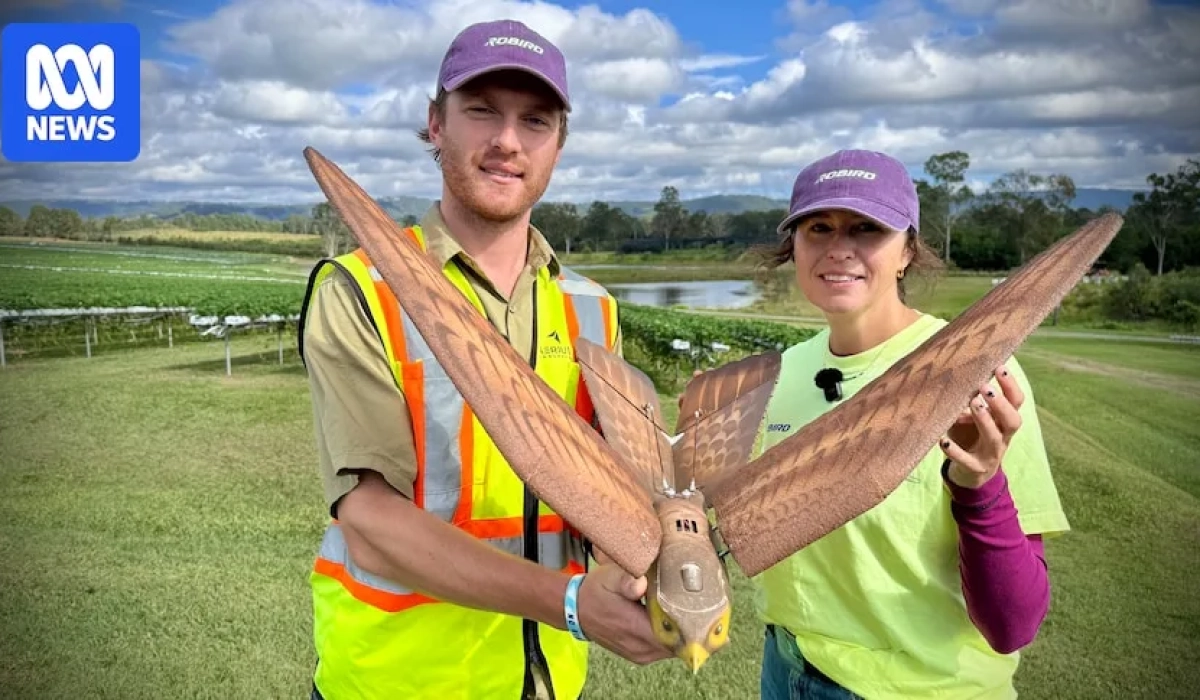
The Queensland trial is taking place at TSL Family Farms, about an hour north-west of Brisbane. It is part of a three-year project funded by Hort Innovation’s Frontiers program and run with Canadian company AERIUM Analytics. The company says related flying and fixed-wing versions of RoBird have already been used overseas to deter birds at airports and mining sites, while horticultural trials in Australia last year focused on stone fruit, apples and almonds.
The strongest early result so far has come from almonds. Jill Viccars, chief growth officer at AERIUM Analytics, said a treated-versus-untreated trial showed an 89 per cent reduction in fruit damage. The company’s second year of almond work is now focused on scaling the system. For strawberry growers, those numbers are particularly relevant because bird pressure can be highly variable, but when it hits, the cost can be very high.
TSL Family Farms co-owner Laura Wells said her family had moved strawberries from ground production to tabletop systems to reduce labour, soil-borne disease, weed pressure and chemical use. But the higher crop also became an easy feeding platform for lorikeets. In the farm’s worst season, early crop losses reached about $200,000 in only a couple of weeks. Wells said traditional measures such as gas guns, scarers and driving through the crop had done little to stop the damage. That is why growers are treating the new three-year trial as a serious attempt to find a scalable, non-lethal technology that can save commercially significant volumes of fruit.