
Agrivoltaics gains ground in Nova Scotia as farms pair solar panels with livestock and crops
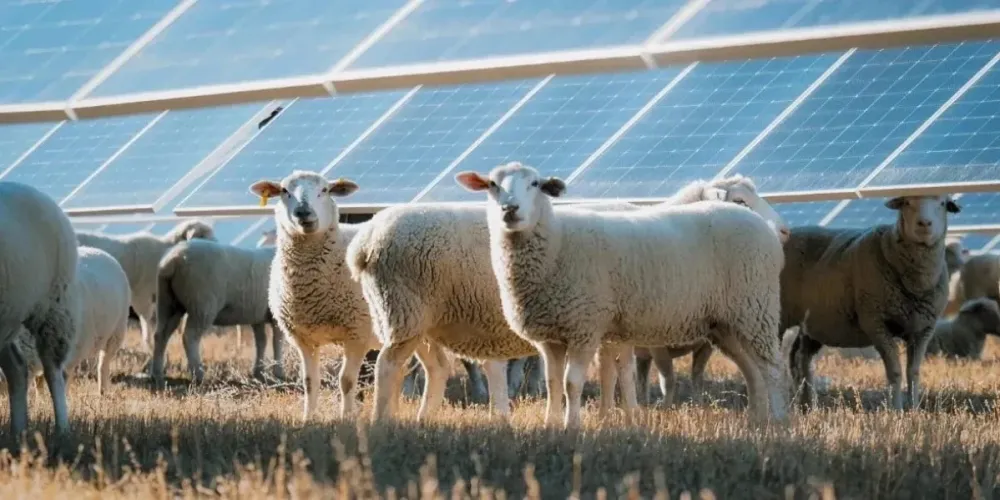
Interest in agrivoltaics is rising in Nova Scotia, where researchers and farm operators are examining how solar power can be combined with active agricultural land use. In practice, that can mean sheep grazing under solar arrays or crops growing in partial shade rather than losing the land entirely to stand-alone energy infrastructure. As climate volatility increases, the idea is gaining attention as a way to make farms more resilient without separating energy and food production.
Research on the topic has been underway since 2022 at Dalhousie University’s Agricultural Campus in Truro. The latest feasibility work was funded through the province’s Low Carbon Communities program and carried out with Nova Scotia Community College. The study looked at how agrivoltaics could help farms cope with climate pressure while also producing cleaner and lower-cost electricity, making it both an adaptation and diversification tool for agriculture.
Stephanie MacPhee, executive director of Dalhousie’s Office of Sustainability, said one immediate advantage is shade for livestock during hotter summers. That matters in open grazing areas where animals often have limited shelter from heat. She also pointed to crop opportunities, saying small berries, apples, peaches, grapes and leafy greens are among the products that may benefit from protected, partially shaded conditions. The article cited a well-studied raspberry example from the Netherlands, where cover from excess rain helped reduce mold risk.
Over the past year, Dalhousie and NSCC completed another feasibility study to identify the five best locations on the Truro campus for demonstration installations. Those options differ in array size, electricity output and land use, including livestock grazing, research plots and crop production. MacPhee said the team’s initial work showed yield increases in 10 of the 26 crops reviewed, while 11 others showed no change. The next step is to secure funding for a pilot project that can test more combinations under local Nova Scotia conditions.
Farmer interest appears to be building, although capital cost remains a major constraint. Ground-mounted systems require more racking and tend to be more expensive than roof-based solar. Even so, practical examples are emerging. A large installation has recently been commissioned for Noggins Farm in Port Williams, where sheep are expected to graze under and around the panels. Agrivoltaics Canada director Jeff McAloon said the model is already in use in countries including the United States, Germany, Japan, the Netherlands and Australia, but he also warned that the sector needs balance: if developers only lease farmland for large solar projects, agriculture risks giving up productive land instead of integrating the two uses.
Not yet comments. Be the first!
Comments · 0