
A bee box changed everything: How Nithin Kamath’s initiative boosted farm yields
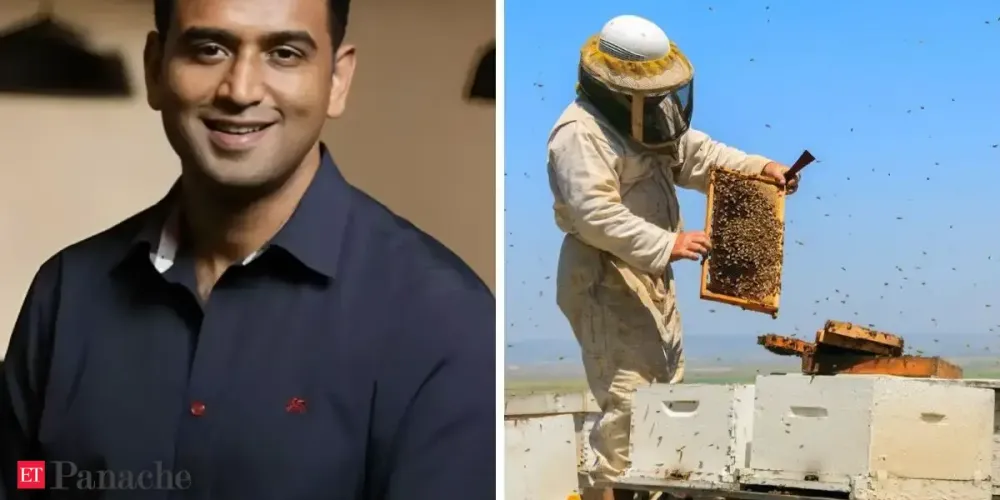
Zerodha co-founder Nithin Kamath has highlighted a compelling success story in modern agriculture, proving that nature-based solutions often outperform complex technological fixes. According to 13 years of data from the Akshayakalpa farming initiative, the simple introduction of bee boxes on farms has resulted in a 20% increase in coconut yields. This boost in productivity underscores the essential role that pollinators play in stabilizing and enhancing crop outputs.
Kamath described the initiative as a "massive win-win" for all stakeholders involved. The program has been successfully scaled, with 7,500 bee boxes now integrated across various farms. Shashi Kumar, founder and CEO of Akshayakalpa Organic, has been instrumental in this transition, demonstrating that setting up these bee homes is straightforward and feasible even in small, semi-urban spaces. For the farmers involved, the project began with the promise of honey revenue but evolved into a core agricultural practice driven by the necessity of pollination.
For Kamath, the broader takeaway from this experiment is the importance of re-evaluating our relationship with nature. While industry often searches for high-tech solutions to environmental and productivity problems, our survival is fundamentally tied to simple, interconnected ecosystems. Protecting bee populations is not merely an environmental preference but a crucial necessity for maintaining global food security and sustainable agricultural cycles.
Data collected since 2013 shows that once bee boxes were introduced, farms saw immediate benefits, including natural swarming and the establishment of more wild colonies. This ecological recovery significantly supports the pollination of a wide range of crops. Research published in the National Library of Medicine supports these findings, noting that bee pollination is critical for the quantity and quality of fruits, vegetables, nuts, and legumes. Scientists estimate that global crop production could drop by as much as 5 to 8 percent without the services provided by these pollinators.
As bee populations globally face threats from climate change, habitat loss, and pesticide use, the success of the Akshayakalpa model serves as a vital blueprint for sustainable farming. By prioritizing the health of pollinators, farmers can improve their economic resilience and contribute to the overall balance of the environment. The initiative highlights a fundamental lesson: effective agricultural growth does not always require innovation in labs; sometimes, it requires simply providing a home for the creatures that sustain our food supply.
Not yet comments. Be the first!
Comments · 0