
Geodesy and Geology for Agricultural Business: Why It's Important from the Start
Why is geodesy and geology important for agricultural business? How do they affect yield, irrigation, and construction — explained in detail.
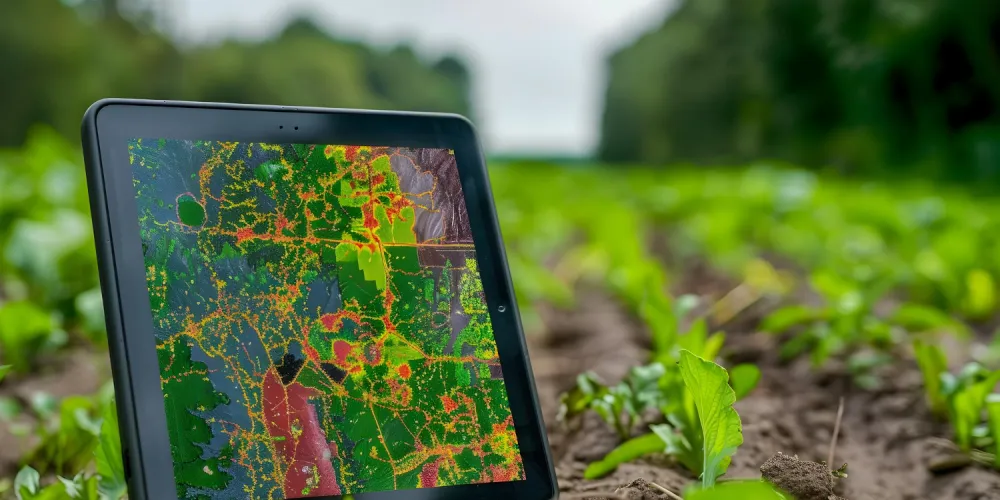
Agriculture in Ukraine — one of the key components of the economy. The efficiency of using every hectare depends not only on the profitability of an individual enterprise, but also on the country's food security. Therefore, before beginning any work on the land, it is important to have a clear understanding of the relief, soil composition, location of networks, and natural features of the plot. This is precisely where geodesy and geology are used.
What is geodesy in the agricultural sector
Geodesy — this is surveying the terrain for the purpose of creating an accurate plot map. In the agricultural context, it allows:
-
to create electronic field maps;
-
to show roads, canals, drainage systems;
-
to assess slopes and elevation differences, which is critical for irrigation;
-
to determine precise field boundaries — this reduces legal disputes and optimizes processing;
-
to prepare the plot for construction of elevators, warehouses, agro-farms.
The result is a topographic plan at a scale of 1:500 or 1:2000, which can be used both for internal planning and legal purposes.
Geology in agricultural business
Engineering geology — this is the study of the composition and properties of soils. In agriculture, these data are necessary:
-
to assess soil fertility and choose processing technologies;
-
for drilling wells for irrigation;
-
before construction of utility buildings (warehouse, grain storage, livestock complex);
-
to evaluate drainage capabilities of the plot;
-
to avoid problems with flooding or settlement of buildings.
Geological surveys include drilling wells, sample collection, and laboratory analysis — ultimately resulting in a report that contains recommendations for agro-projects.
How geodesy and geology interact
These two types of surveys work in tandem. Geodesists fix precise coordinates of points for drilling, determine plot boundaries, while geologists investigate what lies beneath the surface.
For example:
-
in the construction of agro-industrial complexes, geodesy provides a layout map, while geology — recommendations regarding the foundation;
-
in designing irrigation systems, the slope of the plot is determined geodesically, while soil permeability — geologically;
-
in selecting a location for drilling a well, geology is responsible for depth and layer composition, while geodesy — for precise positioning.
When agricultural businesses need these studies
-
before purchasing or leasing a new land plot;
-
before constructing infrastructure: warehouses, hangars, sheds;
-
when implementing precision farming;
-
when creating electronic field maps;
-
before signing contracts for connection to electricity, gas, or water;
-
when drilling wells or designing drainage systems.
Geodesy and geology — this is not just about technical maps. It's about efficiency, accuracy, and profitability of agricultural business. Without quality surveys, risks increase: from overspending on construction — to loss of yield due to improper planning. A comprehensive approach from the start — this is the guarantee of stable business development.
Editorial team agronom.info
Materials are prepared by the portal's agronomists and editors. We use only trusted sources: Ukrainian agricultural universities, variety registries, open scientific publications.
Related articles


Not yet comments. Be the first!
Comments · 0