
Millet mosaic virus
Panicovirus panici
The causative agent of this disease is the virus Panicovirus panici, belonging to the genus Panicovirus. This pathogen infects the vascular tissues of host plants, leading to systemic infection and physiological disruption.
What the section contains
Millet mosaic virus
The viral particles possess specific structural characteristics that enable them to replicate efficiently within the cells of grass crops. The virus survives in perennial weeds, which act as reservoirs throughout the year.
Transmission occurs primarily through insect vectors, such as leafhoppers or aphids. These insects acquire the virus while feeding on infected plant sap and transmit it to healthy crops during their movement.
The virus exhibits high adaptability to various environmental conditions, maintaining its infectivity even under fluctuating temperatures. It can persist in plant debris for a limited duration.
Laboratory diagnostics, including ELISA or PCR testing, are essential for identifying the presence of Panicovirus panici. Understanding its biological cycle is crucial for developing resistant crop varieties.
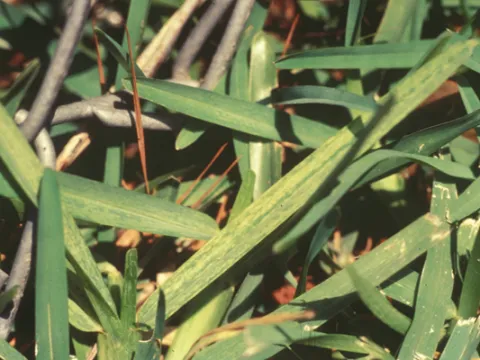
The primary symptom is the development of a mosaic pattern on the leaves, characterized by alternating light-green, yellow, and dark-green patches. This pattern often manifests as streaks running parallel to the leaf veins.
As the disease progresses, systemic chlorosis occurs, covering significant areas of the leaf surface and reducing photosynthetic efficiency. In severe cases, leaf deformation and curling are observed.
Infected plants exhibit significant stunting compared to healthy ones in the same field. They appear weakened, with reduced height and a poorly developed root system, which negatively affects overall crop vigor.
Heading is often delayed or fails to occur entirely in infected plants. The panicles are typically malformed, underdeveloped, and produce a low number of shriveled, lightweight grains.
- Mosaic-like chlorosis.
- Stunting and growth inhibition.
- Leaf streaking and mottling.
- Poor grain development.
Warm and humid weather conditions facilitate the development of the virus by promoting the breeding and migration of insect vectors. High temperatures often correlate with increased population density of these pests.
The presence of wild grasses near fields serves as a primary source of inoculum. These weeds provide a habitat for the virus during the off-season, allowing for early infection of young seedlings.
Poor agricultural practices, such as high-density sowing or inadequate weed control, create a favorable microclimate for viral spread. Over-fertilization with nitrogen can also attract insect vectors.
The spread of the virus occurs as insect populations migrate within the field. The speed of disease outbreaks is directly proportional to the activity of the vectors and their overall population density.
Timely removal of weed hosts in and around fields is critical for minimizing the initial viral load. High infection pressure in the early stages leads to more severe symptoms later in the season.
Millet mosaic virus causes significant economic losses by drastically reducing grain yield. Even with proper care, infected plants struggle to reach their full productive potential.
The quality of the harvested grain is significantly impaired, rendering it unsuitable for seed production and reducing its overall market value. Grains become shriveled and lack uniformity.
Virus-stressed plants become more susceptible to secondary infections by fungi and bacteria. This can lead to premature senescence and lodging, further reducing the harvestable biomass.
Widespread outbreaks can result in severe loss of yield in specific field sections, sometimes exceeding 50 percent of the potential harvest under high-pressure scenarios.
Increased expenditures on insecticide applications to control vectors add to the overall cost of production. In the long term, recurring outbreaks may force changes in farm management strategies.
The primary control strategy involves integrated pest management, starting with the elimination of wild host grasses that serve as viral reservoirs. Regular weeding is fundamental for crop health.
The use of insecticides to manage vector populations is necessary during periods of high insect activity. Monitoring the flight patterns of vectors helps in timing the treatments effectively.
Cultivating resistant or tolerant millet varieties is the most sustainable and efficient approach for long-term protection. Breeding programs focus on enhancing plant resistance to viral pathogens.
Implementing proper crop rotation helps disrupt the viral cycle within the field. Maintaining spatial isolation from other susceptible cereal crops reduces the risk of cross-contamination.
Ensuring healthy soil fertility and using high-quality, virus-free seeds contribute to stronger plant immune systems. Robust plants are better equipped to tolerate the stress caused by the virus.