
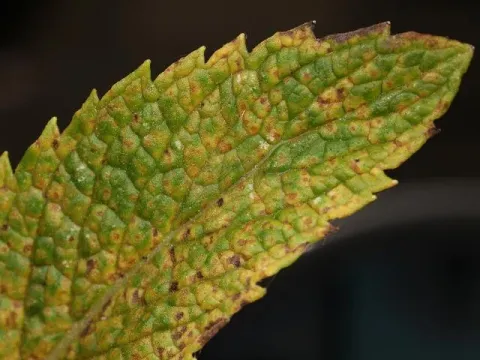
Mint leaf spot virus
Menthavirus menthae
The causative agent of the disease is Menthavirus menthae, a virus specifically targeting plants of the Mentha genus. This obligate parasite hijacks the host's cellular machinery to replicate its viral genome.
What the section contains
Mint leaf spot virus
Once inside the plant, the virus spreads systemically through the phloem, affecting the overall physiological development and inhibiting the production of essential oils and secondary metabolites.
The primary mode of transmission is through vegetative propagation, as using infected rhizomes or cuttings directly introduces the virus into new planting sites.
In addition to vegetative spread, the virus can be transmitted by insect vectors, such as aphids, which acquire the virus while feeding on infected sap and transmit it to healthy plants.
The pathogen persists in the host throughout its entire life cycle, surviving within the root system during winter and re-emerging when growth begins in the following season.
The most common symptoms include chlorotic spots on the leaves, which often display a mottled or mosaic-like pattern rather than distinct, sharp-edged lesions.
Leaves on infected plants may show signs of curling, distortion, or crinkling, leading to a stunted appearance of the entire plant or specific affected stems.
Growth reduction is typical; plants often fail to reach their full height or density, resulting in a sparse and weakened canopy compared to healthy stands.
In severe cases, the mosaic patterns may progress into small necrotic spots, causing tissue death and prematurely reducing the plant's capacity for photosynthesis.
Symptom severity can fluctuate significantly based on environmental conditions, such as temperature and light availability, which can sometimes mask the presence of the disease.
The disease causes significant economic loss primarily by reducing the biomass yield of the harvested mint, leading to decreased commercial output.
Beyond biomass loss, the quality of the essential oil is compromised, as the virus interferes with the biosynthetic pathways responsible for oil production in the glands.
Over several years, the virus causes the progressive degeneration of the crop, making the planting stock unsuitable for continued agricultural use.
Infected plants exhibit reduced vigor, making them more susceptible to secondary fungal or bacterial infections that further degrade the quality of the harvest.
Managing the disease requires significant investments in replacing infected stock, which increases production costs and limits the longevity of the plantation.
The most effective strategy is to start with high-quality, virus-free planting material, specifically stock certified through meristem culture techniques.
Regular field inspections and the immediate roguing (removal) of symptomatic plants help curb the initial spread of the virus within the field.
Implementing a strict pest management program to control aphid populations and other potential insect vectors is essential to prevent secondary transmission.
Practicing crop rotation and maintaining adequate distance from old or abandoned mint fields helps protect new plantations from the encroachment of viral reservoirs.
Maintaining optimal soil fertility and adequate irrigation helps sustain plant vitality, which can help mask symptoms and allow for better performance in mildly infested stands.