
Australian Nepovirus
Nepovirus australiaense
Australian Nepovirus (Nepovirus australiaense) is a specialized plant virus classified within the Nepovirus genus of the Secoviridae family. The term "Nepovirus" is an acronym for nematode-transmitted polyhedral virus, highlighting its primary mode of dispersal.
What the section contains
Australian Nepovirus
The viral particle consists of an icosahedral protein capsid enclosing a genome made of two segments of positive-sense single-stranded RNA. This bipartite genome is a distinctive feature of the genus and is essential for its replication cycle in host cells.
The virus is primarily transmitted by soil-inhabiting nematodes, which act as biological vectors. When these nematodes feed on infected root systems, they ingest viral particles and transmit them to healthy plants during subsequent feeding events.
Transmission can also occur via contaminated propagation materials such as seeds, cuttings, or rootstocks, which is a major factor in the long-distance spread of the disease across agricultural regions.
Australian Nepovirus exhibits significant environmental stability, allowing it to persist in the soil and infect consecutive plantings unless appropriate soil sanitization methods are implemented.
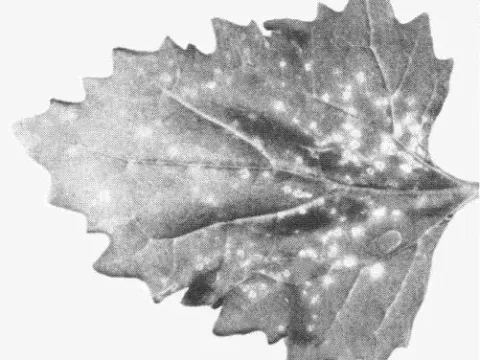
Symptoms of Australian Nepovirus infection vary depending on the host species, but systemic mosaic patterns on leaves are the most common diagnostic feature. These patterns appear as intermingled yellow and green tissues.
Affected plants often show stunted growth and poor vegetative development. Internode shortening is frequently observed, which gives the plant a compact or bushy appearance that deviates from the normal habit.
Leaf deformation is a hallmark sign of the infection; leaves may exhibit crinkling, curling, or asymmetry. In severe cases, chlorotic spots or rings can develop on the leaf surface, indicating disruption of chloroplasts.
The virus severely impacts reproductive development. Affected plants typically show a reduction in flower production, poor fruit set, and decreased overall yield compared to healthy counterparts.
The intensity of these symptoms is often modulated by environmental stressors, such as temperature fluctuations or nutrient deficiencies, which exacerbate the plant's physiological instability.
The presence of nematode vectors in the soil is the primary prerequisite for the development and spread of Australian Nepovirus. Moist soil conditions provide an ideal habitat for nematode mobility and feeding.
Seasonal factors, particularly moderate soil temperatures during spring and autumn, promote the activity of both host plant roots and nematode vectors, increasing the likelihood of widespread infection.
Agricultural practices, such as the use of non-certified propagation materials, are the most frequent cause of new outbreaks. Importing infected seedlings or cuttings into a clean field is a major risk factor.
Monoculture cropping systems often exacerbate the problem because they maintain a constant population of vectors and virus-susceptible host plants in the same area over many years.
In greenhouses, the risk of infection is significantly higher due to the controlled environment, which allows for year-round persistence of the virus if sanitation and vector control protocols are neglected.
The primary economic danger of Australian Nepovirus is that the infection is systemic and incurable. Once a plant is infected, it remains a reservoir of the virus for its entire lifespan.
Crop losses can be substantial, as the virus negatively affects both the quantity and quality of the harvest. Fruits from infected plants often display reduced size, poor color, and diminished taste, making them unmarketable.
The virus compromises the overall health of the plant, making it more susceptible to opportunistic secondary infections, including fungal and bacterial pathogens that further accelerate plant decline.
In perennial crops, the disease can lead to the slow death of entire fields, necessitating the costly and time-consuming process of total field eradication and soil sterilization before replanting.
For large-scale agricultural operations, this virus represents a major production risk that requires strict adherence to phytosanitary regulations to prevent major economic losses.
- Planting only certified virus-free seeds and nursery stock to prevent initial outbreaks.
- Conducting regular soil testing to monitor the presence and population density of nematode vectors.
- Implementing rigorous crop rotation schedules to break the nematode life cycle and reduce viral inoculum.
- Applying recommended nematicides or soil fumigation treatments to sanitize fields where the virus has been detected.
- Immediately roguing and disposing of symptomatic plants, ensuring that the root system is removed to eliminate the virus reservoir.