

Disease · viral
Tomato yellow leaf curl virus
Begomovirus solanumrajasthanense
Description
Symptoms
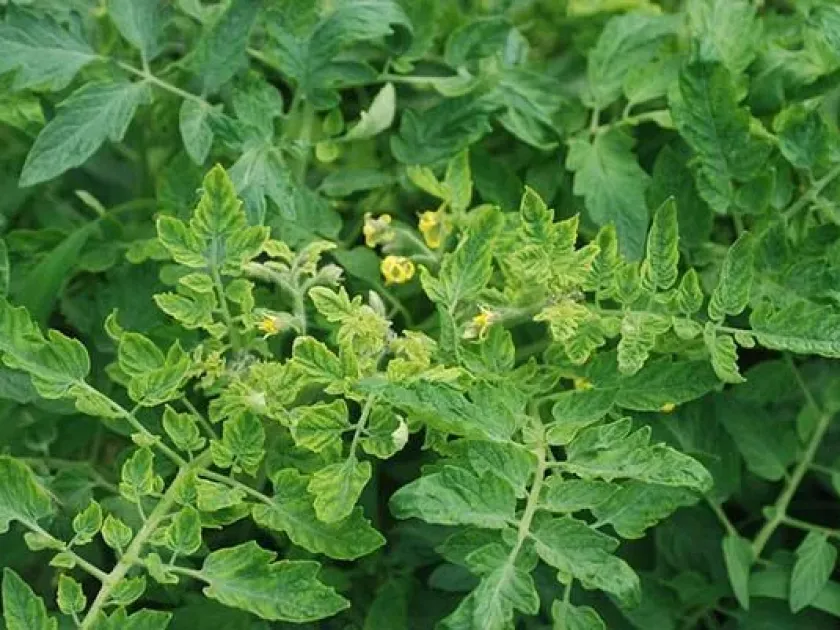
Initial symptoms are usually observed on young, rapidly developing leaves. The leaflets exhibit upward curling, marginal chlorosis (yellowing), and significant leaf deformation.
Infected plants show severe stunting due to shortened internodes. The overall appearance is a bushy, compact plant with a dense, deformed canopy of leaves.
Flower development is often disrupted, leading to flower abscission or the formation of extremely small, unmarketable fruit if fertilization occurs at all.
Plants infected at an early seedling stage typically cease growing altogether and fail to produce any viable commercial yield, representing a total loss for the affected area.
Diagnostic confusion can occur as symptoms may mimic nutritional deficiencies, but the specific combination of leaf curling and severe yellowing is characteristic of TYLCV.
Pathogen
The causal agent is the Tomato yellow leaf curl virus (TYLCV), a member of the Begomovirus genus within the Geminiviridae family. It is a single-stranded DNA virus known for high genetic adaptability.
The primary vector for the virus in the field and greenhouses is the whitefly, Bemisia tabaci. The insect acquires the virus while feeding on infected plant tissues and remains infectious throughout its lifespan.
The virus is not transmitted mechanically via sap or contaminated tools, nor is it seed-borne. Its dispersal depends entirely on the movement and feeding patterns of the whitefly vector.
Once introduced into the plant, the virus moves through the phloem to all systemic parts, causing severe physiological disturbances that inhibit normal development.
The biological success of this virus is inherently tied to the reproductive efficiency of the whitefly, making the management of the insect population the most critical factor in disease prevention.
Conditions for development
The spread of the disease is directly correlated with whitefly population density. Warm temperatures and high humidity provide ideal conditions for rapid multiplication of the vector.
Greenhouse environments offer a stable climate that often supports year-round whitefly activity, creating a high risk for sustained viral transmission cycles.
Nearby reservoir hosts, including various weed species, often harbor the virus during off-seasons, serving as starting points for infestation once crops are planted.
Poor biosecurity practices, such as the introduction of infested transplants or failure to screen vents, significantly escalate the risk of rapid outbreaks within facilities.
Extended dry spells during the growing season often lead to increased whitefly migration, which accelerates the dissemination of the virus across large areas of farmland.
Why it matters
The primary economic impact is the total loss of fruit production, as the virus severely restricts photosynthesis and nutrient transport within the host plant.
TYLCV is considered one of the most devastating viral threats to global tomato production, often causing massive financial losses in both field and protected cultivation.
Due to its systemic nature and the difficulty of treatment, the disease requires intensive management, often resulting in the removal and destruction of large numbers of plants.
Product quality is severely compromised; affected fruits are often small, malformed, and lack the nutritional or aesthetic appeal required for the retail market.
Farmers must allocate significant resources to consistent pest control programs, which increases overall production costs and complicates sustainable farming practices.
Protection
Effective management is based on an Integrated Pest Management (IPM) approach centered on the aggressive control of the whitefly population.
- Installation of insect-proof screening (mesh) on greenhouse vents.
- Systematic monitoring of whitefly levels using yellow sticky traps.
- Sanitation programs to remove weeds that act as alternative virus hosts.
- Utilization of resistant or tolerant tomato varieties as the primary defense mechanism.
- Strategic timing of crop cycles to avoid periods of peak whitefly activity.
Early detection and immediate roguing (removal) of infected plants are essential to reduce the viral inoculum and prevent further spread by whiteflies.
Biological control agents, such as parasitoid wasps (e.g., Encarsia formosa), can be integrated into the management plan to reduce reliance on chemical insecticides.
Content graph
Connections · Tomato yellow leaf curl virus
Most often together:
Marketplace
Products · 1
Community
Discussion
No discussions yet — be the first.