
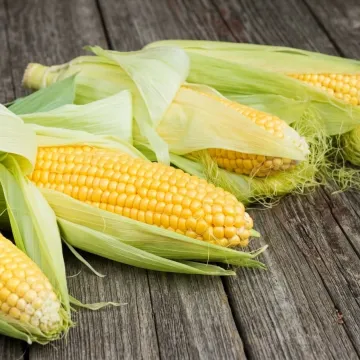
Description
Symptoms
The disease manifests in two distinct phases: the seedling wilt phase and the leaf blight phase. Symptoms often appear in early summer.
On leaves, the infection starts as pale green or yellowish linear streaks with wavy margins that run parallel to the veins of the leaf.
As the disease progresses, these streaks turn brown, wither, and eventually kill the entire leaf. In severe cases, the whole plant wilts and dies rapidly.
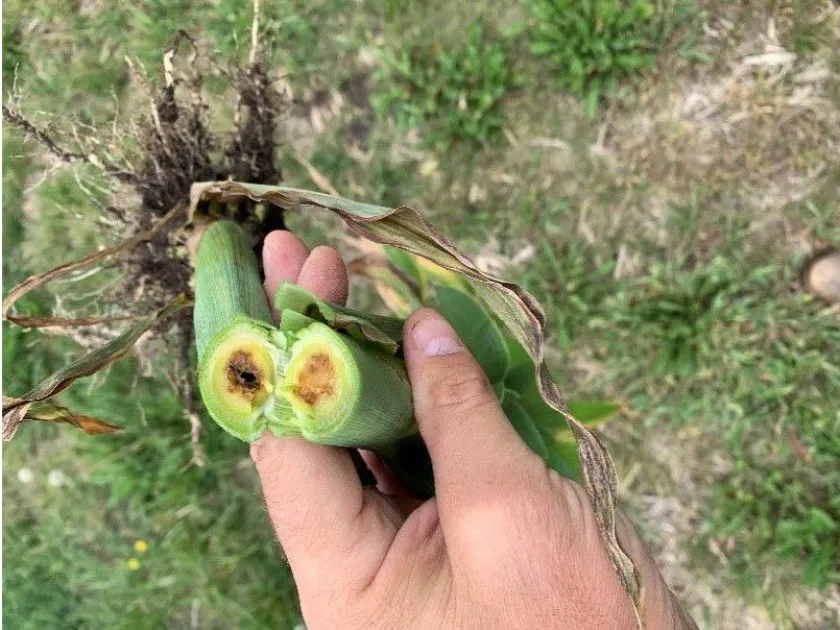
Vascular tissues in the stem exhibit dark discoloration. When a freshly cut stem is squeezed, a yellow bacterial ooze may emerge from the vascular bundles.
Infected ears often show stunted development, with kernels that are poorly filled or missing entirely, leading to significant yield losses in commercial corn production.
Pathogen
Stewart's wilt is caused by the bacterium Pantoea stewartii (formerly Erwinia stewartii). It is a vascular pathogen that colonizes the xylem of corn plants.
The bacterium produces extracellular polysaccharides that physically obstruct the movement of water and nutrients, leading to the characteristic wilt symptoms observed in infected plants.
The primary vector for the pathogen is the corn flea beetle (Chaetocnema pulicaria). The bacteria overwinter within the bodies of these beetles, ensuring survival during cold periods.
The pathogen can also be transmitted via infected seeds. While this is less common than insect transmission, it is the primary way the disease spreads across large geographic areas.
Genetic diversity among strains of Pantoea stewartii contributes to varying levels of virulence, making some corn hybrids more susceptible than others depending on the environment.
Conditions for development
The incidence of Stewart's wilt is strongly correlated with winter temperatures. Mild winters allow for the survival of larger flea beetle populations.
Warm spring and summer temperatures, typically ranging from 25 to 30 degrees Celsius, favor rapid bacterial multiplication and systemic movement within the plant tissues.
High humidity and rainfall promote the feeding activity of flea beetles, which create entry points for the bacteria to enter the leaf tissues.
Susceptibility is highest in young corn plants. Crops planted later in the season are often less affected, as the beetle population peaks earlier in the year.
Dense canopies and high nitrogen fertilization can sometimes exacerbate the disease by creating a more favorable microclimate for both the vector and the pathogen.
Why it matters
Stewart's wilt is a major economic threat, especially to sweet corn and susceptible field corn hybrids. Yield losses can reach 50% or more under severe outbreaks.
Seedling blight causes significant stand thinning, often forcing farmers to replant their fields, which incurs additional costs and reduces potential yield.
In mature plants, the disease impairs grain filling, resulting in light, shriveled kernels and reduced test weight, affecting the overall quality of the harvest.
The presence of the disease in a field can lead to quarantine regulations, limiting the movement and export of seed corn to non-infested areas.
Infected plants are also more susceptible to stalk rot diseases, which can weaken the stalks and cause lodging before harvest, further complicating mechanical collection.
Protection
The most effective strategy for managing Stewart's wilt is the use of genetically resistant corn hybrids, which offer the best protection against the pathogen.
Seed treatment with systemic insecticides can provide a period of protection for emerging seedlings, reducing the risk of early transmission by flea beetles.
Cultural practices, such as choosing appropriate planting dates and managing weed hosts in and around fields, help to disrupt the life cycle of the flea beetle vector.
Monitoring the local population of corn flea beetles in early spring can help farmers make informed decisions about the need for protective foliar insecticide applications.
- Use of resistant corn hybrids.
- Systemic seed treatments for early-season protection.
- Weed management to reduce beetle habitat.
- Regular scouting for symptoms in the seedling stage.
- Compliance with regional phytosanitary guidelines.
Content graph
Connections · Stewart's wilt
Most often together:
Marketplace
Products · 3

Community
Discussion
No discussions yet — be the first.