
Columbia lance nematode
Hoplolaimus columbus
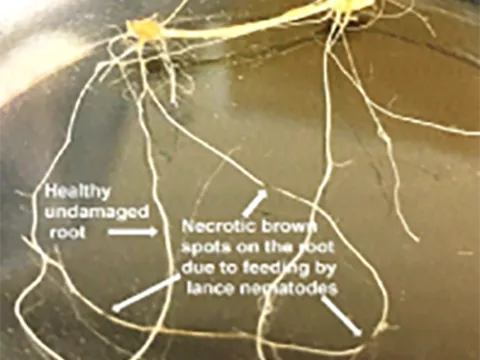
The primary symptom of infestation is significant stunting of plant growth and compromised root system development. Roots appear discolored with necrotic lesions and visible tissue damage.
What the section contains
Columbia lance nematode
Above-ground, heavily infested plants exhibit severe chlorosis, resembling nutrient deficiency, and a noticeable delay in general vegetation development throughout the growing season.
A key characteristic is the patchy distribution of symptoms across the field, leading to visible areas of underdeveloped, stunted plants compared to healthy sections.
Under field conditions, distinguishing nematode damage from general nutrient stress is difficult, requiring laboratory analysis of soil and root samples for confirmation.
In cotton, severe infestations result in premature fruit shedding and a marked reduction in the number of cotton bolls produced, directly impacting overall yield.
The pathogen is Hoplolaimus columbus, a semi-endoparasitic nematode belonging to the lance nematode group.
This microscopic worm utilizes a strong, spear-like stylet to pierce root tissues and feed on cellular contents, partially or entirely penetrating the root cortex.
Unlike root-knot nematodes, this species does not induce large galls but severely damages the root's vascular system, hindering water and nutrient uptake.
It is an obligate parasite that completes its life cycle within the rhizosphere and the root tissues of its host plant.
The nematode population can survive in the soil for extended periods even in the absence of susceptible crops, making effective eradication extremely difficult.
Optimal conditions for reproduction and active parasitism occur in sandy or loamy soils that provide excellent aeration and moderate texture.
Warm soil temperatures during the peak growing season of cotton facilitate a rapid nematode life cycle and intense infestation of the root system.
Soil moisture levels are critical; while the nematode thrives in various conditions, extreme drought or waterlogged soil can exacerbate plant stress, making them more vulnerable to infection.
Spread across fields occurs passively through the movement of infested soil via agricultural machinery, workers' footwear, or runoff from rain and irrigation systems.
Because the natural migration of these nematodes through the soil is slow, localized infestations tend to expand gradually over several years if host crops are continuously cultivated.
The primary harm caused by Hoplolaimus columbus is the destruction of root tissue, which severely limits the plant's ability to maintain hydration and nutrient uptake.
Root damage frequently facilitates secondary infections, including Fusarium wilt, which further exacerbates the decline of cotton stands.
Economic impact is realized through significant reductions in both the quantity and quality of harvested cotton lint due to diminished boll weight and count.
Infested plants become increasingly sensitive to abiotic stresses, such as high summer heat or inadequate nitrogen availability, leading to reduced overall vigor.
Chronic parasitism leads to the degradation of the root system, which can result in plant death under harsh environmental or climatic pressures.
The foundation of management is a robust crop rotation strategy that avoids planting susceptible hosts, such as cotton or soybeans, in infested fields for several years.
Utilizing nematode-resistant cultivars remains the most effective and environmentally sustainable method for limiting the economic impact of this pest.
Application of certified nematicides prior to or at planting can suppress population densities, although strict adherence to safety and efficacy guidelines is required.
Sanitation is a vital control measure; thoroughly cleaning agricultural equipment when moving from infested to clean fields is essential to prevent the spread of cysts.
Maintaining optimal soil fertility and plant nutrition helps crops mitigate the damage caused by nematodes, allowing them to better sustain productivity despite infestation.