
Gladiolus rust
Uromyces transversalis
The causative agent of the disease is the pathogenic fungus Uromyces transversalis. It is an obligate parasite, belonging to the rust fungi group, which specifically targets gladiolus species.
What the section contains
Gladiolus rust
The life cycle involves the production of urediniospores, which facilitate rapid spread through wind currents, rain splashes, and gardening equipment handling.
The pathogen invades the host's epidermal tissues, establishing a mycelial network that systematically extracts nutrients from the plant's leaves.
Due to its high host specificity, the fungus focuses its entire destructive energy on the gladiolus plant, making it a critical threat in both garden and commercial setups.
Survival occurs primarily through overwintering on plant debris or infected corms, which emphasizes the necessity for thorough sanitation in crop management.
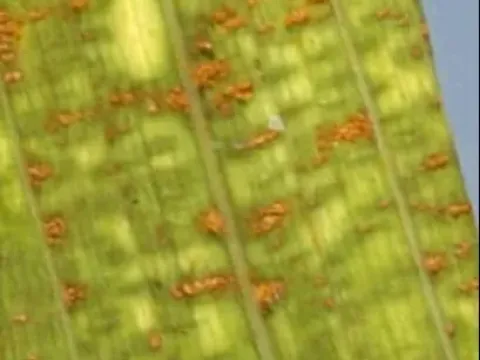
Initial symptoms manifest as small, chlorotic yellow spots on the leaves, which progressively expand and turn into brownish lesions.
The hallmark sign of Uromyces transversalis is the formation of elongated, transverse pustules arranged parallel to the leaf veins, giving the disease its characteristic appearance.
As the pustules mature, the leaf epidermis ruptures, releasing a mass of rusty-brown spores, which significantly detracts from the plant's decorative value.
Severe infections lead to rapid wilting and necrosis of the leaf blades, starting from the lower foliage and moving steadily upward.
In advanced cases, leaves become deformed and dry out, preventing the plant from photosynthesizing efficiently and compromising the health of the entire plant.
Development of the fungus is heavily favored by high humidity (80-90%) and the presence of moisture on leaf surfaces, which is essential for spore germination.
The optimal temperature range for the rapid proliferation of the pathogen lies between +18 and +24 degrees Celsius.
Overcrowded plantings with poor air circulation create an ideal microclimate for the accumulation and spread of fungal spores between adjacent plants.
Overhead irrigation, especially during evening hours, keeps the foliage wet for extended periods, significantly increasing the probability of a rust outbreak.
Periods of prolonged rain and cloudy weather act as primary catalysts for the epidemic spread of the disease in outdoor garden beds.
The disease severely disrupts the plant's photosynthetic capacity, causing stunted growth and poor flower quality.
Heavy infection leads to the deformation of flower spikes, rendering them unsalable and unsuitable for floral arrangements.
The lack of nutrient reserves in the corms means they often fail to mature properly, resulting in poor storage performance and low viability in the following season.
Chronic infestation weakens the plant significantly, making it highly vulnerable to secondary pathogens such as bacterial soft rot and various soil-borne diseases.
Total loss of aesthetic value in flower beds is common when left untreated, leading to long-term site contamination and financial loss for growers.
Prevention starts with sourcing disease-free corms and implementing a strict crop rotation schedule to break the pathogen's life cycle in the soil.
Sanitation is crucial; all infected plant debris must be collected and destroyed immediately after the growing season to prevent spore buildup.
Chemical intervention involving fungicides (copper-based or systemic triazoles) should be initiated at the first sign of pustule appearance to prevent escalation.
- Improved plant spacing for better airflow.
- Drip irrigation to keep leaves dry.
- Regular fungicide application protocols.
- Use of plant stimulants to boost innate immunity.
Constant monitoring of foliage, particularly after rainy weather, allows for the early detection and removal of infected plants to protect the rest of the crop.