
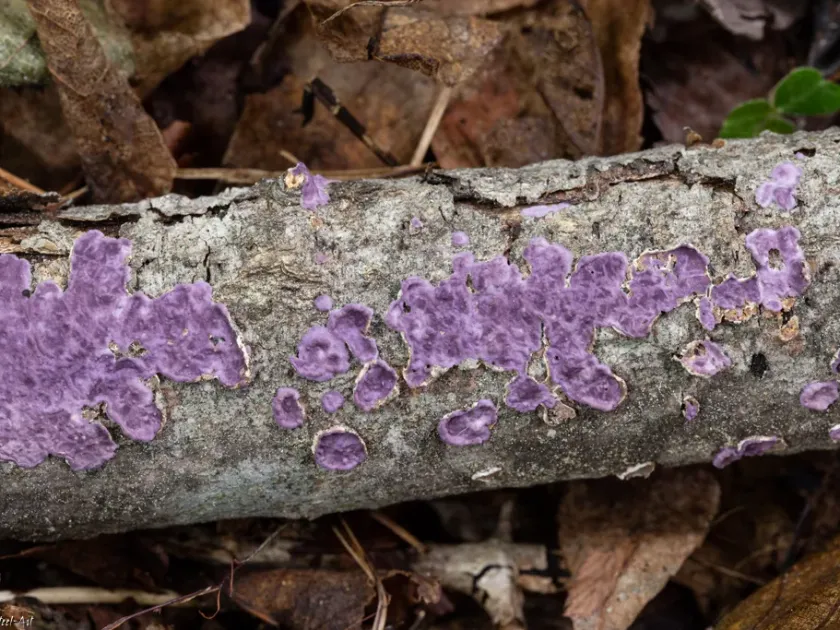
Description
Symptoms
The most distinctive symptom is a metallic, silvery, or pearly sheen on the leaves. This occurs because the fungal toxins cause the leaf epidermis to detach from the underlying tissue.
The trapped air beneath the leaf surface reflects light, creating the "silver leaf" effect. Over time, affected leaves may become brittle and drop prematurely.
Internal wood infection is characterized by a dark brown or reddish discoloration of the heartwood or sapwood, which can be seen if an infected branch is cut open.
The overall appearance of the tree becomes sickly; canopy growth may be stunted, and branches may gradually wither and die back as the wood decays.
Symptoms may initially be localized to a single branch, but if untreated, the fungus can progress to the main trunk, eventually killing the entire tree.
Pathogen
The causal agent of this disease is the fungus Chondrostereum purpureum, a basidiomycete responsible for wood decay. It affects a wide range of broad-leaved trees and shrubs in temperate climates.
The fungus enters the host plant through wounds such as pruning cuts, frost cracks, or mechanical damage to the bark. Once inside, the fungus colonizes the xylem tissue.
Chondrostereum purpureum produces toxins that travel through the tree's vascular system, disrupting normal cell function and causing the characteristic silvering of the leaves.
Fungal fruiting bodies, which appear as purple or violet crusts on dead wood, release basidiospores that are spread by wind and rain, potentially infecting neighboring trees.
Commonly affected crops include apple, sour cherry, apricot, cherry, almond, peach, pear, and raspberry.
Conditions for development
High humidity and mild temperatures are ideal for the germination of fungal spores. Infections are particularly common during cool, wet spring weather.
Poor pruning practices, such as working in rainy conditions or leaving large, untreated wounds on the branches, greatly increase the risk of fungal entry.
Trees weakened by environmental stress, frost damage, or improper nutrition are significantly more susceptible to successful colonization by Chondrostereum purpureum.
Lack of proper aeration in the orchard can lead to prolonged moisture on the bark, facilitating the infection process through small, unnoticed cracks in the tree structure.
Poorly maintained orchards with large amounts of dead or rotting wood serve as reservoirs for the fungus, increasing the spore pressure on healthy trees.
Why it matters
The primary damage is systemic wood decay, which disrupts the tree’s ability to transport water and nutrients, leading to a decline in vigor and structural integrity.
Fruit production is negatively impacted; yield is reduced, and fruit quality often declines significantly, making the harvest economically unviable.
The disease reduces the tree's lifespan, as the internal rotting of the trunk and branches makes them prone to breakage and collapse under heavy loads.
Treating established infections is difficult because the fungus resides deep within the wood, making superficial chemical sprays largely ineffective against existing internal mycelium.
The presence of the disease in a commercial orchard can lead to significant financial loss, as infected trees often require removal to prevent the spread to the rest of the crop.
Protection
Sanitation is the most effective control measure. Pruning infected branches at least 15-20 cm below the visible discoloration is necessary to remove the fungal mycelium.
Disinfecting pruning tools with alcohol or a strong disinfectant between every cut is essential to prevent the mechanical transmission of the fungus from infected to healthy trees.
All pruning wounds should be sealed immediately with a protective pruning paste or wound dressing to prevent spores from entering the fresh wood.
Orchard hygiene, including the removal and destruction of dead wood and stumps, is crucial to reduce the population of fungal spores in the environment.
Maintaining tree health through proper fertilization, adequate watering, and protection from pests helps ensure that trees can better resist the initial establishment of the pathogen.
Pathogens and affected parts
Affects crops · 9
Discussion
No discussions yet — be the first.