
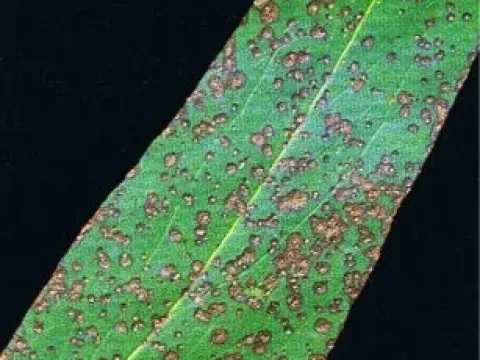
Eucalyptus leaf spot
Pseudocercospora eucalyptorum
The disease is caused by the fungus Pseudocercospora eucalyptorum, a significant pathogen known to affect various Eucalyptus species globally.
What the section contains
Eucalyptus leaf spot
This fungus produces spores, known as conidia, which are primarily disseminated by wind and water splashes from infected leaves to healthy foliage.
The mycelium of the pathogen colonizes the leaf tissues, eventually erupting through the stomata to produce fruiting bodies and propagate the infection cycle.
It is capable of surviving for extended periods in fallen leaf litter, which acts as a primary inoculum source for the next growing season.
Genetic diversity within the species allows Pseudocercospora eucalyptorum to adapt and infect diverse Eucalyptus cultivars, making it a persistent challenge.
Symptoms initially appear as small, irregular leaf spots that can be brown, reddish-purple, or gray depending on the host species and disease stage.
On the underside of the leaves, the spots often show a characteristic dark, velvety growth, which corresponds to the conidial mass of the fungus.
As the infection progresses, the spots expand and may coalesce, leading to extensive tissue necrosis and eventual leaf drop (defoliation).
Younger leaves and shoots are often the most susceptible, showing signs of distortion, curling, and a general lack of vigor.
Severe infestations can lead to early shedding of leaves, which significantly impacts the canopy density and overall health of the tree.
The fungus thrives in warm, humid conditions, with optimal development often occurring when temperatures range between 20°C and 25°C.
High relative humidity and frequent rainfall are critical factors that promote the germination of conidia and the establishment of new infections.
Dense plantations with poor air circulation create a microclimate that prevents foliage from drying out, facilitating the rapid spread of the fungus.
Overhead irrigation systems can inadvertently create the wet conditions necessary for the pathogen to thrive, especially in nursery settings.
Stressed trees, whether due to nutrient deficiency or drought, often show higher susceptibility to initial infection by the pathogen.
The primary impact of Pseudocercospora eucalyptorum is the reduction of total photosynthetic area due to premature defoliation.
Repeated loss of leaves leads to reduced tree vigor, slower growth rates, and can result in significant losses in timber and biomass production.
In nursery environments, this disease can cause high mortality rates among young seedlings, leading to substantial economic loss for producers.
Trees weakened by the fungus become more susceptible to secondary pests and environmental stressors, potentially leading to tree death in severe cases.
As a quarantine-significant pathogen, its presence can restrict the international movement and sale of Eucalyptus plant material.
Effective management begins with strict sanitation practices, including the removal and destruction of fallen leaves and infected plant debris.
Applying appropriate fungicides, particularly copper-based or systemic products, during high-risk periods can help mitigate the spread of infection.
- Maintaining optimal tree spacing to ensure adequate air circulation.
- Using disease-resistant Eucalyptus species or clones in new plantings.
- Implementing regular monitoring and early detection protocols.
Avoiding overhead irrigation or watering early in the day so that leaves dry quickly can significantly reduce the risk of successful infection.
An integrated approach that combines biological control, proper silvicultural management, and chemical treatment is essential for long-term disease mitigation.