
Meconopsis downy mildew
Peronospora meconopsidis
The first visible symptom of downy mildew on Meconopsis is the appearance of chlorotic spots on the upper side of the leaf blade. These spots are often angular in shape as they are restricted by leaf veins.
What the section contains
Meconopsis downy mildew
On the underside of the leaf, a characteristic fuzzy growth forms in the affected areas, ranging in color from grayish to violet-brown. This is the sporulation of the fungus, which facilitates the further spread of the pathogen.
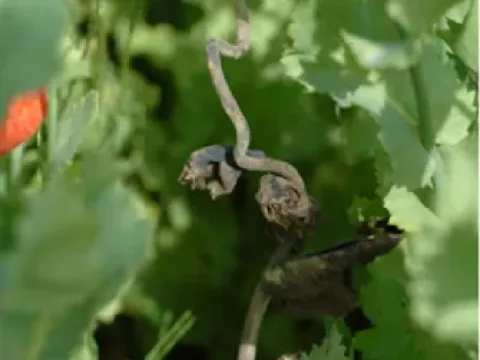
As the disease progresses, the spots gradually darken, turning brown or necrotic. The leaves begin to yellow, curl, and dry out prematurely.
In cases of severe infection, deformation of stems and flower stalks is observed. The disease can lead to stunted growth of the entire plant and premature loss of ornamental value.
In neglected cases, necrosis can spread to all above-ground parts of the plant, resulting in its total death within a single growing season.
The causal agent of this disease is the specialized oomycete Peronospora meconopsidis. This microorganism belongs to the class of oomycetes, known as water molds or pseudo-fungi, and is an obligate parasite.
The pathogen's life cycle includes asexual reproduction through the formation of sporangia on specialized hyphae called sporangiophores. These are easily dispersed by wind and water droplets to healthy plant tissues.
Primary infection most often survives as oospores in infested plant debris or in the soil. Oospores have high survival rates and can endure unfavorable winter conditions.
The pathogen is highly specialized and affects primarily members of the Meconopsis genus, causing epiphytotics in specialized nurseries and gardens housing these plant collections.
The pathogen's biology is closely linked to water availability: the presence of free moisture on leaf surfaces is a critical factor for spore germination and infection of the host tissue.
The development of downy mildew is favored by high relative humidity (above 80–90%), which often occurs during periods of prolonged rain or foggy nights.
Optimal temperature conditions for active mycelial development and sporulation range between +15 and +20 degrees Celsius.
Crowded plantings of Meconopsis, which prevent proper air circulation and quick drying of dew on leaves, significantly increase the risk of mass infection.
Using overhead irrigation, where water hits the leaves directly, creates ideal conditions for spreading pathogen spores from infected plants to healthy ones.
Poor ventilation in greenhouse or covered environments also acts as a critical factor that promotes disease outbreaks.
The main damage consists of a sharp decline in the plant's ornamental quality, making it unsuitable for landscape design and garden collections.
As a result of the infection, the photosynthetic leaf surface is significantly reduced, leading to plant exhaustion and the absence of full flowering in the current or future season.
Severe downy mildew infection reduces the general winter hardiness of Meconopsis, often causing weakened specimens to freeze during the winter period.
The disease can lead to the total loss of rare Meconopsis species if prompt measures are not taken to localize the source of infection.
Economic damage is reflected in the need for replacement of lost plant material and the costs associated with expensive fungicide treatments for the entire collection.
Prevention begins with following correct horticultural practices: ensuring optimal spacing between plants for free air movement and maintaining weed-free areas.
It is crucial to perform timely sanitary pruning: removing and immediately burning all affected leaves and stems to prevent secondary infection.
For irrigation, it is recommended to use drip systems or base watering to exclude wetting of the leaf blade and prevent the formation of surface water films.
At the first sign of the disease, the use of systemic fungicides effective against oomycetes (products based on metalaxyl, fosetyl-aluminum, or copper-based agents) is necessary.
- Regular inspection of plants during morning hours.
- Autumn cleanup and deep incorporation of plant debris.
- Selection of well-ventilated planting sites.
- Use of high-quality, disease-free planting stock.