
Nidularia
Nidularia
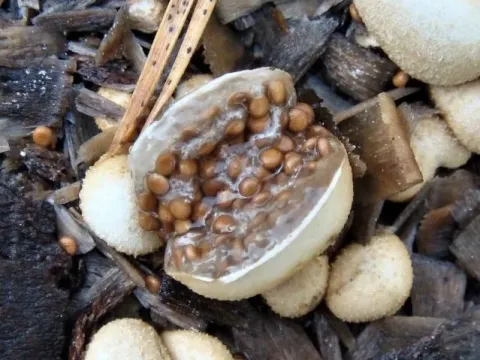
Nidularia is a genus of fungi within the Nidulariaceae family. Known for their unique bird's-nest-like appearance, these fungi primarily function as saprotrophs, decomposing organic matter such as wood debris and leaf litter.
What the section contains
Nidularia
The fungus produces small, cup-shaped fruiting bodies containing egg-like sporangioles. These structures are designed to release spores when raindrops strike the cup, scattering them across the immediate environment.
While Nidularia does not directly attack living plant tissues, its mycelial network actively colonizes decaying vegetable matter in the topsoil. This makes them a common sight in gardens or agricultural fields with high organic residue content.
The life cycle of the fungus is dictated by its need for moisture and a suitable substrate. As it consumes carbon-rich materials, it participates in the decomposition cycle, essentially competing for space with other soil microorganisms.
From an agronomical standpoint, Nidularia is considered an indicator species for soils that are rich in undecomposed organic matter and maintain high moisture levels throughout the growing season.
Nidularia thrives in environments with high humidity and abundant fresh organic waste. Soils that have recently been treated with non-composted mulch, wood chips, or unrefined manure are prime targets for colonization.
The fungus prefers shaded, cool, and damp areas. Poorly drained fields or greenhouse substrates that remain waterlogged for long periods provide the ideal conditions for the development of its fruiting bodies.
The dispersal of spores is highly dependent on mechanical force, typically provided by heavy rain. Consequently, the fungus tends to spread rapidly during wet spring and autumn seasons.
Soil compaction is another factor that promotes the presence of Nidularia, as it reduces aeration and favors anaerobic or semi-anaerobic processes near the surface where the fungus establishes itself.
Temperature also plays a role, with moderate temperatures facilitating the metabolic activity of the mycelium. Extreme heat or prolonged drought can effectively halt the fungus's visible development.
The primary concern regarding Nidularia is the potential for nitrogen immobilization in the soil. As the fungus breaks down carbon-heavy residues, it consumes available soil nitrogen, potentially depriving nearby crop plants.
In addition, the accumulation of fungal mycelium in the surface layer can create a physical barrier. This may hinder air circulation and water infiltration, impacting the root health of sensitive young seedlings.
While not a direct pathogen, its presence in dense concentrations can signify poor soil sanitation. This environment may inadvertently support other, more harmful soil-borne pathogens that thrive in similar conditions.
For ornamental or nursery crops, the aesthetic appearance of bird's-nest fungi can be problematic, causing concern among producers about the overall quality and hygiene of the growing medium.
Growth inhibition in younger crops is sometimes reported due to the release of metabolic byproducts during the decomposition process, which can create a temporary toxic environment for fragile root systems.
Effective management begins with proper site sanitation. Ensuring that all organic debris is either fully composted before incorporation into the soil or properly managed prevents the fungus from finding a food source.
Regular cultivation and tilling of the soil help break up the mycelial mats and improve overall aeration. This practice encourages the faster breakdown of residues and dries out the topsoil surface.
Biological control using Trichoderma species has shown promise in suppressing the growth of saprotrophic fungi. These beneficial fungi outcompete Nidularia for resources within the soil profile.
In greenhouses, maintaining appropriate moisture levels and providing adequate ventilation is crucial. If the infestation is severe, replacing the growing substrate is often the most effective remedy.
- Use well-rotted compost only.
- Improve soil drainage systems.
- Practice regular crop rotation.
- Monitor moisture levels in high-organic soil plots.