
Nidularia deformis
Nidularia deformis
Description
Symptoms
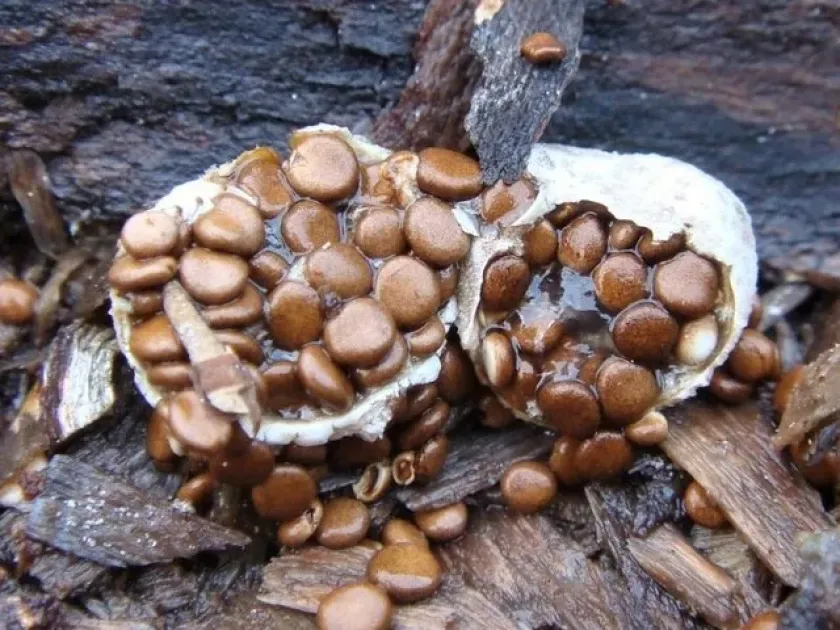
The most prominent sign is the presence of small, nest-like structures on decaying wood surfaces. These structures are often deformed or irregular, giving the species its specific name.
The fruit bodies are usually brown or tan, allowing them to blend into the moist, decaying forest substrate where they grow in clusters.
During the maturation phase, the peridioles inside the cups are exposed. These spore-filled bodies are easily detached by raindrops, facilitating the spread of the fungus.
Wood colonized by this fungus exhibits increased porosity and brittleness. As the mycelium penetrates deeper, the structural integrity of the decaying material is significantly reduced.
Clusters of these fungi can appear on the underside of logs or within damp, shaded forest patches, especially following periods of high humidity and rainfall.
Pathogen
The fungus Nidularia deformis belongs to the Nidulariaceae family, often referred to as bird's nest fungi. It is a saprotrophic organism that plays a significant role in the decomposition of organic matter.
This fungus produces small, cup-shaped or barrel-shaped fruit bodies that lack a distinct lid (epiphragm). Inside these structures, peridioles containing spores are developed and protected.
Unlike parasitic species that attack healthy plant tissues, this fungus targets decaying wood. It breaks down complex organic polymers such as lignin and cellulose using specialized enzymes.
The life cycle of the fungus is strictly dependent on the availability of organic substrates in forest ecosystems. It typically thrives on debris, fallen branches, and rotting bark.
Morphologically, Nidularia deformis is distinct due to its irregular fruit body shape and the way its spores are dispersed by splashing water, which is a classic adaptation for this genus.
Conditions for development
High moisture levels are the most critical factor for the development of Nidularia deformis. It requires consistently damp environments to trigger fruit body formation.
Optimal growth occurs in shaded, poorly ventilated areas where moisture is trapped within forest litter or stored wood piles. These microclimates are ideal for the fungus.
Moderate temperatures during the growing season support active mycelial growth and the subsequent development of reproductive structures across the substrate surface.
The presence of large amounts of decaying organic matter, such as branches and bark from logging operations, creates an ideal reservoir for the fungus to establish and proliferate.
Stagnant air and poor circulation in dense forest stands or wood storage areas exacerbate the conditions necessary for the fungus to colonize new materials efficiently.
Why it matters
While Nidularia deformis is generally considered a beneficial decomposer, it can cause economic damage if it colonizes stored lumber or commercial wood products.
The primary harm is the degradation of wood quality, rendering it less suitable for construction or industrial use due to the structural breakdown of wood fibers.
In forest nurseries, the fungus may compete with young seedlings by colonizing organic mulch or soil amendments, potentially altering the nutrient profile of the growth medium.
The presence of large fungal colonies can increase local moisture retention, creating a favorable environment for secondary pests that may directly attack young trees.
Furthermore, if left unchecked, the accumulation of decaying debris can pose a fire hazard in addition to facilitating the persistence of various wood-decaying fungi.
Protection
Effective management focuses on sanitation practices and environmental control to minimize the conditions that favor fungal colonization.
- Regular removal of logging debris and forest waste from productive areas.
- Ensuring proper aeration and stacking of lumber to keep it dry and prevent fungal rot.
- Controlling irrigation and moisture levels in nurseries to maintain an unfavorable environment for fungi.
- Using appropriate fungicide treatments for valuable timber exposed to humid conditions.
- Monitoring forest stands for heavy infestations to implement timely sanitary logging.
Discussion
No discussions yet — be the first.