
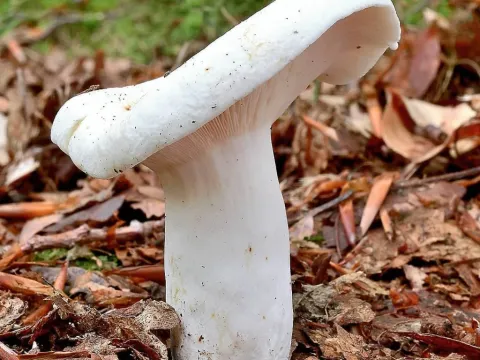
Peppery milk-cap
Lactarius piperatus
The peppery milk-cap (Lactarius piperatus) is a basidiomycete fungus and is strictly not a plant pathogen.
What the section contains
Peppery milk-cap
It exists in a beneficial symbiotic relationship with the roots of various tree species, forming a structure known as ectomycorrhiza.
In this association, the fungal hyphae envelop the plant roots, creating a bridge that facilitates the uptake of water and nutrients from the surrounding substrate.
This symbiotic connection is essential for the growth and vitality of many forest and garden trees, particularly in nutrient-poor environments.
Therefore, it should not be categorized as a disease-causing agent in any agronomic context or phytopathological manual.
The occurrence of Lactarius piperatus fruiting bodies around trees is not a symptom of infection or tissue damage.
Unlike necrotic diseases, the plant remains healthy, with normal leaf development and no signs of wilting or chlorosis.
Symptoms such as lesions, discoloration of foliage, or root decay are entirely absent when this fungus is present in the vicinity.
Observation of white mushrooms on the soil surface indicates a mature and healthy soil ecosystem supported by mycorrhizal connections.
The plant demonstrates stable growth parameters and remains unaffected by the fungal activity around its root zone.
The fungus thrives in moist, well-drained soils, typically in temperate regions under deciduous trees like oak or beech.
Development is favored by high humidity levels and a thick layer of organic mulch or forest leaf litter.
Optimal soil temperature ranges for fruiting occur during late summer and early autumn when rainfall is sufficient.
The presence of Lactarius piperatus is a positive indicator of soil biological activity and organic content.
Environmental stressors such as drought or chemical pollution can inhibit the expansion of the fungal mycelium.
The peppery milk-cap causes no harm to agricultural or silvicultural crops; it is non-parasitic by nature.
There are no recorded economic losses associated with this fungus, as it supports rather than degrades plant root health.
Confusing this symbiotic fungus with plant pathogens can lead to the unnecessary and harmful application of fungicides.
By disrupting these natural mycorrhizal associations, cultivators may inadvertently reduce the long-term vigor of their plants.
It poses no threat to timber quality or crop productivity, remaining a harmless and beneficial component of the ecosystem.
No control measures are necessary for Lactarius piperatus since it is not a pest or a cause of crop disease.
Management should focus on maintaining healthy soil structure, which inherently supports beneficial symbiotic fungal networks.
If mushroom visibility is undesirable for aesthetic reasons, removing excess organic leaf litter is the only recommended step.
Avoid heavy usage of broad-spectrum fungicides that could damage the vital soil microbiota necessary for plant health.
- Monitor soil pH levels for optimal plant-fungi balance.
- Maintain adequate soil aeration.
- Protect natural organic layers to support beneficial mycorrhiza.