
Perenniporia
Perenniporia
Description
Symptoms
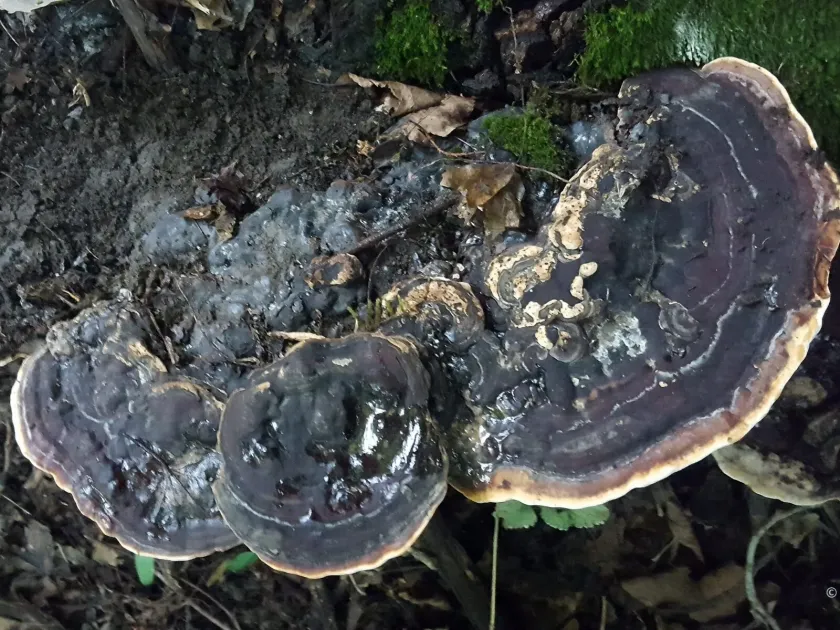
The primary symptom of an infection is the emergence of perennial fruiting bodies on trunks, stumps, or major scaffold branches, often appearing as semicircular shelves or flat crusts.
Internally, the presence of white rot causes the wood to lose density, becoming fibrous, soft, and noticeably lighter or yellowish in color, often leading to hollow cavities.
On the bark surface, affected areas may show discoloration, deep longitudinal cracking, and abnormal exudation of resin or sap, which are clear indicators of extensive internal decay.
Trees infested by Perenniporia exhibit signs of declining health, such as premature leaf yellowing, dieback of the crown, and a significant reduction in annual shoot growth.
As decay progresses, the structural integrity of the wood fails, making the tree brittle and susceptible to windthrow or the sudden snapping of large limbs under their own weight.
Pathogen
Perenniporia is a genus of wood-decaying fungi within the division Basidiomycota. These fungi are typically characterized as perennial polypores capable of surviving on wood for many years.
This pathogen specializes in degrading lignin and cellulose, resulting in white rot. The fungal mycelium penetrates deep into the tree structure, gradually compromising its internal integrity and mechanical strength.
Biologically, it behaves as both a saprotroph on dead wood and a parasite on weakened living organisms, ensuring a consistent nutrient supply throughout its long life cycle.
Reproduction occurs through spores released into the environment, which are dispersed by wind currents. Upon landing on fresh wounds or bark injuries, these spores germinate to initiate a new infection.
A distinctive trait of the genus is the formation of dense, leathery, or corky fruiting bodies that often exhibit perennial growth layers, indicating the age and stability of the fungal colony.
Conditions for development
The development of this fungus is highly dependent on high moisture levels, which are critical for spore germination and the expansion of mycelium within the host tissues.
Mechanical injuries, including frost cracks, sunscald, improper pruning cuts, or damage caused by machinery, create ideal entry points for the pathogen to colonize the tree.
The fungus thrives in shaded, poorly ventilated areas where the microclimate supports consistent humidity, allowing the mycelium to spread even under varying external conditions.
Temperatures ranging from +15°C to +25°C are considered optimal for rapid fungal growth, though the species demonstrates significant resilience across various climatic ranges.
Weakened trees, suffering from nutrient deficiencies, drought stress, or other pathogens, are significantly more susceptible to successful colonization by Perenniporia.
Why it matters
Perenniporia causes substantial economic losses in forestry and orchard management by converting valuable timber into decayed material, rendering it entirely unusable.
For fruit orchards, the presence of the fungus leads to a gradual decline in yield, eventual tree death, and the costly requirement of removing and replacing established plants.
Infested trees pose severe safety risks, as internal decay can lead to unexpected structural failure, threatening nearby buildings, utility lines, and human safety.
The fungus significantly increases the infection pressure in an orchard, as spores continuously spread to healthy trees, establishing new foci of long-term infection.
Because the disease often progresses internally, trees frequently reach a terminal state before the fruiting bodies become visible, making early detection and intervention difficult.
Protection
Effective management requires strict adherence to proper pruning practices, ensuring cuts are clean and immediately treated with protective wound paint or fungicide.
Sanitation is critical; all infected trees, stumps, and woody debris must be promptly removed and destroyed, preferably by burning, to eliminate potential spore sources.
Whitewashing trunks with lime-based solutions containing fungicidal additives helps protect the bark from cracks and sunscald, preventing initial spore entry.
Maintaining high horticultural standards, including balanced fertilization and proper irrigation, enhances the tree's natural resistance, making it less vulnerable to attack.
- Regular sterilization of pruning tools between uses.
- Filling cavities with specialized sealants after thorough cleaning.
- Consistent monitoring of bark and trunk condition for early symptoms.
- Avoiding unnecessary damage during cultivation and harvesting.
Discussion
No discussions yet — be the first.