
Hexagonia
Hexagonia
Hexagonia is a genus of bracket fungi (polypores) known for causing white rot in woody plants. These fungi are saprotrophic or parasitic, primarily targeting the lignin and cellulose of their hosts.
What the section contains
Hexagonia
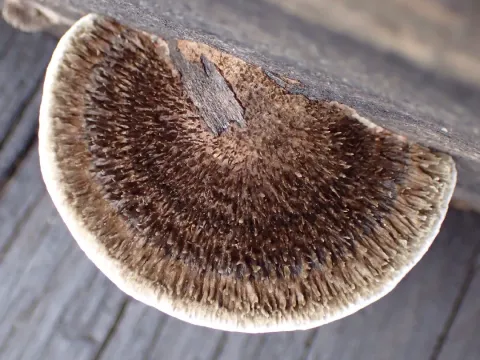
The pathogen is characterized by its distinctively hexagonal or honeycomb-like pores found on the underside of its fruiting bodies, which makes it easily identifiable by specialists.
Unlike some other wood-rotting fungi, Hexagonia species can persist for years on the same host, steadily consuming the structural components of the tree's trunk.
The life cycle involves the release of airborne spores that germinate upon landing on suitable substrates, such as exposed heartwood or wounds on tree stems.
The fungal mycelium spreads systemically through the tree’s vascular system, eventually leading to the formation of visible, often perennial, fruiting bodies.
The presence of Hexagonia is typically indicated by the emergence of bracket-shaped fruiting bodies protruding from the trunk or main branches of affected trees.
A tell-tale sign of advanced infection is the alteration of wood texture; the wood becomes soft, fibrous, and develops a lighter, bleached appearance typical of white rot.
As the rot progresses, the bark above the infected areas often cracks and peels away, revealing the white, cottony mass of the mycelium underneath.
Symptoms in the canopy include thinning foliage, premature senescence, and the dieback of upper branches, indicating restricted water and nutrient flow.
Structural instability is a critical sign; heavily infected trees may snap under moderate winds due to the degradation of their internal support structures.
The development of the fungus is highly dependent on environmental humidity, which facilitates both the germination of spores and the growth of the fungal colony.
Wounds caused by frost, wind breakage, or animal activity serve as the primary entry points for the pathogen into the tree's internal structure.
High tree density and lack of ventilation create a microclimate that allows fungal spores to persist and spread more effectively within a stand.
Trees that are already under stress from drought or nutrient deficiency are significantly more susceptible to successful colonization by the fungus.
Inconsistent temperatures, leading to annual growth fluctuations, can create fissures in the bark, further increasing the risk of infection.
The primary economic impact of Hexagonia is the degradation of timber quality, rendering the affected wood useless for construction or furniture production.
Beyond timber loss, the fungus poses a significant threat to forest and park ecosystems by acting as a reservoir of inoculum for surrounding healthy trees.
The pathogen severely impairs the tree's physiological function, eventually leading to the death of the specimen once the structural integrity is compromised.
Infested trees become significant safety hazards in urban landscapes and managed parks, as they are prone to sudden, unexpected collapse.
The persistent nature of the fungus makes it difficult to eradicate once a site becomes heavily infested, requiring intensive long-term management.
Effective control starts with the immediate identification and removal of infected trees to eliminate the source of further spore dispersal.
Wound protection is essential; all pruning cuts or accidental damage should be sealed with appropriate fungicides or wound-healing sealants.
Maintaining high forest hygiene, including the removal of deadwood and stumps, is crucial to preventing the buildup of fungal populations.
Application of systemic fungicides may be used in high-value ornamental trees, though results depend heavily on the stage of infection.
- Regular tree health inspections.
- Sanitary removal of infected debris.
- Disinfection of pruning tools.
- Promotion of vigorous tree growth through proper irrigation.