
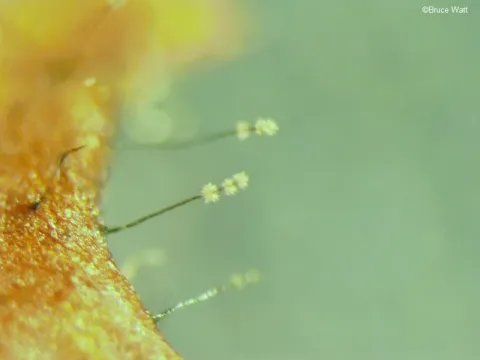
Gonatobotryum
Gonatobotryum
Gonatobotryum is a genus of imperfect fungi that acts as a plant pathogen. It is classified within the group of hyphomycetes, known for their specific method of asexual reproduction through conidia formation.
What the section contains
Gonatobotryum
The biology of the fungus involves the development of specialized conidiophores. These structures have characteristic swellings or nodes where conidia are arranged in whorls, a diagnostic feature used in mycological identification.
The fungus is capable of surviving on plant debris as a saprophyte. However, under suitable conditions, it readily shifts to a parasitic life cycle, attacking the living tissues of various host plants.
Once it infects a plant, the mycelium penetrates the epidermis and begins to spread throughout the tissues, utilizing enzymes to break down cell walls for nutrient acquisition and growth.
The dispersal of conidia occurs primarily through air currents and water splashes. High reproductive rates allow the fungus to spread rapidly throughout a crop field, especially when plants are grown in high-density environments.
The earliest signs of infection include the appearance of localized patches of mycelial growth on leaf surfaces or stems. This growth often presents as a grayish or brownish fuzzy coating.
As the infection progresses, affected tissues develop necrotic spots that may be irregular in shape. These spots are frequently surrounded by a chlorotic halo, indicating the plant's stress response to the invading pathogen.
Microscopic examination reveals the unique morphology of the fungus, specifically the node-like swellings on the conidiophores. This structure allows agronomists to distinguish Gonatobotryum from other fungal leaf spots.
In severe cases, leaves may curl, wither, and prematurely fall off. The disruption of physiological processes leads to overall stunting and a significant decrease in the plant's photosynthetic capability.
The presence of high humidity often causes the fungal sporulation to become visible to the naked eye, turning the necrotic lesions into velvety patches that produce millions of new spores.
High relative humidity is the most critical environmental factor for the development of the disease. Levels above 80 percent are ideal for the rapid germination of conidia and colonization of plant tissues.
The fungus thrives in moderate temperature ranges, typically between 18 and 25 degrees Celsius. Outside these ranges, its metabolic activity slows down, but it can persist in dormant states.
Poor ventilation, particularly in greenhouses or dense field plantings, creates stagnant air pockets with high moisture levels. These microclimates are perfect for the initiation and spread of Gonatobotryum.
Free moisture on leaf surfaces from rain, dew, or overhead irrigation is essential for infection. When plants remain wet for extended periods, the risk of a severe outbreak increases dramatically.
Plants that are physiologically weakened by nutritional deficiencies, soil compaction, or insect herbivory are significantly more susceptible to infection compared to healthy, well-nourished plants.
The primary damage is the reduction in healthy leaf area, which limits the plant's ability to produce energy through photosynthesis. This directly impacts overall biomass and yield potential.
If the infection reaches the flowers or developing fruits, it can lead to abscission (dropping) of reproductive structures, resulting in lower harvest quality and total yield loss.
The lesions caused by the fungus facilitate the entry of secondary pathogens, such as soft-rot bacteria. This synergistic effect can lead to rapid decay of plant tissues, even after the crop is harvested.
In nursery settings or seedling production, Gonatobotryum can cause damping-off or severe foliage necrosis, potentially killing the entire batch and causing significant financial loss.
Marketable quality is severely degraded due to the unsightly necrotic spots and potential deformation of the produce, rendering it unsuitable for sale in fresh markets.
Sanitation is the cornerstone of disease management. Removing and destroying all infected plant debris at the end of the season significantly reduces the primary inoculum for the following crop.
Improving air circulation through proper spacing and pruning helps lower the humidity around the foliage, making the environment less favorable for fungal development.
Fungicide applications, specifically those targeting hyphomycetes, can be effective if applied early in the disease cycle. It is recommended to rotate fungicides with different modes of action to prevent resistance.
Optimizing nutrition, specifically balancing potassium and phosphorus levels, can help improve the plant’s structural integrity and resistance to fungal penetration.
Regular monitoring of crops, especially during humid or rainy weather, allows for early detection. Targeted removal of initial infection foci can often contain the spread without needing widespread chemical intervention.