
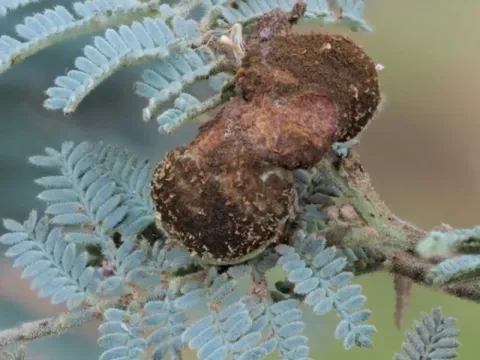
Endoraecium
Endoraecium
Endoraecium is a specific genus of fungi belonging to the group of rust pathogens within the order Pucciniales. These are obligate parasites that develop within the tissues of host plants, utilizing living cells for nutrition and forming specialized structures known as haustoria.
What the section contains
Endoraecium
The biological cycle of this pathogen is characterized by a high degree of specialization. Unlike some other rust fungi, Endoraecium features a reduced sporulation cycle, which significantly simplifies its reproduction under specific climatic conditions.
The fungus primarily affects flora associated with particular ecological niches. Its mycelium actively spreads within the intercellular spaces of the plant, gradually destroying tissue structure and disrupting physiological metabolic processes.
This pathogen is a specialized parasite, evolutionarily adapted to a narrow range of host plants. This makes it extremely dangerous in monoculture conditions, as the fungus quickly adapts to the specific environment of a field or garden plot.
The genetic stability of the pathogen allows it to survive in soil or plant debris for long periods. Studying the morphology of Endoraecium spores helps plant protection specialists identify the disease in its early stages.
The primary sign of infection is the formation of characteristic pustules on various plant organs, mainly on leaves and stems. A powdery mass of spores with a specific hue accumulates within these pustules.
As the disease progresses, the spots begin to merge, creating extensive necrotic zones. Tissues in the affected areas lose chlorophyll, turn yellow, and eventually dry out, leading to premature leaf fall and a reduction in the overall vitality of the crop.
The appearance of the plant changes drastically: stunted growth, deformation of young shoots, and curling of leaf blades are commonly observed. In severe cases, the complete wilting of individual vegetative organs is possible due to the disruption of the vascular system.
During visual inspection, one can notice that Endoraecium pustules are often grouped, concentrating around the primary infection sites. This creates a mosaic effect on the surface of healthy tissue.
Diagnosing the disease often requires microscopic analysis, as symptoms may be similar to those of other rust fungi. A distinctive sign is the specific localization and the method by which the spore mass ruptures the plant epidermis.
The development of the infection is favored by high air humidity, which is critical for the germination of urediniospores. Fogs, frequent dews, and prolonged rains create an ideal environment for the rapid spread of the fungus.
Temperature plays a key role in Endoraecium epiphytotics. Moderately warm weather combined with high humidity significantly accelerates the pathogen's life cycle and shortens the incubation period of the disease.
Dense plant stands create a favorable microclimate with poor ventilation. Under such conditions, spores are more easily transferred from one plant to another, causing mass infection of the entire area.
Violation of agricultural practices, such as the excessive application of nitrogen fertilizers, lowers the natural immunity of crops. This makes tissues more susceptible to the penetration of fungal hyphae and the further development of the parasite.
The presence of plant debris on the soil surface is a major factor in the accumulation of the inoculum. It is within these remains that the fungus overwinters or survives unfavorable dry periods until new seedlings appear.
The damage caused by Endoraecium involves a sharp reduction in the photosynthesizing leaf surface. This leads to a significant drop in yield and a deterioration in the quality of the harvested produce.
The plant spends massive resources fighting the infection, which depletes its vitality. As a result, the crop becomes less resistant to other stress factors, including drought, pests, and other pathogens.
When reproductive organs are affected, the fungus impairs seed or fruit formation, leading to a loss of marketability and reduced seed quality. In some cases, complete death of young plants can occur if infection happens early.
Economic losses include not only the loss of a portion of the yield but also the costs of implementing protection measures. Regular fungicide treatments increase production costs and require strict adherence to environmental regulations.
The spread of Endoraecium can lead to quarantine restrictions if the disease affects important agricultural crops. This creates additional barriers to the sale of agricultural products in domestic and international markets.
Prevention begins with crop rotation, which breaks the pathogen's development cycle. Returning susceptible crops to the same location is recommended only after 3-4 years.
The use of resistant varieties and hybrids is the most effective and environmentally friendly method of protection. Breeding for immunity to rust diseases is a priority in modern plant science.
Agricultural practices include thorough cleaning and subsequent destruction of plant debris, which is the primary source of infection. Deep plowing of the soil contributes to the rapid mineralization of plant fragments and the death of spores.
Chemical protection involves the use of systemic fungicides at the first sign of the disease. It is crucial to conduct treatments in a timely manner, preventing the mass spread of spores, and to rotate drugs to prevent the fungus from developing resistance.
To increase the overall resistance of plants, the application of potassium-phosphorus fertilizers in optimal dosages is recommended. It is also useful to thin out crops to ensure better aeration and reduce humidity in the root zone.