
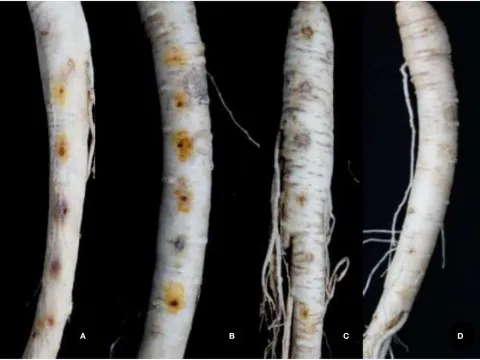
Cylindrocarpon wilt
Nectria radicicola
The causative agent of this disease is the imperfect fungus Nectria radicicola (formerly known as Cylindrocarpon destructans). This pathogen belongs to a group of soil-borne fungi characterized by high adaptability and the ability to survive in the substrate for extended periods.
What the section contains
Cylindrocarpon wilt
The fungus maintains a saprophytic or weakly parasitic lifestyle, attacking the root system and the root collar of plants. Conidial sporulation and microsclerotia play a critical role in the fungus's life cycle, ensuring the long-term survival of the infection within the soil.
The pathogen primarily enters plant tissues through micro-wounds, damage caused by pests, or natural openings in the root system. Once inside the vascular tissues, the fungus develops and releases toxins that disrupt the normal transport of water and nutrients.
The fungal mycelium can grow deep into root tissues, causing their gradual decay. The rate of infection spread depends directly on the host plant's immune status and the activity of beneficial microorganisms in the rhizosphere.
In natural conditions, the pathogen is extremely resistant to adverse environmental factors. It affects a wide range of crops, including forest trees, shrubs, and various agricultural species, such as the walnut tree.
One of the first signs of infestation is general suppression of the tree's growth: young shoots grow weakly, and leaves develop a chlorotic hue or yellow prematurely.
Upon examination of the root system, characteristic darkening and tissue necrosis are observed. Roots lose elasticity, become brittle, and cross-sections reveal browning of the vascular bundles, indicating damage to the plant's transport system.
Ulcers or necrotic patches often form near the root collar, which may eventually girdle the trunk. The bark cracks in affected areas, and a light-colored or pinkish fungal bloom may sometimes appear beneath it.
In advanced cases, the tree begins to wilt rapidly, a condition most noticeable during periods of peak temperature and water deficit. The plant loses turgor, and leaves wither while remaining attached to the branches for a long time.
An important diagnostic sign is the lack of lateral root development and the death of active suction rootlets. Without immediate intervention, the affected plant will perish within one or two growing seasons.
Disease development is closely linked to soil waterlogging and poor drainage. High humidity creates ideal conditions for spore germination and the active spread of mycelium through soil horizons.
Weakened plants due to nutrient deficiencies, particularly potassium and phosphorus, become more susceptible to the pathogen. Unfavorable climatic conditions, such as sharp temperature fluctuations, also facilitate disease progression.
Poor agricultural practices, specifically excessive soil compaction and lack of aeration, prevent normal root respiration and stimulate rotting processes. Under these conditions, the fungus becomes the dominant component of the microflora.
The use of low-quality nursery stock, already infected with fungal spores, is the primary factor in the rapid spread of the disease to new areas. Infected seedlings introduce the infection into healthy soil.
Root trauma during mechanical soil cultivation or careless digging in the garden opens a "gateway" for infection. Damaged tissues become easy targets for Nectria radicicola.
The main danger of this disease lies in its hidden progression during the initial stages. By the time symptoms become clearly visible, it is often extremely difficult or impossible to save the tree.
Cylindrocarpon wilt causes significant economic losses in walnut cultivation, as the infection leads to the death of entire blocks of young plantations and a decrease in the overall productivity of the orchard.
Damage to the root system disrupts physiological processes, lowering the plants' winter hardiness. Trees become less resistant to harsh winters and are more easily damaged by frost.
The presence of the pathogen in the soil limits the ability to use the land for susceptible crops for long periods. The high infection pressure in the orchard requires constant monitoring and costly disinfection measures.
Indirect damage manifests as a decline in nut quality, smaller nut size, and premature shedding. In the long term, this makes commercial walnut farming unprofitable due to the constant need to replace dead seedlings.
A fundamental method of control is strict adherence to phytosanitary standards. It is essential to use only healthy, certified planting material that has undergone prior testing for fungal infections.
When establishing an orchard, it is necessary to select plots with good drainage. Water stagnation is the pathogen's main ally; therefore, creating drainage ditches or drainage systems is a mandatory requirement for prevention.
Regular sanitary pruning and the destruction of affected plant parts are recommended. Tools used during maintenance must be disinfected with copper sulfate solutions or alcohol-based agents to prevent the transfer of spores.
An effective preventive measure involves applying balanced fertilizers that enhance the overall immunity of the plants. Particular attention should be paid to micronutrients that contribute to strengthening the cell walls of trees.
If initial signs of the disease are detected, broad-spectrum fungicides aimed at suppressing soil-borne infections should be used. Drenching the root zone with specialized preparations helps to halt the spread of the fungus.