
Chaetoceros
Chaetoceros
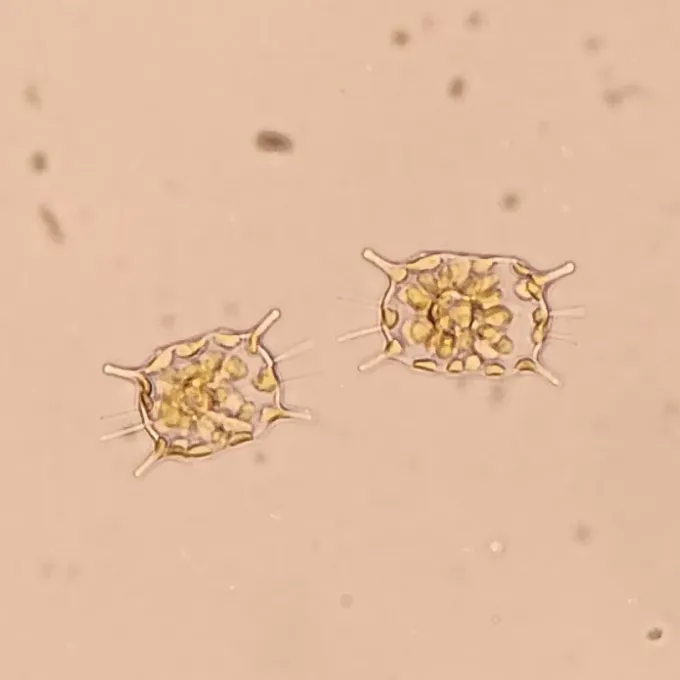
Description
Symptoms
The primary clinical signs of Chaetoceros exposure in fish include severe respiratory distress due to mechanical gill damage.
Fish often exhibit surface swimming and gasping behavior, indicating acute hypoxia caused by obstructed or damaged gill filaments.
Excessive mucus production on the gills is a common reaction, as the fish attempts to protect its delicate tissues from the sharp spines.
Post-mortem examination of gills typically reveals hemorrhages, inflammation, and localized necrosis at the points of impact.
In shellfish, symptoms manifest as reduced filtration activity, sluggish growth rates, and increased mortality in densely stocked environments.
Pathogen
Chaetoceros is a genus of planktonic diatoms that, while essential for natural ecosystems, can act as a significant health risk in aquaculture environments.
These microorganisms are characterized by long, rigid, and sharp siliceous setae (spines) that form chain-like colonies.
Unlike traditional agricultural pathogens, Chaetoceros causes damage primarily through physical, mechanical abrasion of sensitive biological structures.
They belong to the Bacillariophyceae class and possess a cell wall made of silica, which provides them with high mechanical strength and sharpness.
Under favorable nutrient and light conditions, these diatoms can proliferate rapidly, leading to dense water blooms that occupy the entire water column.
Conditions for development
Blooms of Chaetoceros are heavily influenced by environmental factors such as temperature, light intensity, and water quality.
High levels of nutrients, particularly nitrogen and phosphorus runoff from feed, significantly accelerate the growth rate of these diatoms.
Stable or stagnant water conditions allow these organisms to aggregate in high densities, creating localized zones of extreme hazard.
Optimal temperatures for the development of most Chaetoceros species generally range between 15°C and 22°C.
Anthropogenic eutrophication of aquaculture ponds remains the most significant driver of population explosions for this genus.
Why it matters
The core threat is the physical trauma caused by siliceous spines to the delicate epithelium of fish gills, leading to secondary complications.
Once the gill barrier is breached, the fish becomes highly susceptible to opportunistic bacterial and fungal infections.
For fish farms, such blooms can cause rapid and catastrophic losses, significantly impacting the productivity and profitability of the facility.
Shellfish are equally affected, as the sharp spines clog their delicate filtering mechanisms, leading to starvation and reduced vitality.
Diurnal fluctuations in oxygen levels, associated with dense algal presence, put additional metabolic stress on all cultured species.
Protection
Proactive management requires regular phytoplankton monitoring to detect rising cell counts before a full-scale bloom occurs.
The most effective strategy involves controlling nutrient loads and preventing water stagnation in holding tanks or ponds.
Mechanical aeration and water circulation systems are critical for disrupting algal aggregations and maintaining water quality.
During active blooms, it is recommended to suspend feeding and, if possible, transfer livestock to unaffected water sources.
Advanced water filtration systems, including sand or cartridge filters, provide a physical barrier that prevents Chaetoceros from entering sensitive production areas.
Discussion
No discussions yet — be the first.