
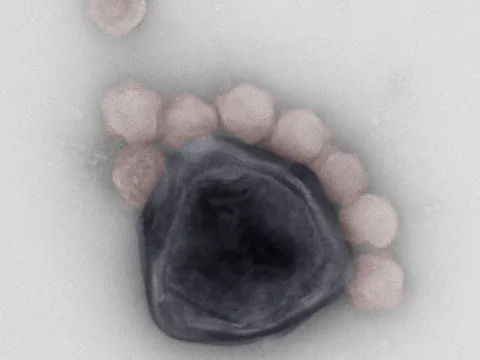
Cafeteria roenbergensis
Cafeteria roenbergensis
Cafeteria roenbergensis is a well-known species of free-living heterotrophic marine flagellate, belonging to the bicosoecid group, widely distributed in aquatic ecosystems.
What the section contains
Cafeteria roenbergensis
In the context of controlled environment agriculture, this organism serves as a primary consumer of bacteria, significantly influencing the microbial composition of water systems.
The cell structure of Cafeteria roenbergensis features two distinct flagella, which it utilizes for locomotion and for creating feeding currents to capture bacterial prey.
Although it is not a direct plant pathogen, its presence in hydroponic and aquaponic systems can profoundly impact the efficiency of plant nutrient uptake by altering the bacterial population.
The biology of this species is central to the microbial loop in aquatic environments, making it a critical subject for studies regarding water quality in agricultural settings.
Identifying Cafeteria roenbergensis colonies in a practical setting is difficult due to their microscopic scale, which requires specialized laboratory equipment for accurate detection.
A notable sign of an imbalance caused by these organisms is the decrease in clarity of the nutrient solution, often appearing as a persistent, fine turbidity.
Plants may exhibit symptoms of nutrient deficiency or stress despite adequate fertilizer levels, which can be a secondary effect of microbial instability in the rhizosphere.
Biological monitoring often reveals a shift in the microbial community structure, where the presence of these flagellates indicates a high turnover of bacterial populations.
Positive identification in professional agriculture is typically performed via microscopic analysis of water samples or through advanced molecular diagnostic techniques.
The population growth of Cafeteria roenbergensis is primarily driven by the availability of organic matter, which supports the proliferation of their bacterial food source.
Optimal environmental conditions for these flagellates include water temperatures ranging between 15°C and 25°C, ensuring rapid metabolic activity and reproduction.
Oxygenation levels within the nutrient solution play a vital role; these aerobic organisms thrive in environments with constant aeration and water circulation.
Fluctuations in pH can significantly influence their activity, with stable, slightly alkaline or neutral conditions often supporting the most robust populations.
Accumulation of plant debris and organic waste in hydroponic tanks provides the necessary substrate to trigger explosive growth of both the bacteria and the flagellates feeding on them.
The primary hazard posed by Cafeteria roenbergensis in cultivation systems is the disruption of the beneficial microbial balance that assists in nutrient assimilation.
By intensively consuming beneficial bacteria, these organisms can lead to the depletion of essential biofilms that protect the root zone from harmful pathogens.
Massive development of these flagellates can lead to oxygen depletion in nutrient-rich solutions, placing systemic stress on the root systems of cultivated plants.
Metabolic by-products from high densities of this species can potentially accumulate in closed-loop systems, creating a toxic environment that inhibits healthy root growth.
The competition for dissolved oxygen and organic resources reduces the overall efficiency of the hydroponic system, leading to sub-optimal plant development.
Effective management of Cafeteria roenbergensis involves strict hygiene protocols and consistent maintenance of the nutrient solution delivery systems.
Implementation of UV-C sterilization is highly recommended to effectively reduce the concentration of flagellates and bacteria within the circulation system.
Regular maintenance, including the cleaning of filters and the removal of organic sediments, is critical to preventing the build-up of microbial food sources.
Adopting precise monitoring of pH, EC, and dissolved oxygen allows growers to maintain conditions that are less conducive to flagellate outbreaks.
- Periodic complete draining and sanitation of the irrigation tanks.
- Installation of mechanical filtration systems to remove organic debris.
- Use of biological inoculants to promote a diverse and healthy microbial ecosystem.
- Regular water quality audits to track microbial trends early.