
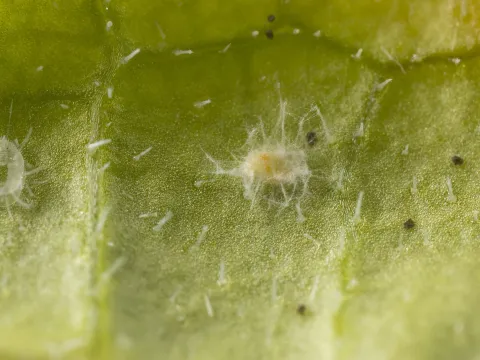
Akanthomyces muscarius
Akanthomyces muscarius
Akanthomyces muscarius (formerly known as Lecanicillium muscarium) is an entomopathogenic fungus belonging to the Cordycipitaceae family. It is a powerful biological control agent rather than a plant disease, effectively targeting a variety of insect pests.
What the section contains
Akanthomyces muscarius
The fungus acts by infecting the host through the cuticle. Once in contact with the insect, specialized enzymes are secreted that degrade the chitinous exoskeleton, allowing the fungal hyphae to penetrate the insect's body.
This species is naturally occurring in soil and on plant surfaces. Its life cycle is tightly coupled with the availability of insect hosts, making it a sustainable choice for Integrated Pest Management (IPM) programs.
Inside the host, the fungus colonizes the hemocoel and consumes internal nutrients, eventually leading to the death of the insect. This process is highly selective, focusing on specific pest populations without harming the host plant.
Scientific research highlights the potential of Akanthomyces muscarius to manage populations of insects that have developed resistance to traditional synthetic insecticides, offering a vital alternative for modern agriculture.
The most visible sign of infection is the appearance of a characteristic white to yellowish fungal mycelium covering the body of the deceased insect. This indicates that the fungus has successfully completed its colonization.
Infected pests often display reduced mobility and cessation of feeding shortly after exposure to the fungal spores. They frequently remain attached to the underside of leaves while the fungus develops on their exterior.
Mass infestations lead to visible patches of fungal growth on the leaves, which serve as reservoirs for spreading spores to healthy insects. This facilitates the rapid spread of the pathogen within the pest population.
Unlike phytopathogenic fungi, Akanthomyces muscarius does not damage plant tissues, cause leaf spots, or induce systemic disease symptoms in crops. Its presence on leaves is strictly an indicator of successful entomopathogenic activity.
- Presence of a fluffy white mycelium on the pest's body.
- Significant decrease in pest movement and feeding behavior.
- Accumulation of dead insects on the undersides of leaves.
- Rapid secondary spread of spores to healthy insects in humid conditions.
High relative humidity is the most critical environmental factor for the successful activity of Akanthomyces muscarius. Optimum infection rates are achieved when humidity remains above 80-85%.
Temperature significantly influences the growth rate and metabolic activity of the fungus. It performs best under stable temperatures, typically ranging from +20°C to +25°C.
The presence of free water or leaf surface moisture encourages the germination of spores. Greenhouse environments often provide these ideal conditions, leading to higher efficacy of fungal-based biopesticides.
High host density is a major factor in the success of the fungus. Dense clusters of insects allow for faster spore transmission and the development of widespread epizootics within a short timeframe.
Excessive UV radiation can be detrimental to spore viability. Therefore, in open-field applications, the formulation of the bio-product and the timing of application are crucial for achieving consistent results.
From an agronomical perspective, Akanthomyces muscarius is strictly beneficial. It is never a threat to crop health; instead, it is a tool used to prevent the damage caused by agricultural pests.
It is particularly effective against whiteflies, aphids, thrips, and certain mite species. By suppressing these pests, the fungus prevents the transmission of viral diseases often carried by these insects.
The integration of this fungus into farming practices minimizes the need for harsh chemicals, promoting safer food production and reducing the environmental footprint of agricultural activities.
Because the fungus does not produce toxins harmful to plants or humans, it is considered safe for use throughout the crop growth cycle, including during the harvest period.
However, its efficiency can be hampered by the misuse of broad-spectrum fungicides, which may inadvertently kill the beneficial fungal population and stop the biological control process.
To utilize Akanthomyces muscarius effectively, farmers should apply specialized bio-insecticides containing the fungal spores at the very onset of a pest outbreak.
Application techniques should ensure thorough coverage of the plant, focusing on the underside of the leaves where pests congregate. Proper equipment calibration is essential for optimal spore distribution.
Compatibility with other pesticides is a key consideration. Avoid using systemic fungicides near the time of application, as these will inhibit the growth of the entomopathogenic fungus.
Maintaining a controlled microclimate, particularly regarding humidity in greenhouses, is a form of proactive maintenance that helps the fungus flourish and maintain low pest pressure.
Storage of bio-products must be managed carefully. Keep them in a cool, dark environment to preserve the high germination rate of the spores until the moment they are needed for field application.