
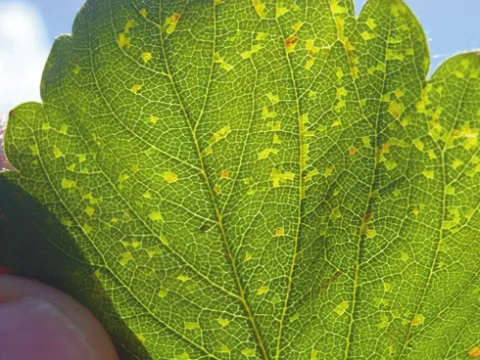
Angular leaf spot of strawberry
Xanthomonas fragariae
The causal agent of this disease is the Gram-negative bacterium Xanthomonas fragariae. It is a highly specialized pathogen that specifically targets plants within the Fragaria genus.
What the section contains
Angular leaf spot of strawberry
The bacteria survive in infected plant debris, soil, and on infected runners used as planting material. They can persist for long periods in dry, necrotic tissue until favorable conditions trigger activity.
Infection occurs through natural plant openings such as stomata and hydathodes, or through mechanical wounds caused by field operations or weather events.
The pathogen is highly mobile in moist environments, spreading via rain splashes or overhead irrigation systems, which distribute the bacteria across the canopy.
The biology of the bacterium is closely tied to moderate temperatures, with spring weather providing the ideal window for initial colonization and rapid multiplication.
Early symptoms appear as small, water-soaked, translucent spots on the underside of the leaves. When held against the light, these spots are clearly visible and angular, bounded by the leaf veins.
Under conditions of high humidity, a sticky bacterial exudate often appears on the undersides of the lesions, which dries into a thin, shiny, translucent film.
As the disease progresses, the lesions darken, turning reddish-brown or necrotic. These spots can coalesce, leading to large dead areas across the leaf blade.
Severe infections may spread to petioles and calyxes, causing tissue collapse, darkening, and significant plant stress.
Heavy damage reduces the photosynthetic efficiency of the plant, leading to weakened growth and reduced vigor during the subsequent cropping season.
Cool and wet weather conditions are the primary drivers of disease development. Temperatures between 15°C and 20°C are optimal for the bacterium to thrive.
High relative humidity and the presence of free water on leaf surfaces are strictly necessary for the bacteria to enter the host tissue and initiate infection.
High-density plantings that restrict air circulation create a persistent microclimate that favors the rapid accumulation and spread of the pathogen.
Overhead irrigation, especially in the evening, poses a significant risk as it provides the moisture required for the bacteria to travel from one leaf to another.
The introduction of infected nursery stock is the main pathway for the initial establishment of the disease in new fields.
Angular leaf spot causes substantial economic losses by reducing both yield and the quality of the harvested fruit. Infected plants also show decreased tolerance to environmental stress.
Damage to flowering stalks directly limits fruit production, while severe defoliation during the growing season prevents the plant from storing sufficient energy.
This pathogen is particularly devastating for strawberry nurseries, as infected plants must be culled to prevent further spread, resulting in total loss of stock.
The reduction in healthy leaf area impairs the plant's ability to produce sugars, leading to smaller berries and lower overall crop value.
If an outbreak occurs during favorable weather, the disease can quickly spread across an entire plantation, making manual control and recovery efforts extremely costly.
The most critical control measure is the exclusive use of certified disease-free nursery stock to ensure that the pathogen is not introduced into the field.
Good agricultural practices must be followed, including maintaining proper plant spacing, effective weed control, and the prompt removal and destruction of crop residues.
Copper-based bactericides are the primary chemical tool for suppressing the disease, though they must be applied preventatively to be effective.
- Utilizing resistant or less susceptible strawberry cultivars.
- Switching from overhead to drip irrigation to keep leaf surfaces dry.
- Implementing strict crop rotation and isolation distances from older, infected fields.
- Sanitizing tools between rows or plots to prevent mechanical transmission.
Continuous monitoring during cool, wet spring periods allows for early detection and targeted management before the disease becomes widespread throughout the planting.