
Jaaginema disease
Jaaginema
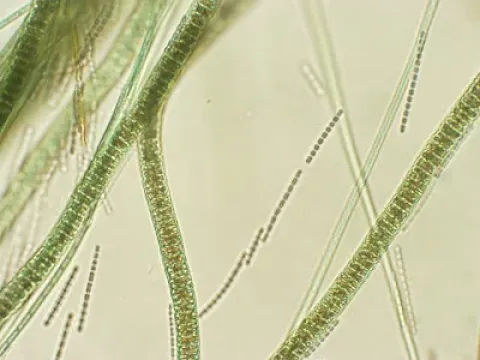
The causative agent of Jaaginema disease is a microorganism from the Jaaginema genus, which belongs to the group of filamentous cyanobacteria. This pathogen is typically found in moist soil substrates and on the surfaces of plant organs under high humidity conditions.
What the section contains
Jaaginema disease
The biological nature of Jaaginema involves the formation of long trichomes that actively colonize the epidermis of crop plants. Unlike typical fungal infections, this organism exhibits characteristics that can range from saprotrophic to pathogenic depending on the environment.
These organisms are systematically linked to aquatic ecosystems and waterlogged soils, which defines their habitat. Identifying the pathogen requires careful microscopic examination of tissue smears collected from affected plants.
The spread of Jaaginema in agroecosystems occurs primarily through water splashes, soil particles, and contaminated farm equipment. The structural stability of the trichomes allows the pathogen to survive in unfavorable environmental conditions.
Evidence suggests that the pathogen can act as a secondary agent, exacerbating other plant infections by creating a favorable environment for bacterial proliferation and tissue decay.
The primary symptom of the disease is the appearance of a characteristic slimy film or specific patches on the leaf and stem surfaces. This film often displays a blue-green or dark hue, distinguishing it from common fungal molds.
In areas where Jaaginema trichomes accumulate, localized inhibition of tissue growth occurs, often accompanied by discoloration of the epidermis. Affected areas may turn chlorotic due to the disruption of photosynthetic processes.
As the disease progresses, plant tissues undergo deformation, including leaf curling and premature wilting. Under high-humidity conditions, these symptoms spread rapidly across adjacent plant organs.
The root system, when heavily infested, may become covered in a slimy substance, preventing efficient nutrient and water uptake from the soil. This leads to stunted growth compared to healthy plants.
- Formation of a blue-green slimy film on leaves.
- Localized chlorosis and yellowing of leaf tissues.
- Deformation of stems and curling of young leaves.
- Reduced turgor pressure and overall plant decline.
- Interruption of metabolic and photosynthetic processes.
The primary factor triggering Jaaginema outbreaks is prolonged waterlogging and stagnant moisture in the root zone. High relative humidity (exceeding 85%) is critical for the rapid colonization of these cyanobacteria.
The temperature optimum for Jaaginema development ranges from +18 to +25 degrees Celsius. Rapid fluctuations in temperature combined with high humidity significantly increase the risk of infection.
Poor soil aeration, caused by soil compaction or excessive organic matter application, creates anaerobic micro-zones that serve as ideal substrates for these pathogens.
Poor planting density, where plants are positioned too close to each other, restricts airflow and creates a humid microclimate in the lower canopy, favoring pathogen spread.
Excessive nitrogen fertilization can decrease the plant's natural immunity, making it more susceptible to colonization by filamentous cyanobacteria during the growing season.
The harm caused by Jaaginema disease manifests as suppressed plant growth and significantly reduced quality of produce. Infested crops become less competitive, leading to uneven fields and poor yield uniformity.
Metabolic byproducts of Jaaginema can exert toxic effects on host cells, accelerating necrosis and significantly reducing the overall photosynthetic efficiency of the plant.
For vegetable and leafy greens, the marketability of the produce is severely compromised by the presence of the slimy film, often rendering the harvest unsuitable for commercial sale.
The disease causes premature leaf abscission, which deprives the plant of the leaf area required for energy production, resulting in poor fruit development and smaller fruit size.
Long-term accumulation of the pathogen in the soil complicates future cultivation, as the organism can persist in the environment for extended periods waiting for suitable conditions.
The primary preventive measure is the implementation of effective drainage systems in fields and greenhouses to prevent water stagnation. Regular soil cultivation is essential to maintain proper aeration.
Maintaining proper planting distance and spatial isolation is crucial to ensure adequate airflow, which helps to minimize humidity around the root zone and plant surfaces.
If symptoms are detected, the application of fungicides and algicides specifically targeted at cyanobacteria and complex infections is recommended to curb the pathogen's development.
Disinfecting agricultural tools and equipment after working in infested areas is essential to prevent the mechanical transfer of pathogen trichomes to healthy plant populations.
Optimizing mineral nutrition, with a focus on balanced potassium and phosphorus, strengthens plant cell walls and increases resistance against colonization by various plant pathogens.