
Description
Symptoms
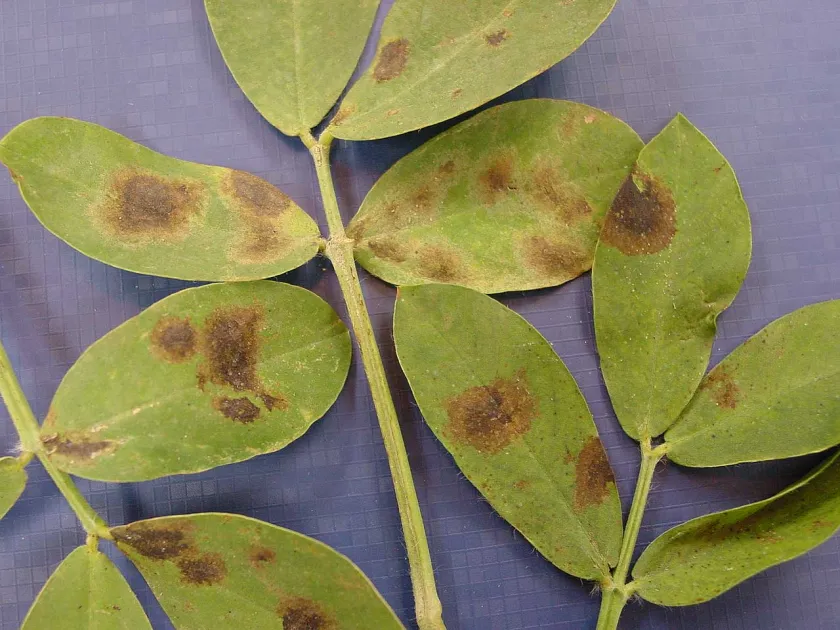
The most characteristic sign is the appearance of irregular, brown-to-dark spots on the leaves. These lesions are often initially small but can expand significantly.
A web-like, grayish mycelial growth is often visible on the surface of the lesions, especially in high-humidity conditions, which is why it is called "web blotch".
As the disease advances, the infected leaf tissue turns necrotic and brittle. Severe infection leads to widespread chlorosis and premature shedding of leaves.
The lesions on stems and petioles can become elongated, causing the affected parts to wither and die, which ruins the overall plant structure.
In advanced stages, the canopy may appear scorched due to the confluence of numerous large lesions covering most of the leaf area.
Pathogen
Peanut web blotch is caused by the ascomycete fungus Didymosphaeria arachidicola. This pathogen is known to specifically target the foliage of peanut plants during their growth stages.
The life cycle involves the formation of perithecia, where ascospores are produced. These spores serve as the primary inoculum, spreading the disease across the field under suitable weather conditions.
The fungus overwinters in plant debris left in the soil. Proper field sanitation is crucial for managing the survival of the pathogen between cropping seasons.
The mycelium colonizes the leaf tissue, disrupting physiological processes such as photosynthesis. As the infection progresses, it can move from the leaves to the petioles and stems.
It acts as a necrotrophic pathogen, causing cell death and tissue necrosis which gradually spreads across the plant canopy if left unmanaged.
Conditions for development
High humidity and moderate temperatures are the most critical factors favoring the development and spread of peanut web blotch.
Frequent rainfall and prolonged dew periods provide the necessary moisture for spore germination and mycelial colonization of the foliage.
Dense planting patterns that restrict airflow within the crop canopy create a favorable microclimate for the pathogen to thrive and spread rapidly.
Cloudy days with persistent overcast conditions prevent the leaves from drying out, further encouraging the progress of the infection.
Poor soil drainage and inadequate spacing can exacerbate the severity of the disease by maintaining a persistently humid environment around the plants.
Why it matters
The economic impact of web blotch is significant, as it leads to a reduction in the photosynthetic efficiency of the plant, directly impacting pod yield.
Severe defoliation results in underdeveloped kernels and lower grain weight, negatively affecting the market value of the harvested crop.
The overall quality of the pods is reduced, which may also decrease their viability as seeds for future plantings due to lower nutritional reserves.
Weakened plants are more susceptible to secondary infections and environmental stresses, potentially leading to further yield degradation.
Costs associated with fungicide applications and additional management efforts increase production expenses, reducing the overall farm profitability.
Protection
Implementing a crop rotation system is the primary cultural practice to reduce the pathogen population present in the soil.
Removing or deeply incorporating crop residues immediately after harvest prevents the pathogen from surviving through the off-season.
The use of resistant or tolerant peanut varieties is the most effective long-term solution for managing this specific fungal disease.
- Applying fungicides at the onset of symptoms to suppress further spread.
- Ensuring proper row spacing to enhance ventilation and drying of the canopy.
- Maintaining balanced fertilization to improve overall plant vigor and immunity.
Regular field scouting is essential to detect the disease in its early stages, allowing for timely intervention before it reaches epidemic levels.
Pathogens and affected parts
Affects crops · 1
Discussion
No discussions yet — be the first.