
Batist
ФГБНУ Федеральный Аграрный Научный Центр Северо-востока имени Н.В. Рудницкого
Rye
0
0
·
37
No offers
—
Details
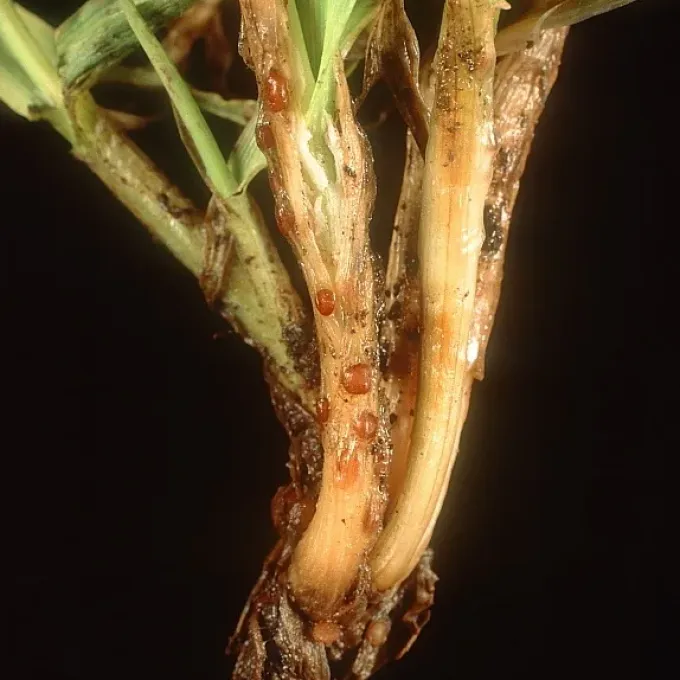
The primary symptom of Typhula blight appears in early spring when the snow melts, revealing patches of necrotic or stunted plants in the field.
Infected leaves initially lose turgor and turn greyish-white, eventually rotting and dying, which leads to the formation of bare spots in the crop stand.
A distinctive white or pinkish mycelial mat is often visible on the surface of dead leaves and around the crown area of the affected plants.
The diagnostic feature of this disease is the presence of small, round, pin-head-sized sclerotia embedded within the decaying plant tissue or on the crown.
Severe infestations cause total destruction of the crown and root system, resulting in significant thinning or complete loss of the cereal crop.
Typhula blight is caused by fungi belonging to the genus Typhula, primarily Typhula incarnata and Typhula ishikariensis, which are classified as basidiomycetes.
These pathogens survive in the soil and on crop residues by producing durable, compact fungal structures known as sclerotia, which are typically reddish-brown to black.
The fungus produces a web-like mycelium that spreads across the plants, eventually forming these sclerotia as the environmental conditions become unfavorable for vegetative growth.
Sclerotia are highly resilient, allowing the pathogen to persist in agricultural soils for several years even in the absence of a host crop.
The disease cycle typically initiates in late winter or early spring, triggered by cold temperatures and high moisture levels under the snow cover.
The development of Typhula blight is heavily dependent on the presence of a persistent, deep snow cover over unfrozen or lightly frozen soil.
The pathogen thrives in cool, moist conditions with temperatures ranging from near 0 °C to +5 °C, which are typical for the late winter thawing period.
Reduced air circulation and high humidity under the snow layer provide an optimal microclimate for the rapid spread of the fungal mycelium.
Agronomic factors such as late planting, excessive nitrogen application, and dense plant stands increase the plant's susceptibility to this infection.
Mild winters with frequent thaws and high rainfall significantly enhance the risk of widespread disease outbreaks in susceptible cereal fields.
Typhula blight can cause substantial economic losses by drastically reducing plant density and requiring costly reseeding of winter cereal fields.
Infected plants that manage to survive are often severely weakened, leading to reduced tillering, delayed growth, and overall lower grain yield.
The disease weakens the crop's ability to compete with weeds, further exacerbating the reduction in quality and quantity of the harvest.
Fields with a history of Typhula infection have a high inoculum potential, making them a recurring problem for future winter cereal production.
Forage crops and grasses can also be significantly degraded by the blight, reducing their nutritional value and safety for livestock consumption.
Crop rotation remains the most effective long-term management strategy to reduce the density of sclerotia in the soil and disrupt the disease cycle.
Seed treatment with broad-spectrum systemic fungicides provides essential protection for seedlings during the critical autumn establishment phase.
Balanced fertilization, particularly avoiding high late-autumn nitrogen rates, helps maintain plant health and promotes winter hardiness.
Deep tillage or incorporation of crop residues into the soil helps accelerate the natural degradation of sclerotia by soil microorganisms.
In high-risk areas, the timely application of fungicides in early spring can help control the spread of the fungus if conditions remain cool and wet.
No discussions yet — be the first.