
Description
Symptoms
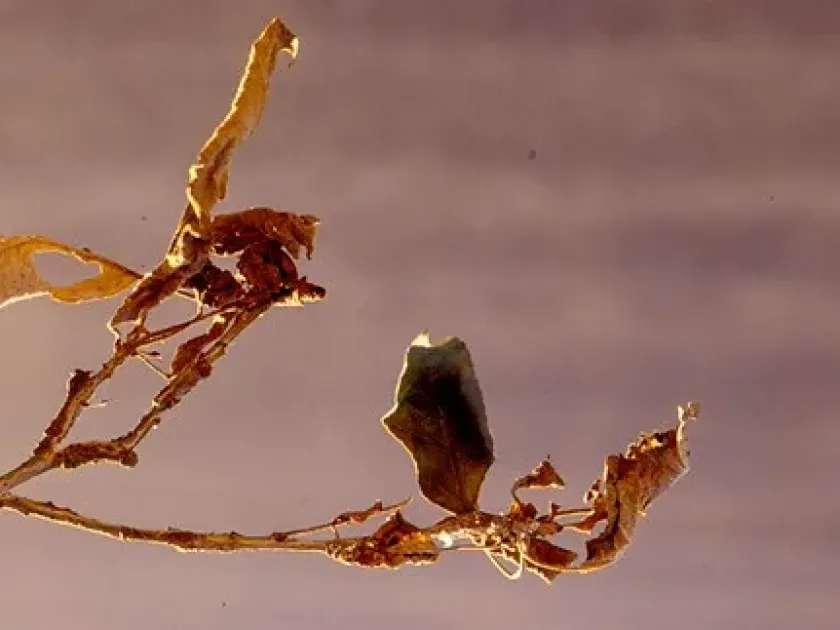
The initial symptoms are characterized by the appearance of brown, necrotic spots on leaves which rapidly enlarge to cover the entire leaf surface.
A diagnostic feature is the presence of fine, brown, thread-like mycelial filaments on the underside of leaves and along the stems of the branches.
Infected leaves often wither and die but remain attached to the tree by the fungal threads, giving the appearance of a web-like structure on the branches.
The fungus also causes necrosis of the bark on young shoots, leading to dieback of twigs and smaller branches throughout the plant canopy.
- Rapid browning and death of leaf tissues.
- Fine, thread-like mycelial growth on stems and leaves.
- Persistence of blighted leaves attached to twigs.
- Necrosis and dieback of young shoots and bark.
Pathogen
Thread blight is caused by the fungus Corticium stevensii (also classified as Pellicularia koleroga), which is a Basidiomycete fungus. This pathogen is a parasitic organism affecting a wide range of woody plants.
The fungus survives the dormant season as mycelial strands or sclerotia on twigs and branches. These structures provide the inoculum source for the start of the next growing season.
The name thread blight is derived from the distinct, thread-like mycelial strands that the fungus produces, which traverse the branches and leaves of the host plant.
The pathogen produces basidiospores that are disseminated primarily by wind currents and rain splashes during periods of high humidity and rainfall.
The biological development of this fungus is highly dependent on ambient moisture, making it a significant concern in regions with high precipitation and prolonged humidity.
Conditions for development
The development of thread blight is heavily favored by long periods of high humidity, frequent rain, and heavy dews during the growing season.
Optimal temperatures for the growth and infection process of the fungus range between 20°C and 28°C, which are typical for summer months in susceptible regions.
Plantations with dense foliage and poor airflow are particularly susceptible, as these conditions prevent the foliage from drying quickly after rainfall.
Lack of proper pruning practices leads to the accumulation of infested wood, which serves as a reservoir for the fungus to persist from one year to the next.
Environmental factors that promote stagnant air and sustained moisture around the tree canopy significantly increase the risk of rapid disease spread.
Why it matters
The disease causes significant damage by destroying the leaf canopy, which severely reduces the tree's photosynthetic capacity and overall vigor.
Fruit production is negatively impacted as trees weakened by leaf loss struggle to mature their fruit, leading to reduced yield and lower fruit quality.
Continued infection cycles can lead to the decline of the tree, starting with the loss of small branches and potentially leading to the loss of major scaffold limbs.
The dieback of shoots hampers the growth of young trees and compromises the structural integrity of the canopy over several seasons of infection.
Economic losses are cumulative, arising from the costs of disease management and the loss of productivity from affected orchards.
Protection
Sanitation is the primary management strategy; all infected twigs and leaves should be pruned and removed from the orchard to reduce the source of inoculum.
Improving air circulation within the tree canopy through proper pruning is essential to facilitate faster drying of leaves and reduce fungal growth conditions.
Fungicide applications, particularly those containing copper, can be effective if applied early in the season when conditions favor disease development.
Regular orchard monitoring is critical to detect the first signs of mycelial threads and prevent the disease from spreading throughout the planting.
Maintaining overall tree health through appropriate fertilization and site management helps the plant to withstand the stress caused by the fungal infection.
Pathogens and affected parts
Affects crops · 1
Discussion
No discussions yet — be the first.