
Description
Symptoms
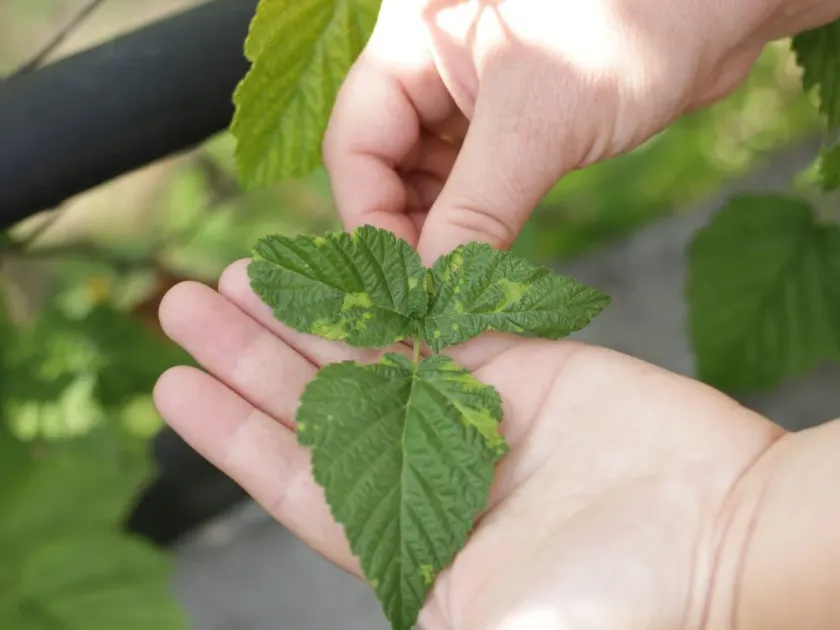
The first signs of infection appear on the leaves as chlorotic spots. These spots often develop into concentric rings or wavy patterns, which is the hallmark symptom for which the disease is named.
Leaves may exhibit deformity and crinkling as the infection progresses. In severe cases, the central part of the ring may become necrotic, leading to brown spots and eventually tearing or browning of the leaf tissue.
Plants often show signs of stunted growth, characterized by shortened internodes and a general reduction in plant vigor. The overall appearance of the bush becomes patchy and unhealthy compared to neighboring healthy plants.
Reproductive growth is also affected. Fruit set is often reduced, and berries may develop unevenly or remain small and crumbly, which significantly reduces the quality and market value of the harvest.
Symptoms are most visible during cooler parts of the growing season. While high summer temperatures may mask some leaf symptoms, the internal damage caused by the virus remains significant throughout the year.
Pathogen
The causative agent of this disease is the Raspberry ringspot virus (RpRSV). It is a member of the nepovirus group, known for its wide host range including various fruit crops and common weeds.
The disease is a systemic viral infection. Once established, the virus spreads through the vascular tissues of the host plant, severely interfering with metabolic functions and overall growth.
The primary vector for the transmission of RpRSV in nature is the soil-dwelling nematode of the genus Longidorus. These nematodes acquire the virus while feeding on infected roots and transmit it to healthy plants during subsequent feeding.
Transmission can also occur via infected propagation material. Planting cuttings from a virus-infected plant ensures the spread of the disease to new locations, making it a critical path of distribution.
The virus biology is closely tied to the host's root system. Persistent infections in roots make the plant a continuous source of the virus, which can spread horizontally through the soil via nematode activity.
Why it matters
The primary harm caused by Raspberry ringspot is the chronic decline of the plant. Infected plants lose their ability to thrive, becoming highly susceptible to environmental stress and secondary pests.
Economic damage is substantial due to the steady loss of productivity. As the systemic infection spreads through the plantation, the crop yield drops, making the maintenance of the affected field unsustainable.
The infection is incurable. Once a raspberry plant is systemically infected, it remains a reservoir for the virus for the rest of its life, requiring total removal to prevent further spread.
The potential for rapid field-wide infection is high if nematodes are present. This necessitates a proactive approach to soil management and the sanitation of the production area to maintain health standards.
Affected fields serve as an infection source for neighboring crops. The presence of the virus can lead to the necessity of destroying entire blocks of plantations to stop the transmission cycle.
Protection
The most important control measure is the use of virus-free, certified propagation material. Growers must ensure that all new stock comes from nurseries that strictly monitor and test for viral diseases.
Managing the nematode population in the soil is crucial. Pre-planting site preparation, including nematode soil testing and proper crop rotation with non-host species, helps reduce infection risk.
Immediate roguing is necessary: any plant exhibiting symptoms must be removed entirely, including the root system, and disposed of away from the plantation to eliminate the infection source.
Sanitation of gardening tools is mandatory. Cleaning blades and equipment with appropriate disinfectants after every contact with suspected or confirmed infected plants prevents mechanical transmission.
Maintain a strict weed control program, as many weeds act as natural reservoirs for both the virus and its nematode vectors. A clean field environment significantly reduces the pressure of the disease.
Pathogens and affected parts
Affects crops · 1
Discussion
No discussions yet — be the first.