

Description
Symptoms
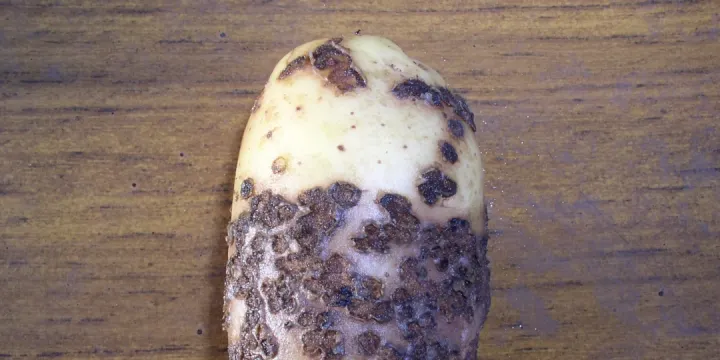
Common potato scab is characterized by the appearance of unsightly lesions on the skin of the tubers, which can manifest as flat, pitted, or raised corky scabs.
The skin texture of the affected area becomes rough and irregular, often breaking or cracking, which drastically lowers the overall quality of the potatoes.
In severe cases, the lesions develop into deep, crater-like pits, sometimes covered with a grayish dusty layer consisting of the pathogen's mycelium.
While the internal flesh of the potato usually remains healthy, the superficial damage renders the tubers commercially unacceptable for the retail market.
Symptoms are typically observed at harvest time, as the underground nature of the infection makes it difficult to detect during the early vegetative phase.
Pathogen
The causative agent of this disease is Streptomyces scabiei, a soil-borne actinomycete that displays biological features common to both bacteria and fungi.
This organism is a persistent saprophyte that thrives in the soil, surviving on decaying organic matter even in the absence of a host potato crop.
The pathogen enters the young, developing tubers through lenticels, stomata, or small abrasions in the skin during periods of rapid expansion.
Upon infection, the bacteria produce a toxin known as thaxtomin, which disrupts plant cell walls and induces the formation of corky scab lesions as a defense mechanism.
Because the pathogen can persist in the soil for years, it poses a recurring challenge for farmers working on the same plot of land without proper management.
Conditions for development
The development of Streptomyces scabiei is favored by neutral to alkaline soil conditions, typically occurring when the pH level is between 5.5 and 7.5.
Dry, warm weather during the critical period of tuber initiation significantly increases the risk of a widespread infection throughout the field.
The application of high rates of lime or fresh manure to the soil can raise the pH, creating an environment that is highly conducive to scab proliferation.
Poor soil aeration and low moisture levels during tuber development make the skin of the potatoes more susceptible to penetration by the bacteria.
Continuous cropping of potatoes on the same field leads to the accumulation of inoculum in the soil, which increases the intensity of the disease over time.
Why it matters
The primary damage caused by common potato scab is the severe degradation of the visual quality of the tubers, making them unfit for sale or professional use.
Tubers affected by scab are more prone to secondary infections during storage, as the damaged skin allows entry points for opportunistic decay organisms.
The nutritional and culinary value of the potato is often reduced, as the presence of lesions can impact starch distribution and overall tuber development.
In agriculture, the disease leads to significant economic losses, forcing growers to discard a portion of their harvest during the grading process.
Planting infected seed potatoes is a major pathway for spreading the pathogen, potentially introducing the bacteria into previously clean fields.
Protection
Effective management begins with strict crop rotation, ensuring that potatoes are not grown on the same field for at least four to five years.
The use of resistant or tolerant potato varieties is one of the most reliable strategies for minimizing the impact of the disease in infested areas.
Maintaining a slightly acidic soil pH is crucial, as this level naturally suppresses the activity and reproduction of the Streptomyces bacteria.
Irrigation during the early stages of tuber formation can help prevent the disease, as maintaining adequate soil moisture inhibits the penetration of the pathogen.
Disinfecting seed potatoes and utilizing appropriate soil treatments can help reduce the initial inoculum load and protect the crop during its early growth stages.
Content graph
Connections · Common potato scab
Most often together:
Categories
1 contact
Marketplace
Products · 1
Community
Discussion
No discussions yet — be the first.