
Black spot of elm
Stegophora ulmea
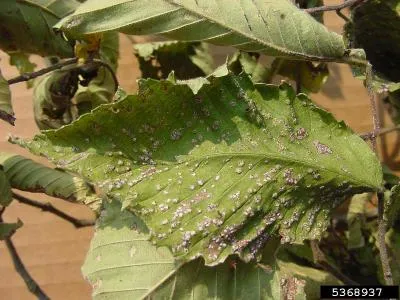
Description
Symptoms
Symptoms appear as small, white to yellow spots on the upper leaf surfaces, which eventually enlarge and turn black as the fungal fruiting bodies mature.
The black spots are often raised and can coalesce, covering large portions of the leaf blade and leading to irregular blotches.
As the infection progresses, severe premature defoliation occurs, leaving branches bare long before the natural onset of autumn.
Small, elongated black lesions may also appear on the petioles and young succulent twigs of susceptible elm species.
- White to yellow initial leaf spots
- Raised black fungal fruiting bodies
- Premature yellowing and leaf drop
- Lesions on leaf petioles and young stems
Pathogen
The disease is caused by the fungus Stegophora ulmea (formerly known as Gnomonia ulmea), an ascomycete pathogen specific to elm trees.
The fungus overwinters primarily in fallen leaves, where it develops perithecia to produce ascospores that initiate primary infections in the spring.
This parasitic organism colonizes the leaf tissue, causing localized cell death and disrupting the tree's natural photosynthetic functions.
Secondary infections occur throughout the growing season as conidia are produced and spread by rain splashes and wind to healthy foliage.
Its persistence depends heavily on the presence of leaf litter, making the cycle highly dependent on the sanitation practices within the growing area.
Conditions for development
The disease thrives in environments characterized by cool, wet spring weather, which is ideal for the discharge and germination of ascospores.
High relative humidity and poor air circulation within the canopy promote the rapid spread of the fungus during the growing season.
Trees located in low-lying areas or dense thickets are particularly vulnerable due to prolonged leaf wetness duration.
Stressed trees, particularly those suffering from malnutrition or water deficiency, show higher susceptibility to severe fungal colonisation.
Extended rainfall periods during the budding and early leaf development stage act as the primary catalyst for severe seasonal outbreaks.
Why it matters
The primary impact of the disease is the drastic reduction in total leaf area, which limits the tree's capacity to store energy through photosynthesis.
Chronic annual infections significantly weaken the tree, predisposing it to other biotic stresses and reducing its structural integrity.
In nursery settings, black spot stunts growth, resulting in stunted saplings that fail to meet commercial quality standards.
Premature leaf drop prevents the tree from properly hardening off, increasing the risk of cold damage during harsh winter months.
The aesthetic decline caused by the defoliation makes the affected elms unsuitable for high-value ornamental landscapes.
Protection
Sanitation is the most effective management strategy; raking and destroying all fallen leaves removes the primary inoculum source for the next season.
Fungicide applications, particularly those containing copper, applied at bud break can protect new growth from the initial spring infections.
Improving cultural practices such as thinning the canopy helps increase airflow, which accelerates leaf drying and discourages fungal growth.
For high-value trees, regular systemic fungicide treatments during wet springs can effectively control the disease's spread throughout the canopy.
Selecting and planting resistant elm cultivars or hybrids is the best long-term solution for maintaining healthy ornamental landscapes.
Discussion
No discussions yet — be the first.