
Phoma leaf spot of potato
Stagonosporopsis andigena
Description
Symptoms
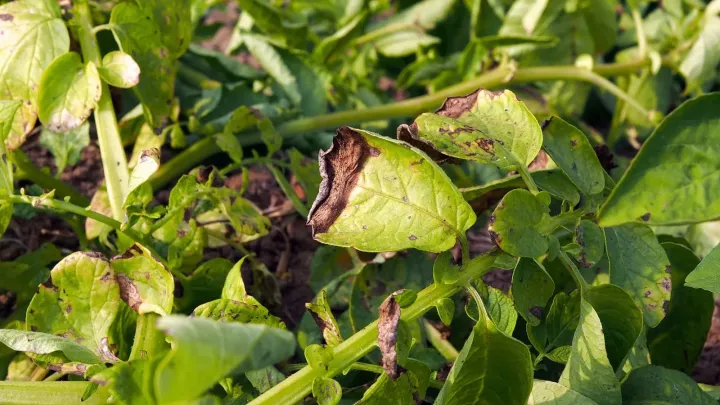
Symptoms of Phoma leaf spot typically appear as small, brownish or dark-colored spots on the potato leaves.
As the infection progresses, these lesions expand and may become angular or circular in shape, eventually merging into larger necrotic patches.
A diagnostic characteristic of the disease is the presence of tiny, black pinhead-sized structures (pycnidia) within the necrotic tissue of the spots.
In highly humid conditions, the foliage around the lesions turns yellow, leading to rapid tissue death and eventual premature senescence of the leaves.
If not contained, the infection can spread from leaves to stems, causing girdling and weakening of the canopy structure.
Pathogen
The causal agent of Phoma leaf spot in potatoes is the fungus Stagonosporopsis andigena (formerly identified as Phoma andigena).
This fungal pathogen belongs to the phylum Ascomycota and is specifically adapted to parasitize potato plants in temperate and mountainous regions.
The fungus produces pycnidia, which are small fruiting bodies that release conidia under favorable environmental conditions to spread the infection.
The mycelium of the pathogen is capable of surviving for extended periods within infected plant debris remaining in the soil after harvest.
It is a specialized parasite that primarily attacks the foliage, though its survival mechanisms allow it to persist across growing seasons.
Conditions for development
The development of the disease is heavily dependent on environmental conditions, specifically high humidity and cool to moderate temperatures.
Extended periods of rain, heavy dew, or fog are essential for the germination of fungal spores on the leaf surfaces.
Planting densities that limit air movement within the field create a microclimate conducive to rapid spore transmission between adjacent plants.
Poor soil fertility, particularly a deficiency in potassium, can compromise the plant's natural defense mechanisms against fungal attacks.
Physical injuries to the leaf surface caused by hail or mechanical equipment provide easy entry points for the pathogen to colonize the tissue.
Why it matters
The primary economic impact is the reduction of photosynthetic leaf area, which significantly limits the plant's ability to produce tubers.
Loss of foliage results in stunted tuber development, lower starch content, and overall reduced yield quality at the time of harvest.
Plants weakened by the fungus become more susceptible to secondary infections by bacteria, which can further decay the canopy and tubers.
If the disease sets in early in the growing season, total yield losses can be substantial, particularly in high-moisture climate years.
Infected crops are also less suitable for storage and should not be used as seed potatoes for future seasons.
Protection
Implementing a strict crop rotation schedule is the most fundamental step in reducing the inoculum level in the soil.
Sanitation practices, including the removal and destruction of infected haulms, are necessary to prevent the pathogen from overwintering.
Sourcing and planting certified, disease-free seed tubers is essential for establishing a healthy crop from the start.
- Apply preventative fungicidal sprays when weather forecasts predict extended humid periods.
- Control weeds, especially those in the Solanaceae family, that may act as alternative hosts.
- Ensure a balanced fertilization program to support plant vigor and resistance.
If the infection appears, rotating systemic and contact fungicides helps manage the pathogen while minimizing the risk of developing resistance.
Discussion
No discussions yet — be the first.