
Description
Symptoms
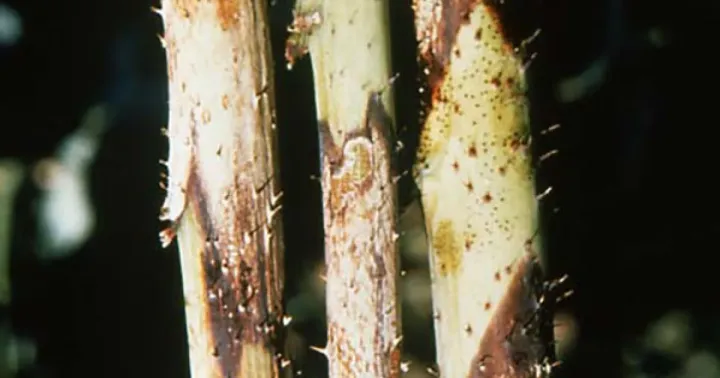
Early symptoms appear in early summer as purple or reddish-brown lesions around the leaf axils of new green shoots, which is a classic diagnostic marker.
As the infection progresses, these lesions enlarge and coalesce, often resulting in gray-brown necrotic patches with numerous tiny black dots, known as pycnidia, embedded in the center.
Affected bark tissue frequently cracks, leading to structural instability and the potential for the cane to snap under the weight of foliage or fruit.
Buds located near the infected areas often fail to sprout the following spring or produce weak, chlorotic side shoots that contribute little to the yield.
Premature leaf drop is common in severely infected canes, which reduces the plant's ability to photosynthesize and store energy for the coming winter.
Pathogen
The disease is caused by the ascomycete fungus Didymella applanata, which is a major pathogen of raspberries and blackberries, severely impacting commercial yields.
The fungus produces two types of spores: ascospores, released primarily in spring from perithecia, and pycnospores, which spread through the canopy during the growing season.
The pathogen overwinters as mycelium in the infected canes, buds, and fallen leaves, remaining viable in the plantation environment for several years.
Infection spreads through the movement of spores via rain splash and wind, typically occurring during periods of high humidity and moderate temperatures.
Once the spores land on susceptible tissue, they germinate and penetrate the epidermis, often utilizing natural openings or wounds to colonize the host's stems.
Conditions for development
Warm, wet weather is the primary driver of disease development, as moisture is required for spore germination and long-distance transmission within the row.
Poor airflow, often caused by overly dense planting or lack of pruning, creates a humid microclimate that allows the fungus to thrive and spread rapidly.
Excessive use of nitrogen fertilizers encourages succulent vegetative growth, which lacks the robustness to resist fungal penetration and colonization.
Injuries caused by cane borers or mechanical damage during cultivation create easy entry points for Didymella applanata spores to initiate an infection.
The longevity of the pathogen in the soil and on old debris means that sites with poor sanitation are highly prone to recurring annual infections.
Why it matters
The primary economic damage is caused by the death of fruiting buds and the systemic weakening of the canes, which leads to significant yield losses in commercial settings.
Brittle, cracked canes are prone to breaking, which complicates maintenance and harvesting and can lead to the loss of entire sections of the plantation.
Plants affected by cane blight are significantly more susceptible to winter injury, as the compromised vascular system cannot protect the plant from freezing temperatures.
Fruit development is stunted on diseased canes, resulting in lower quality, smaller berries, and a reduction in the overall sugar content of the crop.
Without intervention, the cumulative effect of the disease over several seasons can lead to the total collapse of the raspberry patch.
Protection
Sanitation is the cornerstone of control: all infected canes must be pruned out and destroyed by burning or removing them from the site to reduce the inoculum.
Managing canopy density by thinning out weak canes improves air circulation and sunlight penetration, which helps keep the foliage dry and prevents infection.
Chemical control involving copper-based fungicides or systemic options should be timed to coincide with the early growth stages and post-harvest periods.
Integrated Pest Management (IPM) practices, including the control of cane-boring insects, are essential to minimize the physical wounds used by the fungus for entry.
- Ensure wide plant spacing for better ventilation.
- Avoid excessive nitrogen late in the season.
- Select certified disease-free planting stock.
- Maintain a clean field with no debris accumulation.
Pathogens and affected parts
Affects crops · 1
Discussion
No discussions yet — be the first.