
Grey leaf spot of poplar
Sphaerulina frondicola
Description
Symptoms
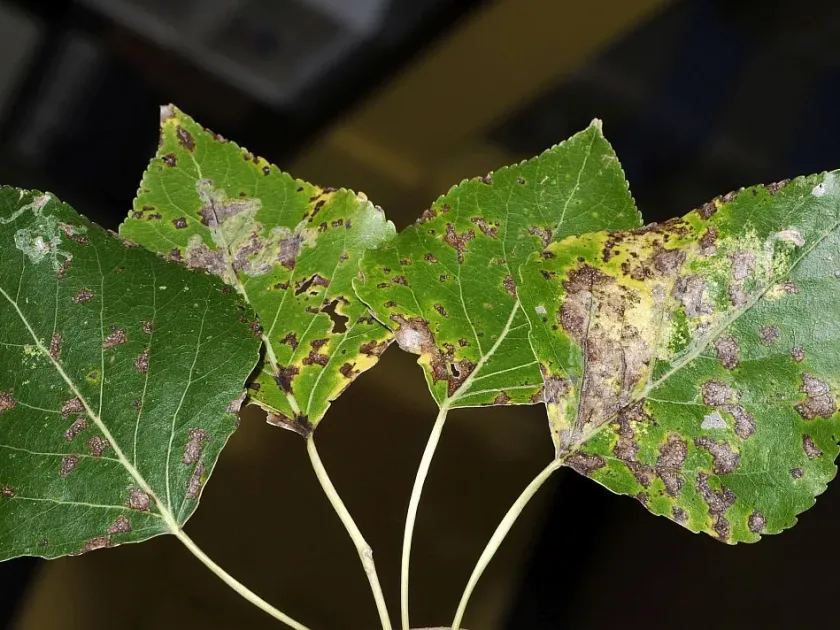
The primary symptom of this disease is the appearance of grey or grey-brown spots on the leaves. These spots are often irregular in shape and may have a darker border, which delineates the infected area from the healthy leaf tissue.
Tiny black dots, representing pycnidia or perithecia, become visible in the center of these spots, particularly on the underside of the leaves. These structures serve as sources for secondary inoculum throughout the season.
Severe infestations lead to curling, premature browning, and necrosis of the leaf blades. Affected leaves often drop prematurely, leading to canopy thinning, which is particularly noticeable by mid-summer.
Young, rapidly growing shoots are often the first to show symptoms. In dense stands, the infection can spread rapidly through the lower canopy, where microclimates are more conducive to fungal growth.
Early identification of these spots is essential. Monitoring the foliage during periods of damp weather can help detect the presence of the pathogen before it causes significant defoliation.
Pathogen
The causative agent of the grey leaf spot of poplar is the ascomycete fungus Sphaerulina frondicola. This pathogen belongs to the Dothideomycetes class and specifically targets the foliage of poplar trees.
The fungus overwinters in fallen, infected leaves where it produces fruiting bodies. During the spring, ascospores are released and dispersed by wind or splashing rain, initiating primary infections on newly emerged leaves.
The pathogen utilizes both asexual and sexual reproductive stages to complete its life cycle. It penetrates leaf tissues through stomata or mechanical injuries, eventually forming new sporulating structures within the lesions.
This fungus affects various poplar species, including hybrids often grown in plantations. Its ability to survive in diverse environmental conditions makes it a persistent issue in poplar silviculture.
Understanding the biology of Sphaerulina frondicola is crucial for developing integrated pest management plans, as the fungus's lifecycle is highly dependent on humidity and leaf moisture duration.
Conditions for development
Sphaerulina frondicola thrives in conditions of high humidity and moderate temperatures. Prolonged rainfall during the spring and early summer is the most significant factor facilitating infection.
Dense planting schemes restrict airflow, causing moisture to linger on leaf surfaces for extended periods. This environment creates the perfect setting for fungal spores to germinate and colonize the tissue.
Temperatures ranging from +18°C to +24°C are optimal for the fungus to sporulate and infect new leaves. Variations in microclimate within a stand often determine the severity of an outbreak.
The presence of overwintered debris, especially leaf litter, is the primary source of the inoculum. Without proper sanitation, the cycle of infection continues year after year in the same location.
Stressed trees, whether due to drought, nutritional deficiencies, or environmental pollution, are significantly more susceptible to the disease, as their internal resistance mechanisms are compromised.
Why it matters
The disease reduces the functional leaf area, which directly impairs the tree's ability to photosynthesize. As a result, the tree suffers from a decrease in carbon fixation and overall vigor.
Premature defoliation is a major concern as it prevents the tree from accumulating sufficient reserves for the winter. This leads to weakened trees that are more susceptible to winter kill and other secondary pathogens.
In ornamental settings, the aesthetic impact is severe. The appearance of diseased, spotted, and thin canopies makes poplars less desirable for landscaping in public parks and urban areas.
Chronic annual infections can result in dieback, where distal branches begin to wither and die. Over time, this cumulative damage reduces the lifespan of the tree and requires expensive canopy maintenance.
In forestry, the loss of biomass accumulation significantly affects the economic return on timber and fiber production, as growth rates diminish in response to persistent fungal pressure.
Protection
Sanitation is the most effective preventative measure. Collecting and removing fallen leaves in the autumn reduces the primary inoculum load, significantly lowering the risk of infection in the following spring.
Pruning of affected branches helps improve canopy ventilation. Ensuring proper spacing between trees during initial planting also helps in reducing the humidity levels that favor the fungus.
Fungicide applications, when performed at the time of leaf emergence, can protect young foliage from primary infections. Both systemic and contact fungicides are used depending on the severity of the outbreak.
Balanced fertilization supports tree health and helps plants withstand infections. Maintaining good soil health and proper hydration are key components of a robust integrated management strategy.
Selecting and planting resistant clones is the gold standard for disease management. Utilizing modern breeding programs to ensure trees are less susceptible to Sphaerulina frondicola is the most sustainable approach for long-term plantations.
Discussion
No discussions yet — be the first.