
Birch leaf spot
Sphaerulina betulae
Description
Symptoms
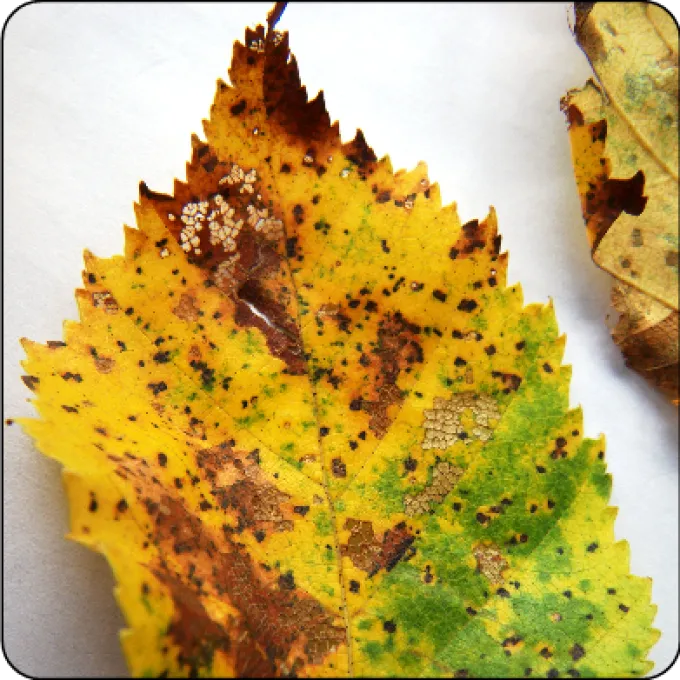
Symptoms initially appear as small, circular or irregular spots on the leaf blades, often displaying a distinct ochre or yellowish-brown color, sometimes with a darker margin.
As the infection progresses, the spots enlarge and coalesce, potentially covering significant portions of the leaf, which leads to necrotic tissue formation.
Tiny black pycnidia, the fruiting bodies of the fungus, can be observed on the underside of the affected leaf areas using a hand lens.
Heavy infestations result in premature chlorosis, where the leaves turn yellow prematurely, leading to significant defoliation before the natural autumn senescence.
Early identification is crucial, as the symptoms can sometimes be confused with other leaf spot fungi or even environmental stress, requiring careful observation of the lesion patterns.
Pathogen
The causal agent of birch leaf spot is the fungus Sphaerulina betulae (formerly known as Septoria betulae or Phloeospora betulae). It is a specialized pathogen that primarily targets species of the Betula genus.
The fungus produces asexual spores (conidia) in specialized structures called pycnidia, which appear as tiny dark specks on the surface of the infected leaves during the growing season.
The life cycle involves an overwintering stage on fallen leaves, where sexual fruiting bodies (apothecia) develop, providing the primary inoculum for new infections in the spring.
Sphaerulina betulae is widely distributed in temperate forest regions and thrives in environments where host trees are abundant.
Biological studies show that the fungus is highly adapted to the host, ensuring its survival even in harsh climatic conditions by remaining dormant in leaf debris.
Conditions for development
Optimal development of Sphaerulina betulae occurs under conditions of high humidity, frequent rainfall, and moderate temperatures during the summer months.
Poor air circulation within dense birch stands prevents rapid evaporation of moisture from the foliage, creating a perfect microclimate for fungal spore germination.
Splashing rain acts as a primary vector for spore dispersal, moving the fungus from the leaf litter or lower branches to the upper canopy throughout the season.
The presence of abundant leaf litter around the base of the tree provides a reliable source of inoculum, which facilitates early spring infections once temperatures rise.
Trees subjected to prolonged periods of wet, overcast weather are significantly more susceptible to widespread infection compared to those in well-drained, sunny locations.
Why it matters
The primary impact of birch leaf spot is the reduction of the functional photosynthetic area, which deprives the tree of necessary energy for growth and defense.
Young trees in nurseries are particularly vulnerable; chronic infection can lead to stunted growth, reduced height, and poor development of the root system.
In mature trees, repeated annual defoliation weakens the overall vigor, making the birch more susceptible to secondary stressors like drought or wood-boring insects.
From an aesthetic perspective, the disease significantly diminishes the ornamental value of birch trees in urban landscaping and parks, causing them to look blighted mid-season.
While rarely fatal on its own, the long-term impact on tree health can lead to gradual decline and predisposition to other biotic and abiotic threats.
Protection
Sanitation is the most effective management strategy: raking and destroying fallen leaves during autumn significantly reduces the overwintering reservoir of the fungus.
Improving air circulation through proper spacing in plantations or thinning out branches in ornamental trees helps to create a less favorable environment for the fungus.
Fungicide applications, particularly those containing copper or systemic triazoles, can be used as a preventative or curative measure in high-value ornamental settings.
Maintaining the overall health of the tree through balanced fertilization and adequate irrigation helps the plant develop higher resistance to pathogenic attacks.
Monitoring local conditions is essential; early application of protective sprays before peak humidity periods can effectively curb the spread of the disease.
Discussion
No discussions yet — be the first.