
Description
Symptoms
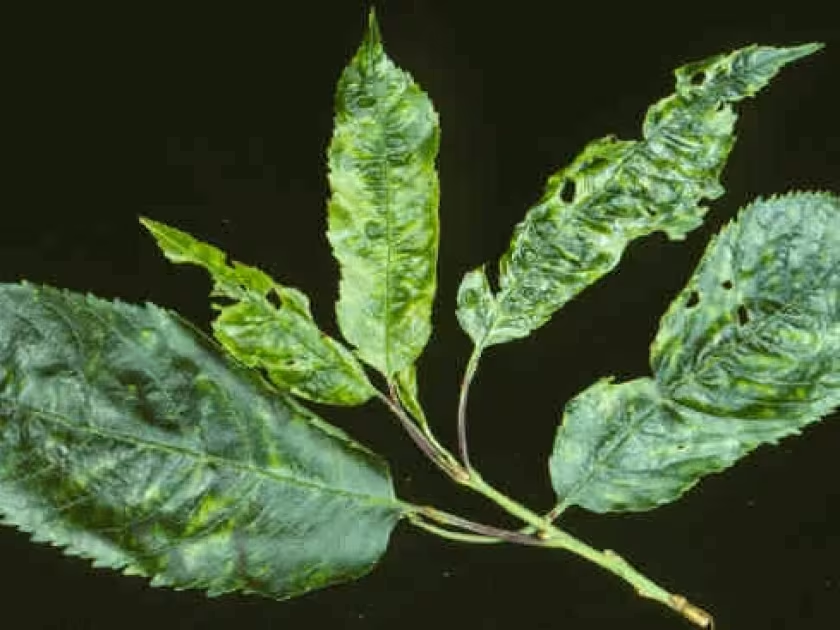
The primary symptom is the appearance of chlorotic spots or rings with a distinct green hue on the foliage. These are most visible during the active growth phase in the spring.
In some cases, the spots appear as blurry patches that gradually become more defined. Leaf deformation can occur in severely affected trees, leading to an irregular leaf shape.
Symptoms often appear on specific branches rather than the entire canopy. This localized expression is a common feature of many viral diseases in stone fruits.
Fruits rarely show direct symptoms, but the overall yield is negatively impacted. Infected trees may produce smaller, poor-quality fruit that lacks the typical flavor and color characteristics.
Environmental conditions play a major role in symptom manifestation. Cooler spring temperatures often lead to more pronounced foliar symptoms, while hotter weather can mask the presence of the virus.
Pathogen
The causative agent of the disease is the Cherry green ring mottle virus (CGRMV). It is a systemic viral disease that primarily affects stone fruit species, with a focus on sour cherries and their relatives.
The virus is mainly transmitted through infected propagation material. When nurserymen use buds or scions from infected mother trees for grafting, the virus enters the new plant system immediately.
The virus often remains in a latent state, meaning it can be present in a tree for many years without showing any external signs of infection. This complicates early detection in orchards.
It infects trees like the sour cherry and Duke cherry. Once the virus enters the vascular system, it spreads throughout the entire tree, moving through the phloem to all branches.
There is no known cure for the virus, and the infected tree will carry it for its entire lifespan. Therefore, the focus is entirely on prevention and quarantine measures.
Conditions for development
The spread of the virus is largely facilitated by agricultural practices. The use of contaminated tools during pruning is a significant vector for transmitting the virus between trees.
Lack of sanitation in nurseries is the primary reason for the initial introduction of the virus into new plantations. If infected rootstocks are used, the entire orchard is compromised from the start.
Stressed trees are more susceptible to showing symptoms. Factors such as drought, nutrient deficiencies, or secondary infections can trigger the transition from a latent phase to an active phase.
There is no evidence that the virus spreads rapidly through common insect vectors, which means that the infection usually spreads slowly but steadily through human-assisted contact.
The accumulation of the virus within the woody tissue is inevitable once the tree is infected. The virus persists through the winter, ready to spread during the next vegetative cycle.
Why it matters
The virus causes a gradual decline in the tree's health and productivity. The annual growth of new shoots is significantly reduced, leading to premature aging and crown thinning.
Yield loss is a major economic factor. The total volume of fruit decreases, and the quality drops, making the harvest less valuable for commercial market purposes.
Infected trees have a compromised immune system, making them more sensitive to environmental stressors like frost damage or sunscald, which often lead to limb dieback.
The long-term impact involves the progressive degradation of the orchard, requiring premature removal and replacement of affected trees to prevent further spread.
Economic losses accumulate due to the need for continuous monitoring, labor costs for removals, and the necessity of purchasing clean, certified nursery stock.
Protection
The only effective strategy is prevention. It is essential to source saplings only from certified nurseries that implement strict virus-testing programs for their mother trees.
Orchard sanitation is critical. All pruning equipment must be disinfected after working on each individual tree to prevent the mechanical transmission of the virus.
If an infected tree is detected, it should be removed and destroyed as quickly as possible. Leaving an infected tree in the orchard serves as a reservoir for further contamination.
While direct treatment is unavailable, maintaining tree vigor through proper fertilization and pest management helps the tree withstand the presence of the virus for longer.
- Purchase certified virus-free nursery stock.
- Sanitize tools with alcohol after every tree.
- Identify and remove infected trees immediately.
- Regular inspection of leaves during early spring.
Pathogens and affected parts
Affects crops · 2
Discussion
No discussions yet — be the first.