
Description
Symptoms
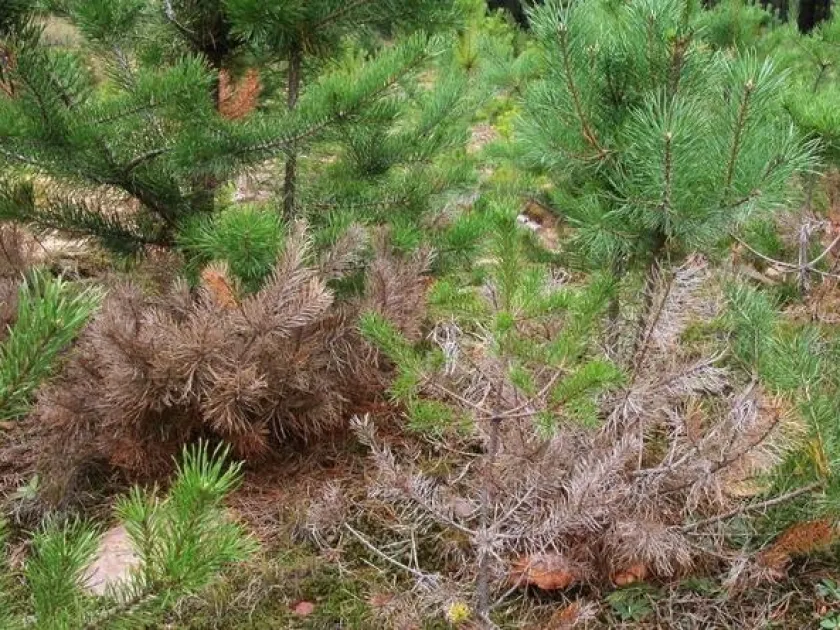
The most distinctive signs of Snow Blight appear immediately after the snow melts in the early spring. Infected needles exhibit yellow or light brown patches, which rapidly turn into a dull, reddish-brown color as the tissue dies.
A hallmark of this disease is the presence of a grayish, cottony fungal mat that binds the infected needles together. As the season progresses, tiny black fruiting bodies become visible on the surface of the needles, indicating the maturation of the fungus.
Affected branches often lose their needles prematurely, leaving them bare and brittle. This needle loss typically starts at the lower branches where the contact with the snow layer was most prolonged during the winter season.
Young trees are especially vulnerable to severe defoliation. If the infection reaches the leader shoot or causes extensive crown loss, the tree's structural integrity and overall vigor are significantly compromised, leading to a stunted appearance.
Regular visual inspections in spring are crucial, as the symptoms are most prominent before the trees begin their new annual growth cycle. Early detection can prevent the disease from spreading throughout the entire plantation.
Pathogen
The causal agent of this fungal disease is Phacidium abietis, a pathogenic fungus that thrives in cold, moist environments. It is specifically known for its ability to attack various conifer species, including spruce, fir, and Douglas fir, primarily during winter months.
The fungus is highly adapted to surviving under deep snow cover. The snow acts as a thermal blanket, maintaining the constant, high humidity and temperatures near freezing required for the fungus to colonize and infect the needles of the host tree.
Within its life cycle, the pathogen produces apothecia—small fruiting bodies that develop on the surface of infected needles. These structures release spores that spread the infection, often during the late autumn or winter period as the initial snow cover forms.
The mycelium of Phacidium abietis is exceptionally resilient, allowing it to remain dormant in fallen needles or plant debris. This persistence makes the disease a recurring threat in nurseries and forests where sanitation measures are neglected.
Once the infection is established, the fungal network grows steadily within the needle tissues, breaking down the cell walls and disrupting vital physiological functions, including gas exchange and the uptake of nutrients necessary for spring growth.
Conditions for development
Consistent, deep snow cover is the primary driver of Snow Blight development. The persistence of snow for several months provides the ideal environment for the fungus to bypass the tree's natural defense mechanisms.
High relative humidity and stagnant air are essential for the survival and spread of Phacidium abietis. Dense, unmanaged plantations or areas with poor air circulation are much more susceptible to severe outbreaks of this disease.
Micro-environmental factors, such as low-lying terrain or shaded areas that remain damp, significantly increase the risk of infection. Sunlight and good airflow inhibit fungal growth, so plantations located in sunny, well-drained spots fare better.
The nutritional status of the trees plays a secondary but vital role in susceptibility. Trees stressed by nutrient deficiencies or summer droughts are less capable of mounting a defense against fungal pathogens during the winter.
Lack of maintenance, particularly the failure to remove fallen debris, creates a reservoir for spores. The pathogen can easily reinfect the same trees year after year if the area is not kept clean and ventilated.
Why it matters
Snow Blight causes significant harm by reducing the tree's photosynthetic capacity. The massive loss of needles limits the tree's ability to produce energy, resulting in reduced height and diameter growth over the following growing seasons.
In commercial nurseries, the disease can lead to total crop failure. Since the aesthetic and physiological quality of seedlings is paramount, even a moderate infection can make the entire stock unsuitable for sale or reforestation.
For landscape and ornamental trees, the damage manifests as a severe loss of decorative value. Bare branches and discolored foliage detract from the beauty of gardens, often requiring years of recovery or the complete removal of the tree.
Weakened trees become targets for secondary pests, such as bark beetles or wood-boring insects. These pests take advantage of the tree's reduced immunity, often finishing what the fungal disease started, leading to the eventual death of the specimen.
The economic impact of Snow Blight is cumulative. Costs include direct loss of planting material, expenses for fungicide applications, increased labor for sanitation, and the loss of long-term timber or ornamental value.
Protection
Effective control requires a combination of cultural and chemical strategies. Improving air circulation by thinning out dense plantations is the most effective way to create an environment hostile to the fungus.
Applying preventative fungicides in the late autumn, just before the first permanent snowfall, is essential. These chemical barriers help protect the needles from initial spore germination and subsequent penetration.
Strict sanitation protocols must be enforced, including the raking and burning of infected needles and debris. Removing this source of inoculum is vital to preventing the cycle of infection from repeating in the following winter.
Selecting conifer varieties that show natural resistance to fungal pathogens can mitigate risks in high-snowfall regions. Consulting with local forestry experts regarding site-specific tree selection is a recommended best practice.
- Thinning of dense canopy layers.
- Autumn fungicide spray applications.
- Proper sanitation and debris removal.
- Balanced fertilization to promote tree vigor.
- Regular monitoring of plantation health.
Pathogens and affected parts
Affects crops · 1
Discussion
No discussions yet — be the first.