

KUBAN EMERALD
OOO 'UPRAVLYaYuShchAYa KOMPANIYa 'METSENAT'
Thuja
0
0
·
61
2 offers
12.34 €per pack
Buy
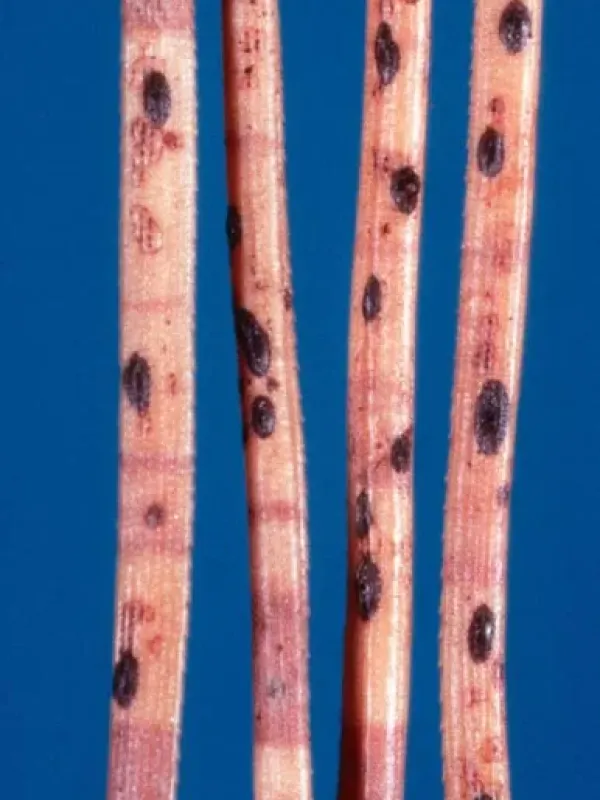
Initial symptoms typically appear in late summer or early autumn, characterized by small yellow or brown spots forming on the green needles.
As the infection progresses, the needle color transitions to a rusty or reddish-brown, followed by brittleness and premature needle shedding.
In spring, black transverse lines become visible on dead needles, which are the fungal stroma indicating the completion of the pathogen's life cycle.
Heavy infestations result in a sparse, sickly appearance of the canopy, especially in younger trees, often leaving lower branches completely bare.
In nursery settings, the disease often spreads in distinct patches, rapidly moving through dense seedling rows if left unmanaged.
The causative agent of this disease is an ascomycetous fungus from the Lophodermium genus, with Lophodermium seditiosum being the most prevalent on Scots pine.
This is a specific fungal pathogen that affects almost exclusively coniferous species, with a particular affinity for various pine tree varieties.
The fungus acts as a parasite, invading plant tissue through the stomata of the needles, where the fungal mycelium begins to proliferate.
The life cycle involves the formation of fruiting bodies called apothecia, which appear as small, shiny black lines or bumps on the infected needles.
Infected fallen needles serve as the primary reservoir for the fungus, allowing spores to disperse and infect healthy trees in the vicinity.
Disease outbreaks are highly favored by prolonged periods of wet, mild weather during late summer, which coincides with the peak sporulation period.
Overcrowded plantings, poor air circulation, and high humidity levels near the ground create the perfect microclimate for spore germination.
Trees that are already stressed due to poor soil quality, nutrient deficiencies, or pollution are significantly more susceptible to successful fungal colonization.
A mild and wet autumn can greatly extend the infection season, allowing the fungus to establish itself across a larger portion of the tree's foliage.
Proximity to older, infected pine stands provides a constant source of inoculum, significantly increasing the risk of infection in younger adjacent plantations.
Lophodermium needle cast is particularly devastating in forest nurseries, where it can cause mortality rates of up to 100% in one-year-old pine seedlings.
In mature trees, the disease reduces the overall photosynthetic capacity, which leads to stunted growth and reduced annual wood production.
The chronic loss of needles weakens the tree's natural defense mechanisms, predisposing it to secondary infestations by bark beetles and other pests.
Persistent infection over several years can lead to complete crown dieback, destroying the economic and aesthetic value of the forest stand.
Financial losses stem from the destruction of nursery stock and the high operational costs associated with recurring fungicide application programs.
Effective prevention relies on sound silvicultural practices, including proper spacing and maintaining good airflow to discourage fungal growth.
Sanitation is critical: removing and disposing of infected fallen needles helps to eliminate the primary source of the fungal inoculum.
Chemical control involving copper-based fungicides or systemic triazole compounds is necessary during the peak spore release window (July–August).
Applications should be repeated at two-week intervals during wet weather to ensure that new needles are adequately protected during the infection risk period.
Selecting disease-resistant cultivars and planting in appropriate site conditions are the most sustainable strategies for minimizing long-term disease impact.
No discussions yet — be the first.