
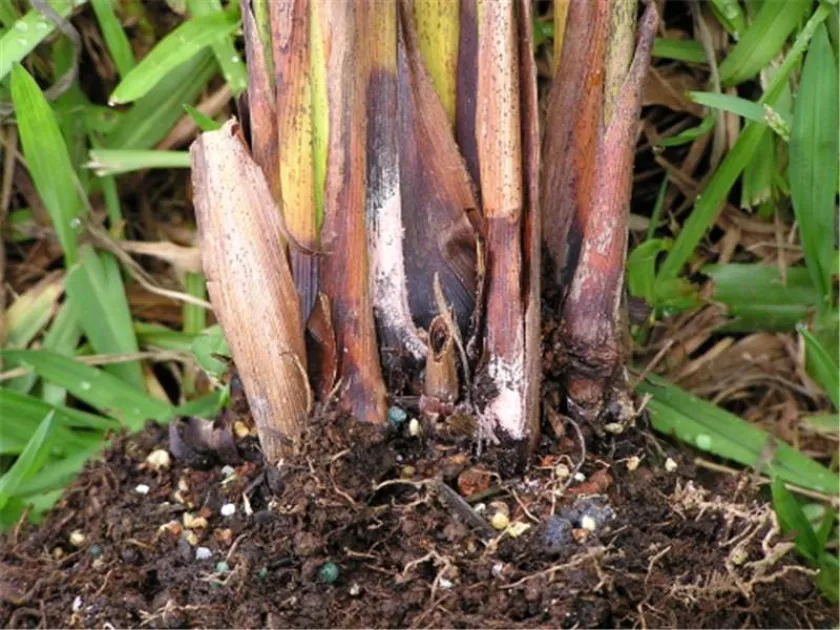
Description
Symptoms
The primary symptom of Gliocladium rot is the softening of tissues, which leads to necrosis. Affected areas often exhibit a dense, pink-colored fungal growth, which is a classic diagnostic sign.
For crops such as winter rapeseed and turnip, the disease typically manifests at the root collar or lower stem, causing the plants to wilt and eventually collapse.
In turnip roots, the disease causes a dry rot, where the internal tissues become brittle, discolored, and eventually turn into a decayed mass permeated with fungal mycelium.
Infected plants show signs of stunted growth and chlorosis. Because the root system is often compromised, the plants can be easily pulled from the soil during the advanced stages of the infection.
The presence of the distinctive pink spore masses on the surface of the affected plant parts is the most reliable visual identifier during field inspections.
Pathogen
The causative agent of Gliocladium rot is the fungus Gliocladium roseum (often identified as Clonostachys rosea). It is a saprotrophic fungus that can act as a pathogen under specific environmental conditions.
The fungus produces a distinctive pinkish or whitish mycelium, which spreads rapidly across infected plant tissues. Its conidial sporulation is highly efficient, ensuring the pathogen propagates easily in humid conditions.
This fungus is known for its ability to persist in the soil and on crop debris as mycelium or spores for extended periods. It acts as a facultative parasite, often exploiting weakened tissues or mechanical wounds.
Due to its versatile biology, the pathogen can survive on various organic substrates, making it a persistent threat in agricultural fields where crop rotation is not strictly followed.
The rapid growth rate of the pathogen allows it to colonize host tissues quickly, especially when plant immunity is compromised by environmental stress or pest damage.
Conditions for development
Gliocladium roseum thrives in environments with high relative humidity (above 85%) and moderate temperatures ranging from 18 to 25 degrees Celsius.
Dense crop stands create a humid microclimate near the soil surface, which is ideal for the infection to spread from plant to plant throughout the field.
Mechanical damage caused by farm equipment or insect pests creates entry points for the fungal spores, accelerating the infection process significantly.
Periods of prolonged rain followed by warm weather create the most favorable conditions for severe outbreaks, as the fungus can reproduce and spread rapidly under such moisture regimes.
Poor soil drainage and inadequate aeration in the field exacerbate the conditions, leading to persistent rot issues and a buildup of inoculum in the topsoil layers.
Why it matters
The economic impact of Gliocladium rot is significant, as it leads to reduced plant stands, poor crop emergence, and total loss of individual plants in severe cases.
In winter rapeseed, the infection of the stem base during the autumn reduces the plants' ability to survive harsh winters, leading to high mortality rates and the need for field reseeding.
The market value of infected turnip roots is severely degraded due to the dry rot, which makes the produce unmarketable and prone to rapid decay during storage.
The fungus produces toxic metabolites that interfere with the plant's metabolic functions, causing systemic weakness and increasing susceptibility to secondary pathogens.
Large-scale outbreaks can lead to significant yield reductions, requiring expensive chemical interventions and long-term adjustments to crop management practices.
Protection
The primary control measure is strict crop rotation, ensuring that rapeseed and turnips are not grown on the same land for at least 3 to 4 years to break the infection cycle.
Thorough incorporation of crop residues into the soil, coupled with the use of biological decomposers, helps to reduce the survival of the pathogen in the field.
Seed treatment with professional fungicides is recommended to protect seedlings from soil-borne pathogens during the most vulnerable early stages of growth.
In cases of high infection pressure, foliar fungicide applications during the growing season can help limit the spread of the disease to healthy plants.
- Maintain optimal plant spacing to promote airflow and reduce humidity.
- Control insects and pests that cause wounds on the plant stems and roots.
- Use resistant or tolerant cultivars when available.
- Ensure balanced fertilization to strengthen the overall plant immune system.
Pathogens and affected parts
Affects crops · 2
Discussion
No discussions yet — be the first.