
Description
Symptoms
Initial symptoms are often masked as general stress, with trees exhibiting yellowing leaves, stunted growth, and premature fruit drop. These signs are frequently mistaken for nutrient deficiency or drought stress.
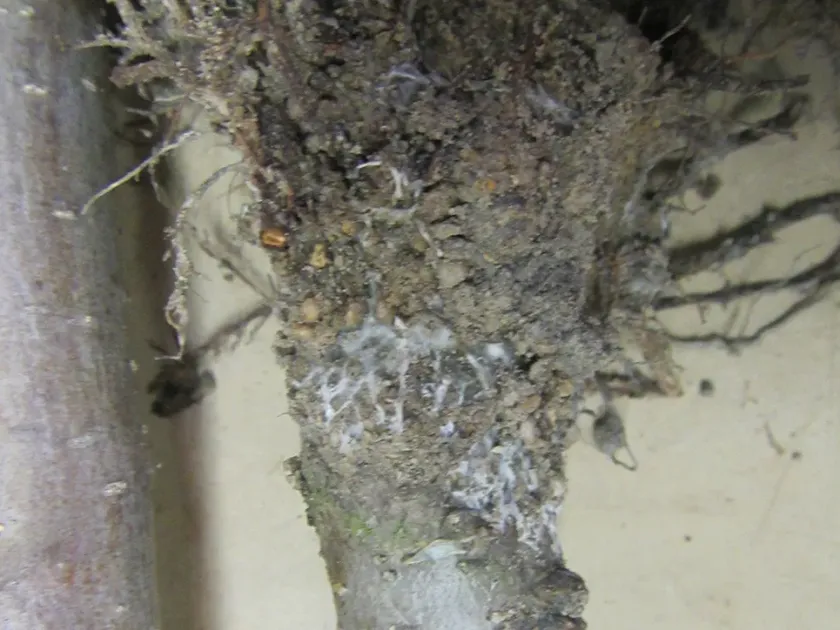
A closer inspection of the root system reveals a characteristic white, star-shaped or fan-like fungal growth on the surface of the roots. This mycelium eventually turns dark and leathery as the disease progresses.
The bark of the roots becomes soft and peels away easily, exposing the inner wood, which may show dark, necrotic discoloration. In later stages, the roots become brittle and decay entirely.
In hop crops, the plant may wilt suddenly, especially during hot periods when water demand is high. The underground rhizomes exhibit rotting symptoms and are covered in fungal threads.
In advanced cases, the tree or plant loses its anchorage in the soil and can be pushed over easily, indicating a near-total destruction of the root structure.
Pathogen
The causative agent of this disease is the fungus Rosellinia, with Rosellinia necatrix being the most prevalent and destructive species. This pathogen is a member of the Ascomycota phylum and is known for its ability to persist in the soil for years.
The fungus produces extensive white mycelial mats that encircle the roots, eventually developing into dark, thick rhizomorphs. These structures allow the fungus to spread through the soil and seek out new host root systems.
It is a highly aggressive pathogen that affects a vast range of woody and herbaceous plants. The disease typically begins when the fungus encounters the root zone and secretes enzymes that break down root tissue.
This fungus survives as a saprophyte on decaying organic matter, such as old stumps and woody debris. This biological trait makes it difficult to eradicate once it is established in an orchard or field.
The pathogen is particularly dangerous due to its versatility, affecting crops as diverse as citrus trees, avocados, and hops. It thrives in various environments, provided there is enough moisture and organic food sources.
Conditions for development
The disease flourishes in soils with high moisture levels and poor aeration. Prolonged rainy periods and heavy, waterlogged soils create the perfect conditions for the pathogen to colonize new roots.
The fungus is most active in temperatures ranging from 15°C to 25°C. These temperatures are common in many citrus and avocado growing regions, facilitating year-round potential for infection.
The spread of Rosellinia is often triggered by planting on land where old trees were previously cleared without proper soil sterilization. The remaining woody debris serves as an inoculum source.
Soil pH plays a role; acidic soils are generally more conducive to Rosellinia growth compared to neutral or slightly alkaline environments, where the pathogen's spread might be slower.
Human activity also spreads the fungus. Contaminated tools, equipment, and footwear can transport spores or mycelial fragments from infected zones to healthy areas of the plantation.
Why it matters
Rosellinia root rot is a devastating disease that can lead to total crop loss. In citrus and avocado plantations, it often causes localized "death zones" that expand outward over time.
For hop growers, this pathogen compromises the root health necessary to support the vegetative vigor required for high-quality cone production, leading to sharp declines in yields.
The disease is economically damaging because it is often discovered only after the plant has already suffered significant root loss. Remediation at that point is rarely successful.
Due to its long-term survival in the soil, the presence of Rosellinia can make a piece of land unsuitable for susceptible crops for a decade or longer without intensive treatment.
The destruction of the root system prevents water and nutrient uptake, causing the plant to wither and eventually perish, even if the above-ground parts are treated with fertilizers or pesticides.
Protection
The first line of defense is the use of disease-free planting material. Always verify the source and inspect the root systems of all new saplings before planting them in your field.
Proper site preparation is essential. Before planting, remove all old stumps and as many root fragments as possible from the previous crop. Burning woody debris is often recommended.
Improve drainage systems in the plantation to prevent water accumulation. Avoid over-irrigation, as moisture-saturated soil directly facilitates the growth of the fungal mycelium.
If an infected plant is identified, it must be removed promptly along with a large volume of the surrounding soil. The planting hole should be treated or left empty for several seasons.
Biocontrol agents and soil amendments that improve microbial balance can help strengthen the plant's resistance, though they are usually insufficient as a stand-alone treatment in high-pressure areas.
Pathogens and affected parts
Affects crops · 3
Discussion
No discussions yet — be the first.