
Description
Symptoms
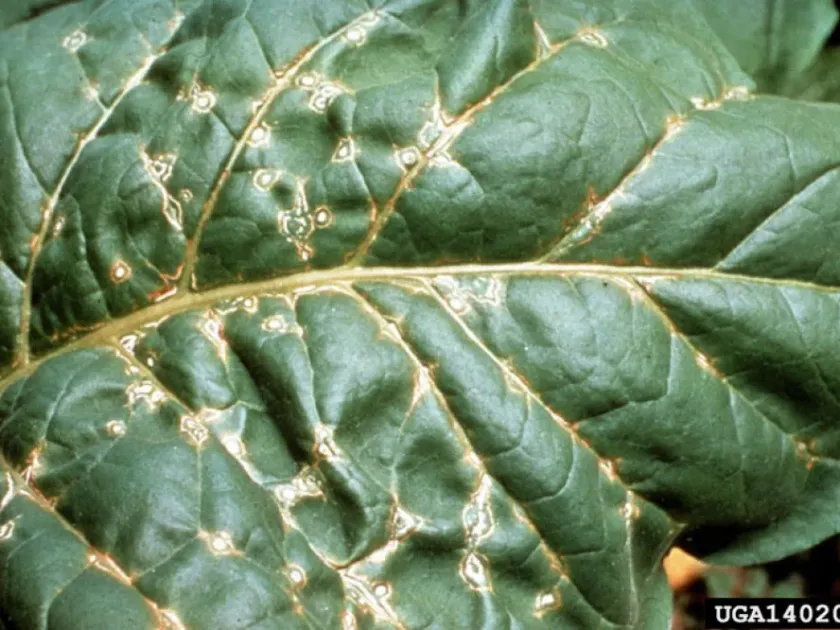
The most characteristic symptom is the development of chlorotic rings or concentric spots on the foliage. These rings may appear yellow or light green against the healthy leaf tissue.
Infected leaves frequently show deformities, such as curling, wrinkling, or vein yellowing. In advanced stages of infection, plants may exhibit stunted growth and significant defoliation.
Fruits may also show distinct ringspot patterns or skin discolouration, significantly reducing their market value. The quality and yield of crops are negatively impacted by the systemic nature of the virus.
Early symptoms are often subtle and can be easily confused with nutritional deficiencies or other minor infections. As the virus spreads, the entire plant becomes chlorotic and loses its vigor.
Internal tissue examination might reveal necrotic streaks in stems or roots, indicative of a systemic viral attack. Regular monitoring is essential to distinguish between ringspot diseases and fungal spots.
Pathogen
Ringspot diseases are a group of viral infections that cause distinct lesions on plant tissues. The primary pathogens include viruses such as Tomato ringspot virus (ToRSV) and Tobacco ringspot virus (TRSV), which belong to the nepovirus group.
These viruses are systemic pathogens that infect the vascular system of the host plant. By interfering with cellular protein synthesis and photosynthetic processes, they inhibit the plant's normal growth and development.
Transmission occurs predominantly through soil-borne nematodes, which carry the virus between host plants. Additionally, the disease can spread via infected propagation material and during contaminated pruning or cultivation.
The virus affects a vast range of hosts, including vegetables, ornamental plants, and various fruit trees. Citrus species are particularly susceptible, often exhibiting chronic symptoms and declining fruit productivity.
A key biological feature of these viruses is their ability to persist in perennial weeds, which act as reservoirs. This makes managing the disease challenging in environments where wild vegetation is abundant.
Conditions for development
Environmental factors like soil moisture are critical for the spread, as they directly influence the activity of nematode vectors. Warm temperatures generally favor both virus replication and vector movement.
Infection cycles are most active during the primary growing season when plants are highly susceptible to trauma. Dense plantings and weed-covered areas facilitate the rapid spread of the virus across a field.
Mechanical transmission is a high risk during agricultural practices. Contaminated cutting tools, shears, and field equipment can carry the virus to healthy plants through minor wounds.
The presence of specific nematode species in the soil determines the focal distribution of the disease. Often, healthy and infected plants coexist in a patchwork pattern due to the localized nature of vectors.
Environmental stress can temporarily hide symptoms, making diagnosis difficult. However, once conditions are optimal for the pathogen, visible symptoms typically reappear with greater severity.
Why it matters
The economic impact of ringspot diseases is substantial due to the significant reduction in yield and product quality. Stunted plants produce fewer and smaller fruits, which are often rejected by commercial standards.
Viral infections weaken the host's immune system, making them more susceptible to secondary bacterial or fungal attacks. In citrus orchards, this can lead to the long-term decline of trees.
Because the disease is systemic, there is no cure for an infected plant, leading to the necessity of total removal. This results in direct loss of investment and planting time.
The disease is highly contagious within a field, potentially leading to total crop failure if ignored. Prevention is costly, yet necessary to maintain the profitability of agricultural operations.
Losses are compounded by the requirement for soil treatment and sanitation to eliminate the nematode population. Long-term management is required to ensure the land remains viable for future plantings.
Protection
Since there are no chemical treatments available to cure systemic viral infections, the strategy focuses entirely on prevention. Best practices in agricultural management are the primary defense.
- Use exclusively certified virus-free seeds and planting material.
- Implement strict nematode control programs through soil testing and crop rotation.
- Promptly rogue and destroy all symptomatic plants to minimize the inoculum source.
- Remove surrounding weeds that may host the virus or act as nematode habitats.
- Sanitize tools and field equipment between uses to prevent mechanical transmission.
Quarantine measures are vital to prevent the introduction of new viral strains into a clean orchard. Regular inspection and early detection of hotspots are the best methods to safeguard the entire crop.
Pathogens and affected parts
Affects crops · 1
Discussion
No discussions yet — be the first.