
Description
Symptoms
Early symptoms include yellowing leaves and gradual wilting of the plant canopy. The plant appears drought-stressed even when the soil moisture is adequate.
A definitive diagnostic sign is the presence of white mycelial mats or strands covering the surface of the roots. These structures are often dense and firmly attached to the root tissue.
As the disease progresses, the bark of the roots decays, turning the internal structure into a white, spongy, or fibrous mass that is easily broken apart.
In crops like cassava, the tubers become rotten, discolored, and ultimately disintegrate. This makes the harvest completely unusable for human consumption or starch production.
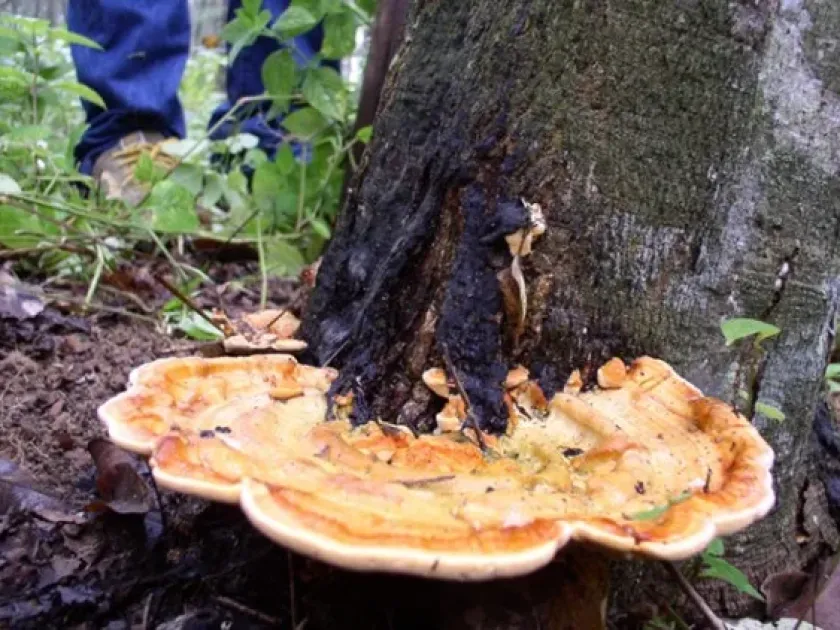
Occasionally, hardened, woody, bracket-like fungal fruiting bodies appear at the base of the infected plant, typically near the soil line, ranging in color from pale cream to brown.
Pathogen
The disease is caused by the basidiomycete fungus Rigidoporus microporus. This pathogen is known for its wood-decaying capabilities and ability to infect the roots of various tropical crops.
It is classified as a root rot disease. The fungus acts by invading the vascular system, preventing water and nutrient transport, which eventually leads to the death of the host plant.
The pathogen is primarily found in tropical environments. It is a significant issue in fields previously used for forestry or land cleared of trees, as it thrives on dead woody debris.
Rigidoporus microporus spreads through both spore dispersal and vegetative growth, expanding from infected root remnants to healthy plant roots in the soil.
The fungus is highly resilient and can remain dormant in the soil for several years by colonizing dead organic matter, making it a persistent challenge for farmers.
Conditions for development
High soil moisture and humidity are the primary drivers of Rigidoporus microporus development. Poor drainage in agricultural fields creates the perfect environment for its spread.
The fungus thrives in tropical temperatures. Its growth rate increases significantly when soil conditions are warm and consistently damp, favoring the rapid colonization of roots.
The presence of old tree stumps, buried logs, or large root systems in the soil provides a crucial food source for the fungus, allowing it to maintain a high inoculum potential.
Root damage caused by agricultural machinery or tools during field maintenance creates infection pathways, allowing the fungus to enter healthy plant tissues more easily.
High plant density encourages the fungus to spread by root-to-root contact, as the interconnected root systems allow the mycelium to move efficiently from an infected plant to neighbors.
Why it matters
The economic impact of white root rot is severe, particularly for cassava and rubber plantations. The disease can wipe out entire sections of a farm within a single season.
The destruction of the root system halts the plant's growth cycle, leading to stunted development and eventual total mortality of the affected crops.
Long-term soil infestation makes the land unsuitable for susceptible crops, forcing farmers to abandon fields or switch to less profitable, resistant varieties.
Harvest losses are often significant, as the rotting of tubers is often discovered only when the plants are pulled for harvest, leaving no time for remediation.
Controlling the spread requires expensive labor-intensive measures, such as soil excavation and the removal of contaminated debris, which increases production costs substantially.
Protection
The most effective management strategy is the complete removal and destruction of infected plants, including all major roots, to prevent the pathogen from surviving in the soil.
Thorough land preparation, which includes clearing all woody residues and stumps, is essential when converting forest or fallow land into agricultural fields.
Improving soil drainage through terracing or trenching is critical to preventing the waterlogging conditions that favor the proliferation of Rigidoporus microporus.
Crop rotation using non-host species is recommended to break the life cycle of the pathogen and reduce the inoculum density in the affected soil over time.
Farmers should implement strict hygiene practices, such as disinfecting tools used near infected areas and minimizing root disturbances during cultivation to protect healthy plants.
Pathogens and affected parts
Affects crops · 1
Discussion
No discussions yet — be the first.