
Description
Symptoms
Early symptoms include sudden wilting of the foliage, often appearing as if the plant is drought-stressed despite adequate soil moisture levels.
The stem tissue at the soil line becomes necrotic and soft, showing evidence of colonization by the distinctive white, thread-like mycelium.
As the disease progresses, the roots and the base of the stem decay rapidly, leading to the collapse and death of the entire plant.
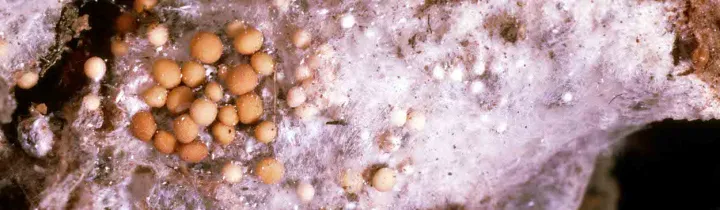
Under moist conditions, mustard-seed-like sclerotia develop on the surface of the infected crown, the stems, and the surrounding soil.
In sugar beet fields, the infection typically spreads in circular patches, with plants at the center of the patch showing the most advanced stages of decay.
Pathogen
The causal agent of this disease is the fungus Athelia rolfsii, previously known by the anamorph name Sclerotium rolfsii. It is a highly destructive soil-borne pathogen.
The fungus produces profuse white, fan-like mycelial mats that grow over the soil surface and the lower stems of infected host plants.
A key biological characteristic is the production of numerous sclerotia, which are small, round, brown structures that look like mustard seeds.
Sclerotia serve as the primary survival structure, allowing the fungus to persist in the soil for several years even in the absence of a host crop.
The pathogen thrives by secreting oxalic acid and cell-wall-degrading enzymes, which break down plant tissues and facilitate rapid colonization of the host.
Conditions for development
Southern blight is a warm-weather disease that develops most rapidly at temperatures between +25°C and +35°C, making it a major concern in summer crops.
High soil moisture and humidity are essential for the aggressive spread of the mycelium and the infection of the plant stems.
The disease is most prevalent in soils that are warm, well-aerated, and rich in organic matter, which can support the growth of the fungus.
Spread of the pathogen occurs through the movement of infested soil, contaminated irrigation water, and the transfer of plant debris by farm equipment.
Densely planted crops that inhibit airflow and maintain high humidity around the base of the plant are significantly more susceptible to outbreaks.
Why it matters
The pathogen is a severe threat due to its extremely wide host range, infecting over 500 plant species, including sugar beet, peanuts, and various vegetables.
The primary economic impact is the direct loss of plant stands, which reduces yield and often leads to the total abandonment of affected field patches.
In sugar beets, the infection can persist into the post-harvest storage phase, where it causes rapid rot and significant contamination of healthy roots.
Field infestation with sclerotia creates long-term management challenges, often preventing the planting of susceptible crops in that field for many seasons.
The pathogen is difficult to eradicate once established, leading to recurring economic losses and increased production costs due to required control measures.
Protection
Crop rotation with non-host species, such as corn or small grains, is the most effective cultural practice to reduce sclerotia levels in the soil.
Deep plowing can help bury sclerotia to a depth where their survival and ability to infect emerging seedlings are significantly reduced.
Improving field drainage and ensuring irrigation practices do not keep the soil saturated around the crowns of the plants helps prevent disease development.
Biological control using beneficial fungi, particularly Trichoderma harzianum, has shown promise in suppressing the population of Athelia rolfsii.
Sanitation practices, such as the removal of infected plants and debris, are crucial to prevent the further spread of the pathogen to clean areas of the field.
Pathogens and affected parts
Affects crops · 1
Discussion
No discussions yet — be the first.