

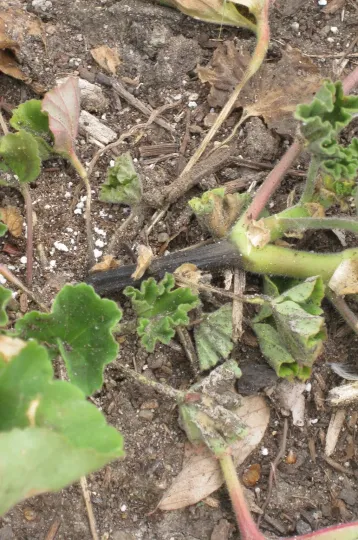
Description
Symptoms
The primary sign is leaf yellowing and wilting during the day, with temporary recovery at night. Eventually, the damage becomes irreversible, leading to plant death.
Root systems of affected plants become dark brown or black, appearing mushy and water-soaked. Often, the outer root cortex detaches from the vascular cylinder.
In seedlings, the disease causes "damping-off," where the stem base thins and turns black, causing the young plant to collapse at the soil line.
Roots show poor development of lateral branches, and the primary root may be completely destroyed, turning into a slimy mass under conditions of high moisture.
Plants display stunted growth, appear generally weak, and show poor development of the canopy due to the inability of the damaged roots to absorb water and nutrients.
Pathogen
The causative agent is the soil-borne oomycete Pythium sylvaticum. It belongs to the pseudo-fungi group, which thrives in moist soil environments and maintains activity for extended periods.
The mycelium of this organism attacks plant tissues at early growth stages, entering through young roots and root hairs. It is highly plastic and can survive by utilizing organic debris in the soil.
Reproduction occurs via zoospores, which utilize flagella to move through soil water, ensuring rapid infection spread during periods of waterlogging or high moisture.
Oomycetes possess a specific cell wall structure different from true fungi, which explains why general fungicides are often ineffective and specialized chemical control is required.
The pathogen survives through oospores, which are extremely resilient to adverse environmental conditions and can persist in a dormant state in the soil for several years.
Conditions for development
The critical factor for infection is excessive soil moisture, which limits root oxygen access and facilitates the active swimming of Pythium zoospores.
The optimal temperature range for the rapid development of the pathogen is between +15 and +22 degrees Celsius, although some strains show activity under cooler conditions.
Heavy, poorly drained soils with low oxygen availability create an ideal environment for the buildup of the oomycete population.
Poor crop rotation practices, where susceptible crops are grown in frequent succession, facilitate a rapid increase in the oospore load in the field.
Mechanical injuries to the root system during cultivation, weeding, or other field operations provide entry points for the pathogen to invade plant tissues.
Why it matters
The primary harm is significant seedling mortality, leading to crop stand loss and the financial burden of having to re-seed the fields.
In mature plants, the disease suppresses growth and development, directly reducing potential yields and lowering the quality of the agricultural product.
Root rot damages the plant's vascular integrity, making it highly susceptible to colonization by secondary pathogens that cause stem and vascular diseases.
Economic losses arise not only from reduced production but also from the increased input costs required for disease management during the season.
Infected areas remain hot spots for inoculum for several seasons, restricting future crop choices for those specific field sections.
Protection
A rigorous crop rotation schedule is the most effective measure, ensuring that susceptible crops are not grown in the same field more than once every three or four years.
Improving soil drainage and physical aeration is essential to prevent water stagnation, thereby limiting the environment conducive to Pythium activity.
- Seed treatment with fungicides specifically labeled for oomycete control.
- Application of biological control agents like Bacillus subtilis or Trichoderma to suppress pathogen growth.
- Monitoring soil pH levels, as acidic conditions can sometimes exacerbate root rot development.
Maintaining clean fields by removing weeds is crucial, as many weeds act as alternative hosts that keep the pathogen population alive in the field.
In cases of severe infestation, specialized fungicides containing phenylamide chemistry are required to effectively combat the pathogen in the soil environment.
Content graph
Connections · Pythium root rot
Most often together:
Marketplace
Products · 2

Community
Discussion
No discussions yet — be the first.